


CGI ads: what they are, examples, cost and how brands use them
CGI ads are made with computer-generated imagery: product films, 3D billboards, FOOH and commercials. The four kinds, real examples, the cost, CGI vs UGC, and what AI can and cannot do.
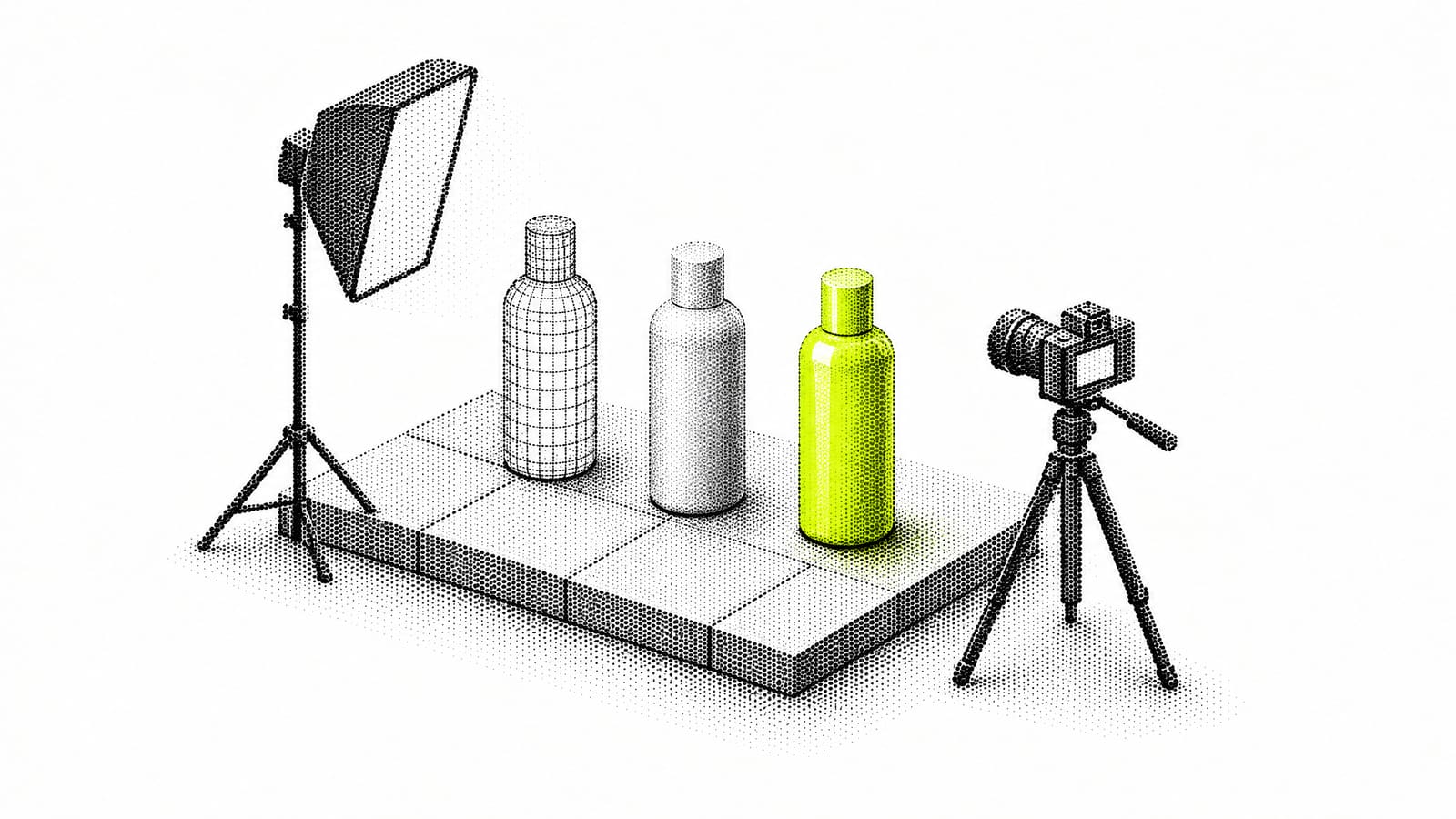
What are CGI ads?
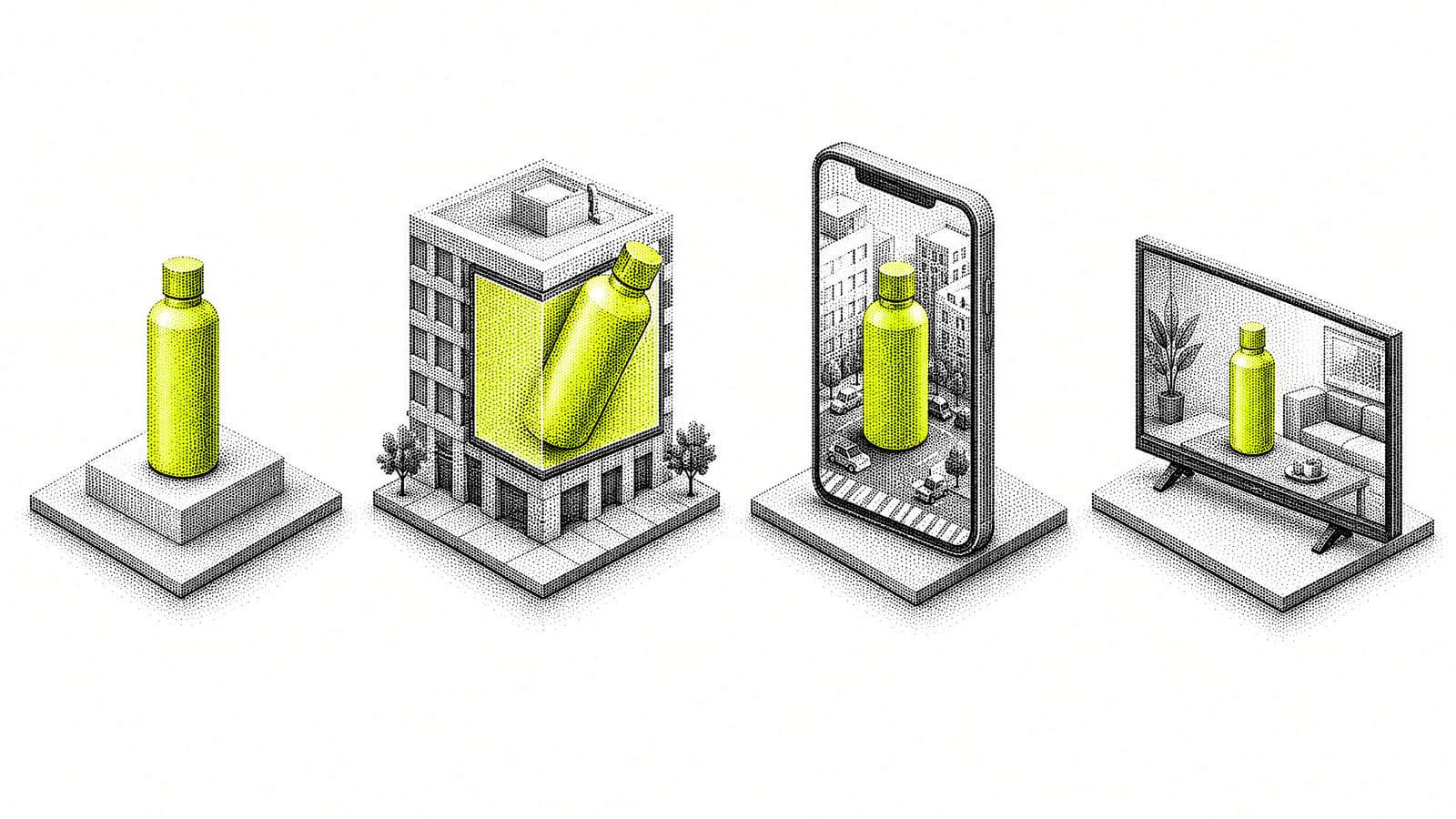
CGI ads are advertisements made with computer-generated imagery: the product, the setting or both are built in 3D software instead of being filmed. They take four main forms: product films and renders, 3D billboards on real screens, FOOH videos for social, and TV or online commercials. Often you cannot tell which parts are real.
The point is control: a 3D model of your product can be lit, animated, scaled to the size of a building and reused in every format, with no prototype and no location.
CGI ads meaning: what CGI stands for
CGI stands for computer-generated imagery. In advertising, it covers any image or film where artists build the subject in 3D: they model it, give it materials, light it, animate it and render it frame by frame.
A few terms get mixed up with it:
- VFX (visual effects) is the wider job of changing filmed footage. CGI is often its main ingredient.
- AI-generated ads come from models that produce images from a prompt. They can look like CGI, but nobody built your product in 3D, and that matters for accuracy.
- CGI marketing is the same craft across a whole campaign: the model built for the film also feeds the website, the packshots and the billboard.
Why brands use CGI advertising
- The product is not ready. A launch film can be made from the CAD files before the first unit leaves the factory.
- The shot is impossible. Inside an engine, a bottle the size of a tower, a liquid that pours upward.
- Every frame is controlled. Color, reflections, the exact angle of the logo. No weather, no reshoot.
- One model, many outputs. Stills, films, languages, screen formats and social cuts come from the same asset.
IKEA is the classic case. It moved to CGI to stop building and shipping prototype furniture to photo shoots, and by 2014 three-quarters of its single product shots were computer-generated, according to Slate. Most of the catalog was still photographed.
The limit: CGI can look like CGI. Realism takes skilled time, and a cheap render reads as cheap.
The four kinds of CGI ads, with examples
| Kind | Where it runs | Effort | Best for |
|---|---|---|---|
| CGI product films and renders | Product pages, e-commerce, social, print, TV | Low to medium: one model, many outputs | Launches, packshots, features you cannot film |
| CGI billboards (anamorphic 3D) | A real LED screen in a city, then the videos people post | High: built for one screen and one viewpoint, plus the media buy | A real public moment that people film |
| FOOH (CGI in real footage) | Social feeds only | Medium: a shoot, camera tracking, compositing | Reach and conversation without booking a screen |
| CGI in TV and online commercials | TV, streaming, YouTube, paid social | From one effect shot to a full CGI film | Storytelling for a mass audience |
1. CGI product films and renders
The most common CGI ads are the ones nobody notices: the packshot on a product page, the 6-second film where a phone turns on a black background. They start from the product’s 3D or CAD file, adapted for rendering. Once that model exists, a new angle or a new color is a new render, not a new shoot.
They work with real materials, real light and a camera that moves like a camera. They fail with the plastic look of an object lit by nothing.
2. CGI billboards: anamorphic 3D on real screens
A CGI billboard plays computer-generated content on a real LED screen. The anamorphic kind is rendered for the spot where people stand, so the product seems to lean out of the screen. Nothing is faked in the street: everyone at that viewpoint sees the effect live. Our guide to anamorphic billboards explains how the illusion is built.
The famous ones: the calico cat on the curved Cross Shinjuku Vision screen in Tokyo (2021), WAVE by the Korean studio d’strict on the COEX Artium in Seoul (2020), and the BMW XM in Times Square (2022, by Goodby Silverstein & Partners with BCN Visuals). More examples, with credits, in famous 3D billboards by city.
Our own reference is Miele HydroClean, in 2026: one full-CGI idea, a building whose facade opens like an oven, adapted to 81 screens in 76 cities across 4 countries, in 5 languages and 300+ versions. No shoot at all. That is 3DOOH, our anamorphic billboard service, at network scale.
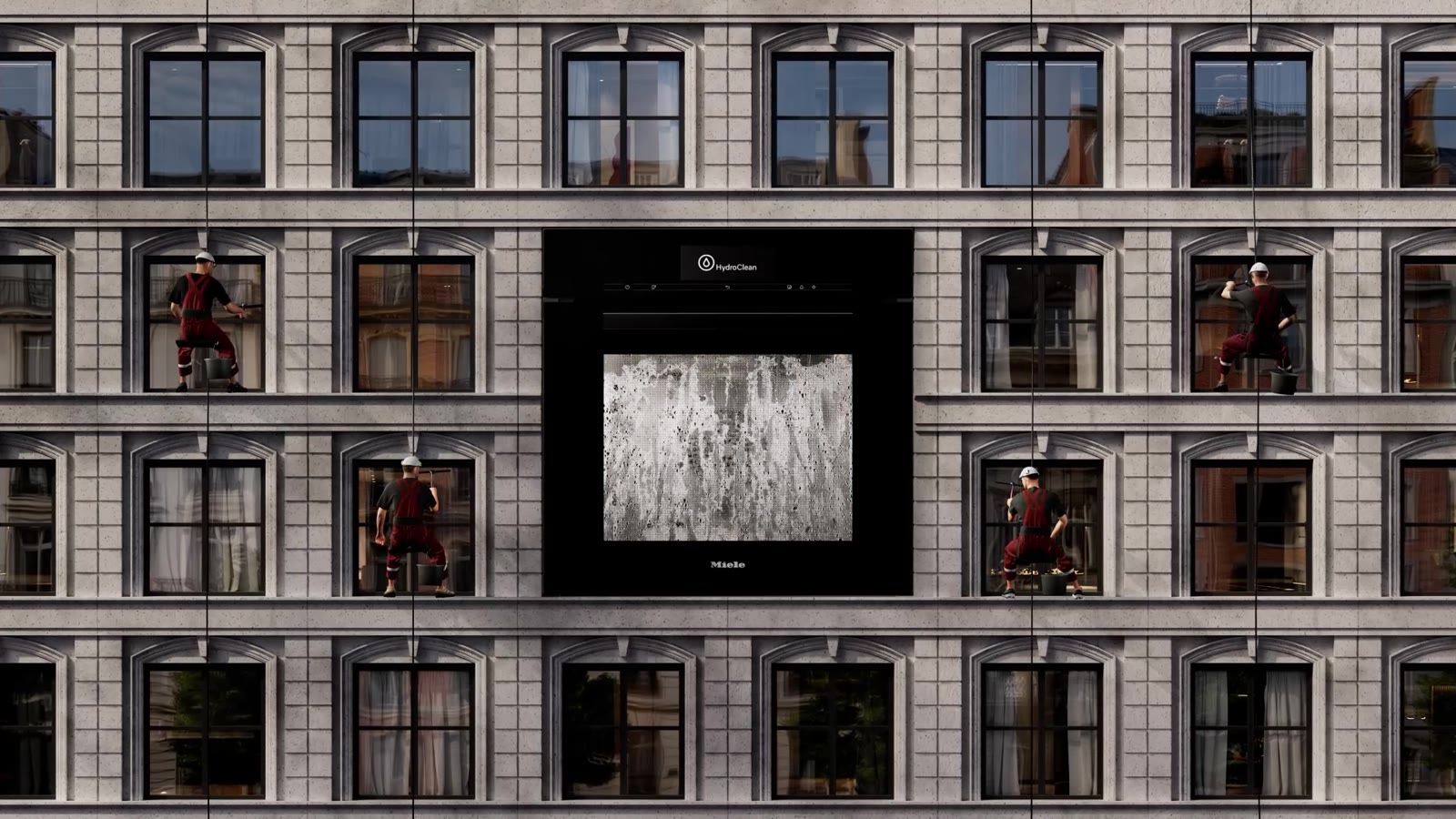
A quick test for viral “CGI ad on a building screen” clips: on a real anamorphic billboard, everything stays inside the screen’s edges. If the object sits on a building with no screen, you are watching FOOH.
3. FOOH: CGI placed in real footage for social
FOOH, or fake out of home, places a CGI object into real street footage and posts the result as a video. Nothing is installed. Jacquemus’s Le Bambino bags driving through Paris traffic and Maybelline’s lashes on a London Tube train, both from 2023 and both made by the 3D artist Ian Padgham, made the format famous. Our guide to what FOOH is covers how it is made, and the best fake out of home examples lists the films worth studying.
FOOH is where KOSMO started. Our FOOH films include France TV’s dinosaurs in the streets of Paris (25M+ earned media) and Maisons du Monde’s Christmas baubles taking over Paris (12M+ earned media, 150K+ engagements). The novelty has faded since 2023, so a FOOH film now needs a story, not just a giant product.
4. CGI in TV and online commercials
Car commercials show how far it goes. In 2016, the VFX company The Mill presented the Blackbird, an adjustable car rig filmed on real roads, with a photoreal CGI car added afterward: a car ad without the car. In 2020, when lockdown canceled Škoda UK’s shoot in Croatia and northern Italy for its SUV range, the brand turned to CGI to stay on air, as The Drum reported.
Most TV spots mix the two: a real actor, a CGI product, a CGI city behind the window. The audience sees one film.
CGI ads by industry
Fashion and clothing brands
Fabric is the hardest material to fake: cloth simulation is slow, and the eye catches stiff folds. CGI ads for clothing brands work best with real garments on real people, and CGI for the impossible part.
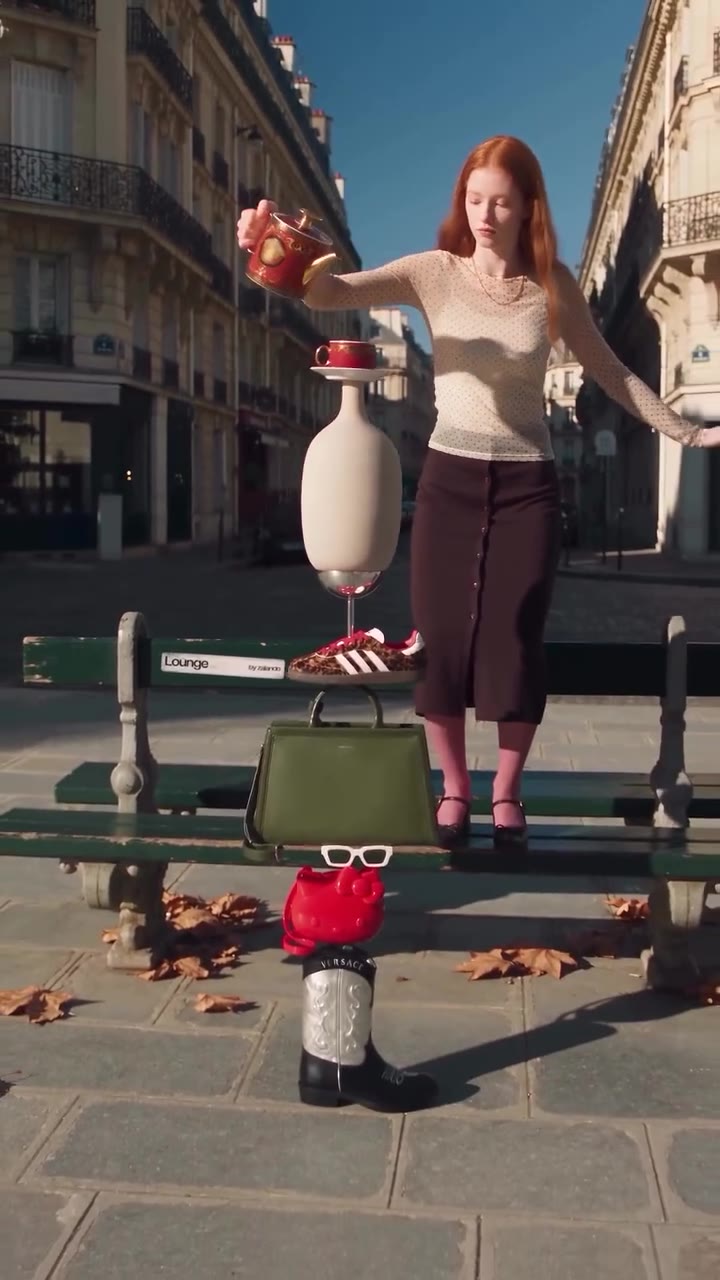
For Zalando Lounge, a model on a Paris bench pours tea into a cup balanced on a vase, sneakers, a handbag and more: real shoot, CGI stack. For Oysho x Premier Padel, one idea ran in Rome, Milan and Valladolid: 6M+ earned media and 550K+ engagements across the films.
Beauty
Beauty CGI is about texture: a cream, a powder, a lash. The rule: exaggerate the scale, never the result. A mascara wand the size of a train is a joke. Lashes that look longer on screen than in real life are a claim. Our film for the beauty brand Jylor’s Paris pop-up reached 2.5M+ earned media and 100K+ engagements.
Food and drink
Splashes, pours and flying ingredients are classic CGI ads for food, and the most expensive shots to simulate. Keep the product looking edible: badly lit CGI food looks like plastic. Our food and drink films include Uber Eats x Team France at Clairefontaine (25M+ earned media), La Baleine turning a familiar box of salt into a viral moment, and Extrême’s summer packaging at street scale (15M+ earned media).
Real estate
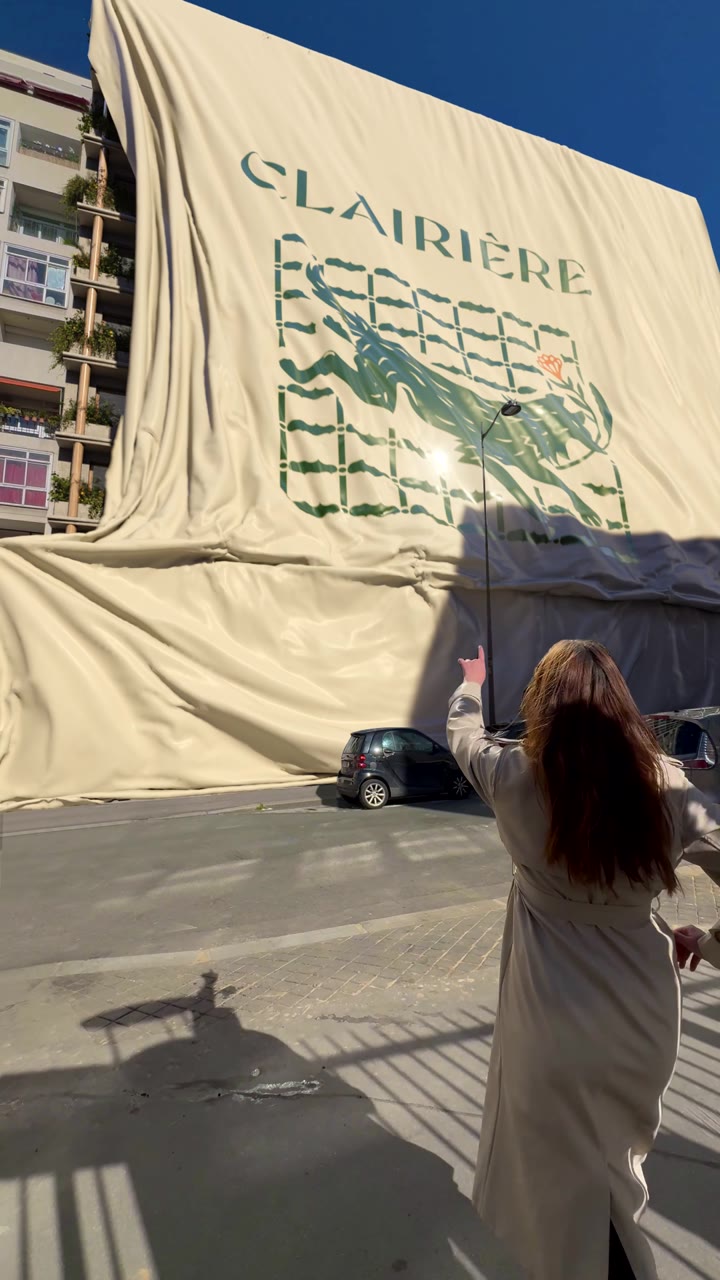
Developers sell buildings that do not exist yet, so renders and fly-throughs are the norm in CGI ads for real estate. The stronger move is to place the building into real footage of its street, so buyers see the light and the neighborhood. For Sogelym Dixence, we made a series of three mixed reality films on Clairière, an office project designed around nature. Our advice: label renders as artist’s impressions.
Tech and appliances
CGI shows what nobody can see: the inside of a device, a feature at work. Miele’s HydroClean film shows an oven cleaning itself in a 10-second slot. On the concept side, our self-initiated film for the iPhone 17 Pro Max launch, set in Dubai and not commissioned by Apple, reached 46M+ earned media and 1.2M+ engagements.
Entertainment
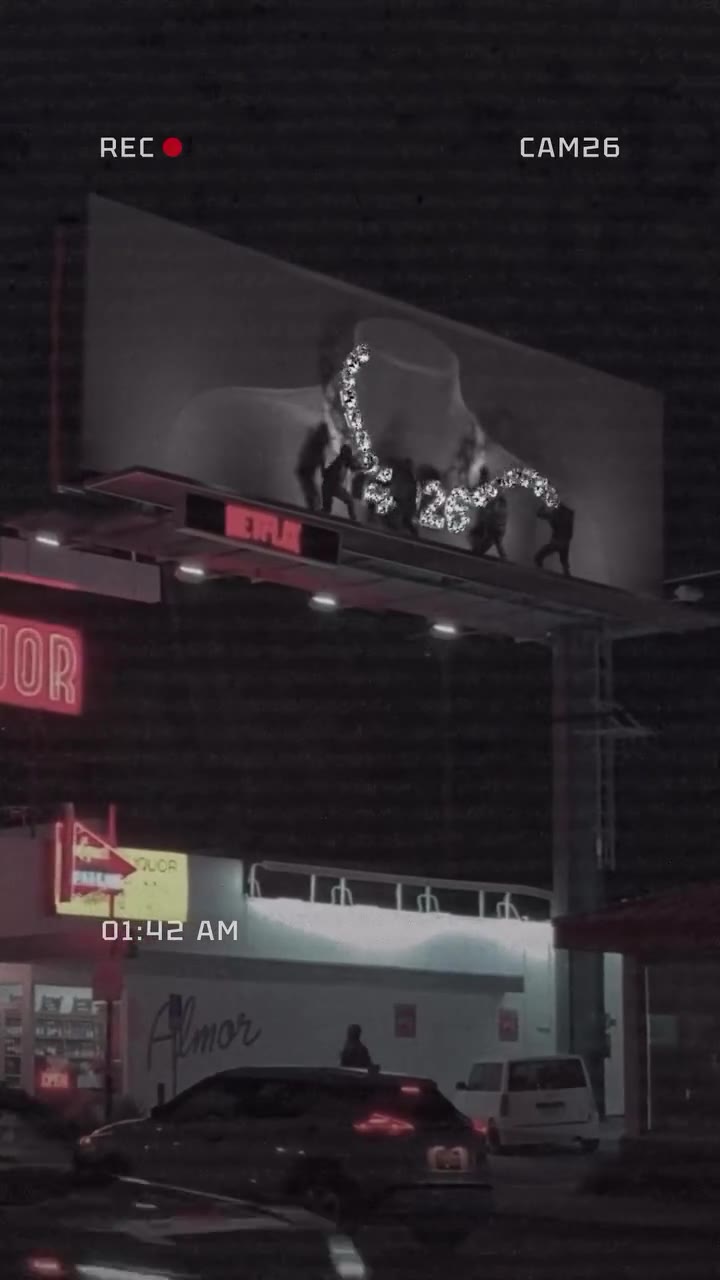
Films, series and games already have CGI worlds. The ads that travel put that world into the audience’s real one. For Netflix’s Avatar: The Last Airbender, a real stencil on a Los Angeles sidewalk, then the ground opening onto the Earth Kingdom: the post passed 30K likes. For Netflix’s Big Mistakes, a CGI thief steals the necklace from a real billboard on Sunset Boulevard.
CGI ads vs UGC ads
UGC ads (user-generated content) are filmed by creators on a phone, in the style of an organic post. CGI ads are produced by a studio. They do different jobs.
| CGI ads | UGC ads | |
|---|---|---|
| Cost | A studio budget per project; the 3D assets are reused across formats | A creator fee per video; cheap to make in volume |
| Speed | Weeks: ours take 3 to 4 weeks from the approved brief | Days |
| Control | Total: every frame, color and angle | Low: the creator’s voice, room and light |
| Trust | Reads as the brand speaking; realistic CGI should be disclosed | Reads as a real person’s opinion |
| Best use | Launches, awareness, ideas that cannot be filmed, screens | Testing hooks in paid social, reviews, conversion |
They combine well. A FOOH film shot handheld borrows the look of UGC. A 3D billboard produces UGC by itself: people film it and post it, and a screen in one street reaches other countries. Our advice: use CGI for the moment, and UGC for the reaction.
CGI ads with AI
AI image and video generators now produce CGI-looking ads from a prompt. Do they replace a studio? In our experience, they replace part of the work.
What AI does well
- Fast concepts: ten directions for an idea in an afternoon.
- Moodboards and early visuals that align a team before the 3D starts.
- Variations once the idea is set: backgrounds, seasons, extra cuts.
Where it breaks
- Product fidelity. A generator does not know your product. Labels, logos and proportions drift. A 3D model built from your files does not.
- Consistency across shots. The same object can change shape between two shots, and a film needs the same product in every frame.
- Brand control. Exact colors, typography, the packshot angle your legal team approved.
- Rights and disclosure. In January 2025, the US Copyright Office concluded that prompts alone generally do not make you the author of the output, so a fully generated ad can be hard to protect. In the EU, Article 50 of the AI Act has applied since 2 August 2026: realistic AI-generated or manipulated video must be disclosed, with a lighter rule for evidently creative or fictional work.
- Delivery to screen specs. A corner billboard needs an exact pixel map, frame rate and length, rendered for one viewpoint. Generators output standard video.
Audiences notice too. In November 2024, Coca-Cola remade its 1995 “Holidays Are Coming” spot with three AI studios. Many viewers called it “soulless”, NBC News reported, while the brand described it as a collaboration between human storytellers and generative AI.
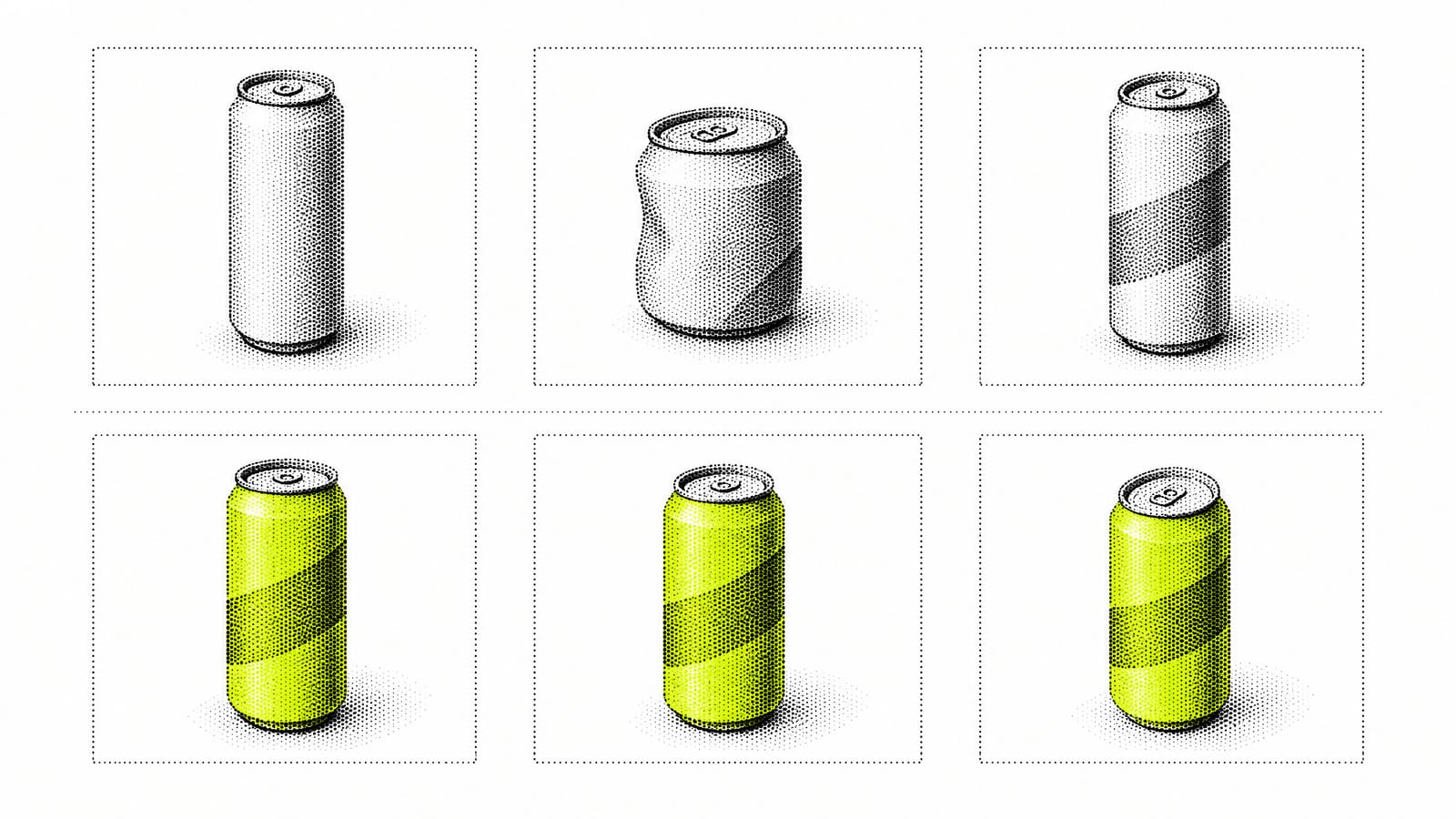
AI works best where there is no real product to protect. Our Yoshi eggs, a self-initiated concept for The Super Mario Galaxy Movie (not a Nintendo commission), put an invented product on a real New York grocery shelf, with AI building the carton, the shots and the variants: 15M earned media impressions, $0 in paid media. Read the Yoshi eggs case.
At KOSMO, AI is used a little, for ideas and early visuals. On client work, the final 3D is built by our team.
How much do CGI ads cost?
There is no fixed price for a CGI ad. The cost follows the work:
- Complexity. One rigid product with one move is the simple case. Characters, crowds and long camera moves add time.
- Materials. Glass, liquid, fur, cloth and smoke take longer to simulate and render.
- Length and versions. Every second is rendered, and every language, variant and cut (6, 10, 15, 30 seconds) is a separate file.
- Formats. Each screen shape and social ratio is recomposed, not stretched.
- Shoot or full CGI. A plate shoot adds crew, location and permits. Full CGI removes the shoot but means building the whole scene.
- Your files. A clean CAD or 3D model of the product saves modeling time.
For reference, the projects we are built for usually land around €40,000: one idea built in 3D, adapted to the screens and feeds of a campaign. It is a reference, not a floor. Each extra screen costs less than the first. The media is a separate budget: we can buy it for you, you keep control of it, and the screens are chosen to fit the idea.
Online, “CGI ads” are also sold for a few dollars: that is the price of a generated clip, not of an ad built on your real product. For the detail, read what a 3D billboard costs for screens and what a FOOH film costs for social.
How to choose a CGI ads agency
Ask four questions before you sign:
- Have you delivered the kind I need? A FOOH reel does not prove a studio can deliver to a billboard’s specs, and the reverse is also true.
- Who builds the 3D, and where is AI used?
- What does the price include? Versions, formats, languages, rounds of changes, the media.
- Can I see an idea for my product or my screen before I sign?
We have delivered 150+ campaigns in 14 countries, on 750+ screens. The full checklist is in how to choose a 3D billboard agency. Agencies that need CGI under their own name can work with us white label.
FAQ
How long does it take to make a CGI ad?
Our projects take 3 to 4 weeks from the approved brief to delivery, with two rounds of changes included. A network of screens or many languages adds versions, so list them in the brief.
Do you have to disclose that an ad is CGI?
It depends on the platform and the market. YouTube asks creators to disclose realistic altered content, and the EU now requires a label on realistic AI-generated video. Our advice: never present a CGI scene as something that really happened.
Can you make a CGI ad from our product’s CAD files?
Yes, and it is the best starting point. The CAD files are cleaned up and given materials, then the same model serves the film, the stills and the billboard.
Is CGI cheaper than a live-action shoot?
Not always. CGI saves the location, the crew and the prototype, but a realistic scene takes skilled time. It pays off when the shot is impossible, the product is not ready, or the assets feed many formats.
Need CGI ads for your brand?
Tell us the product, the launch date and where it should run, on a screen, in the feed or both, through our contact page. We come back with the format that fits and what it takes to make it. Not ready to brief? Ask for a free concept for your screen and judge the idea first.