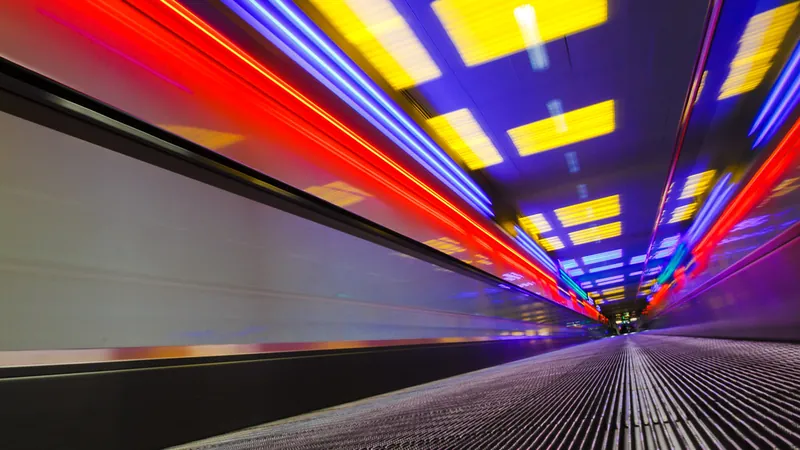
Stachus and the airport. 3D built for Munich's screens.
We create anamorphic 3D billboards in Munich: one film built to the exact specs of the Stachus 3D LED cube or the Plaza Brand Stage at the airport, then cut for the U-Bahn screens and for social. We can also book the screens with the operators.
One 3D film, built to the exact specs of each screen
Media buying with the operators, or delivery to your agency's plan
You bring the screens and the brand. We bring the idea, the 3D and the delivery, and we keep it simple for you from the first call to the day it goes live.
5 steps3 to 4 weeks from approved brief
Week 01
Week 02
Week 03
Week 04
Live +
Brief
Concept
Production
Delivery
Amplification
Munich guide
Germany's first digital screen was in Munich. Its 3D screens are at Stachus.
Germany's first digital out-of-home screen went live in a Munich U-Bahn station in 1994. Today the surfaces that suit a 3D billboard cluster at Stachus, one of the busiest squares in the city, and in the new airport terminal, which publishes its prices. Below: the screens, who sells them, the 2025 airport list prices, the rules and the dates.
market
The Munich out-of-home market
Germany’s out-of-home market is growing fast. Nationally, gross advertising revenue passed €3 billion for the first time in 2024, up 12.7%, and digital out-of-home grew 19% to reach 43% of the total (Fachverband Aussenwerbung figures, reported by LebensmittelPraxis). In the first half of 2025, national digital out-of-home revenue reached about €731 million gross, 22% more than a year earlier, according to Nielsen (W&V).
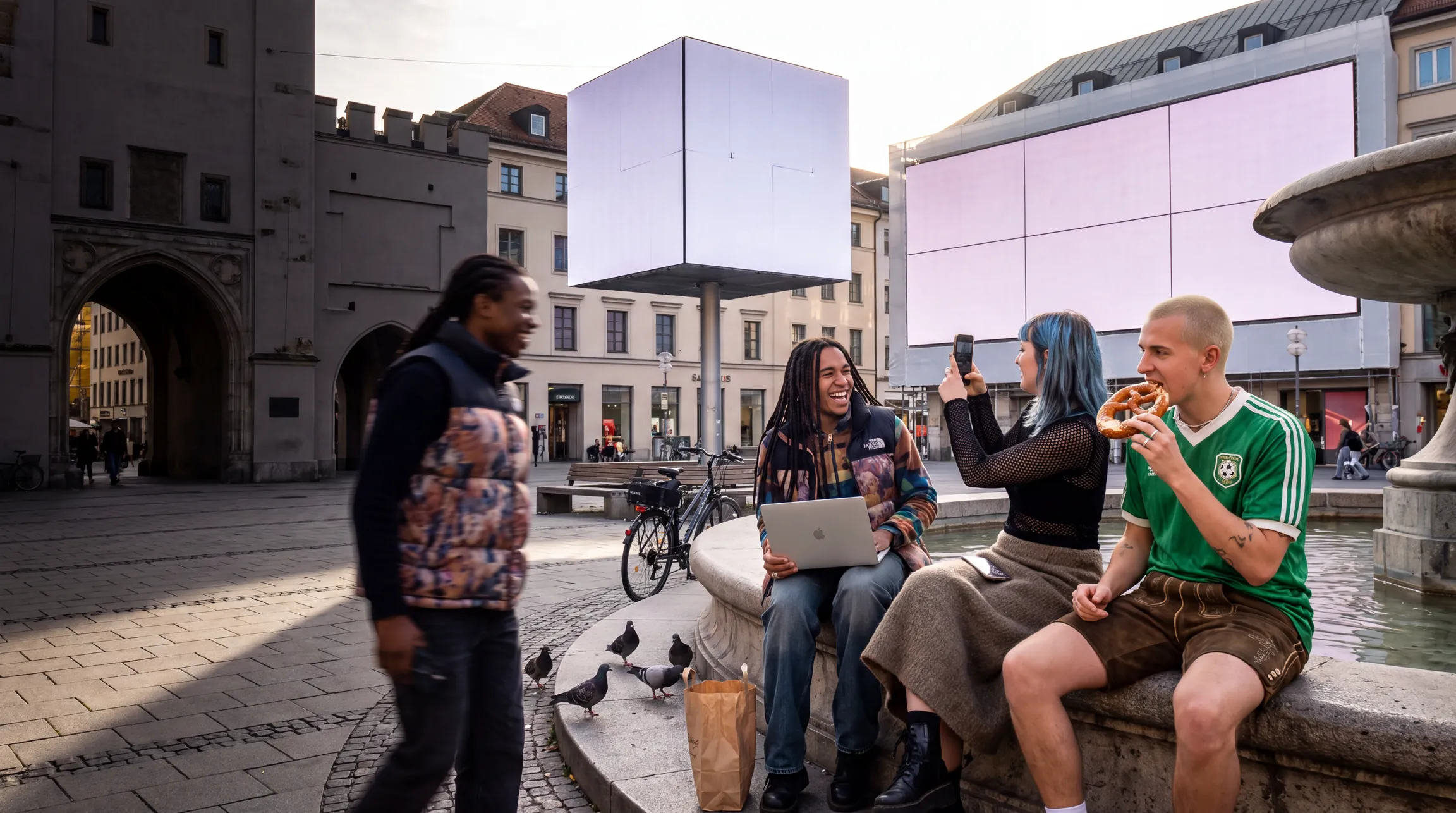
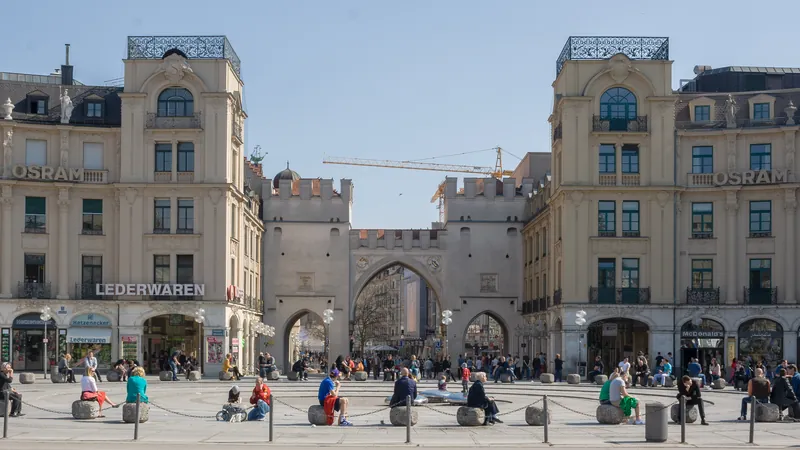
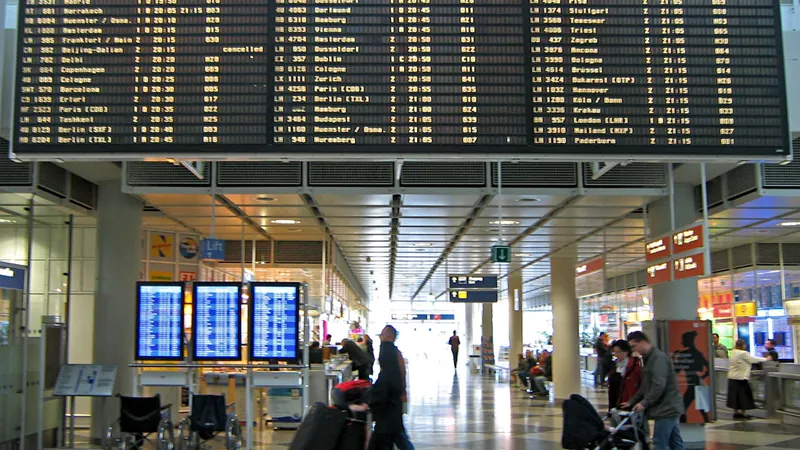
Munich started it. Germany’s first digital out-of-home screen went live at the Odeonsplatz U-Bahn station on 15 February 1994, an Infoscreen now part of Ströer (Ströer). Stachus, or Karlsplatz, sees up to 300,000 passersby a day, and a new freestanding 3D LED cube was set to open there in September 2025 (W&V). At the airport, the Terminal 1 extension adds 56 advertising spaces, all digital, for about 6 million passengers a year expected in its non-Schengen area from 2026 (Munich Airport).
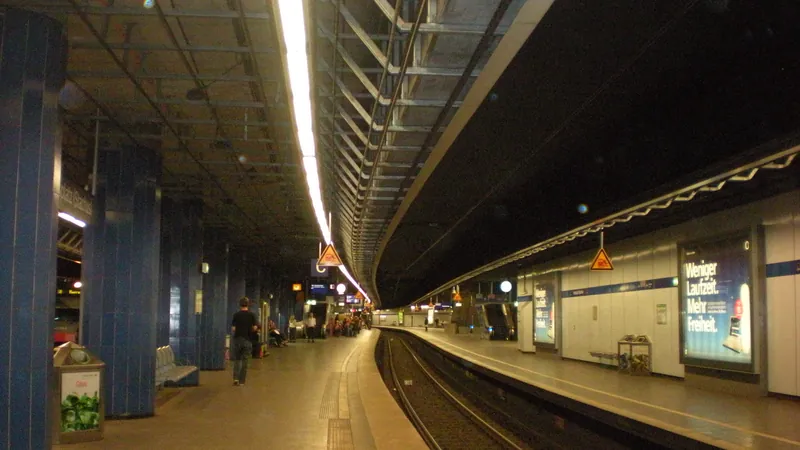
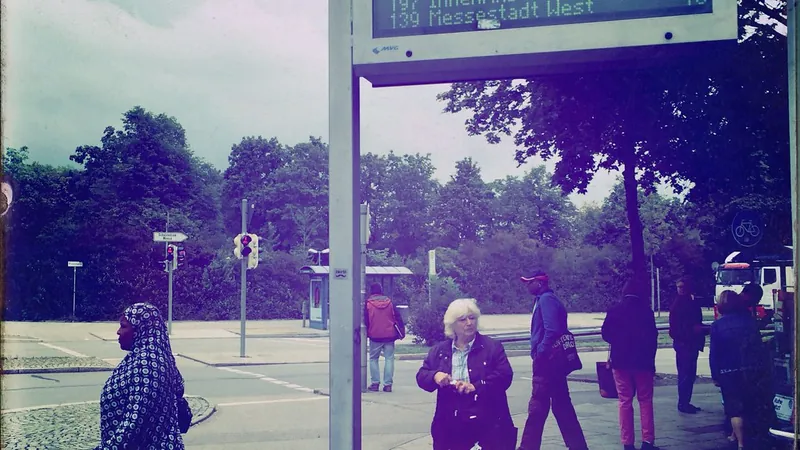
Projections of 4 x 2.5 m on tunnel walls, at Max-Weber-Platz, Odeonsplatz, Rotkreuzplatz and Marienplatz
A waiting audience facing the screen head-on across the tracks (Hörmann)
We found no giant outdoor corner screen in Munich like the one in Hamburg. A national plan can pair a corner screen there with the Stachus formats.
3D campaigns
3D campaigns Munich has already seen
01
Zespri (2023): a forced-perspective campaign with the animated Kiwi Brothers breaking out of large DOOH screens in Düsseldorf, Hamburg and Munich, planned by Mindshare and ScreenOnDemand (Horizont).
02
Red Bull Organics: a 3D-modelled illusion on the Public Video Giant at Stachus, as if viewers were looking through glass into the station pillar. The agency’s case study does not give a year (DEPARTD).
media owners
Who sells the space
01
Ströer, through DSM Deutsche Städte Medien: advertising for the transit operator MVG (trams, stops, U-Bahn), the U-Bahn Infoscreens and the large LED billboard at Stachus (City of Munich).
02
Flughafen München: sells and approves all airport media, including the digital network of the Terminal 1 extension (Munich Airport).
03
Oohlala media: developer of the Stachus 3D cube, with met[ads], a 3D DOOH start-up from Düsseldorf, as premium content partner (W&V).
rules
Rules to know before you brief
Transit ads are approved by MVG: each motif goes to MVG; discriminatory or sexist ads and ads for political parties and religious sects are excluded by contract. A rejected motif has to be revised or does not run (City of Munich).
The city is not the seller on transit: the City of Munich has no contract with MVG or Ströer for transit ad spaces. MVG awards them in its own contracts, and the city only awards advertising rights on city-owned land (City of Munich).
Airport creatives: Flughafen München approves and installs them; the client commissions and pays for production (Munich Airport).
costs
What it costs
Munich Airport publishes list prices for the Terminal 1 extension in its 2025 media data, plus VAT (Munich Airport):
01
Digital City Light Posters (departures, non-Schengen): one slot €3,700 per week, €12,960 per month or €90,000 per year; exclusive use €11,100 per week. The media data notes a 10% agency commission.
02
Passenger Walkway LED network: one slot €7,600 per week or €185,000 per year; exclusive use €22,800 per week.
03
Plaza Brand Stage (LED wall and exhibit space): €475,000 per year, exclusive.
No prices are published for the Stachus screens. The 3D film is a separate budget, and depends on how many formats it has to fit.
calendar
When to launch in Munich
01
Oktoberfest, from mid-September to early October: a record 7.4 million guests over 16 days in 2026; the 2027 edition runs from 18 September to 3 October (Oktoberfest).
02
IAA Mobility, in September of odd years: carmakers and tech brands launch to an international audience; the 2027 edition runs from 7 to 12 September (IAA Mobility).
beyond billboards
Not a billboard? The same 3D for shop windows, events and buildings.
Every screen needs a film built for its exact shape, outdoors or indoors. Same studio, same method.
Yes. A freestanding LED cube at Stachus is built and sold as a 3D DOOH format, visible from several sides, at a square with up to 300,000 passersby a day. Ströer's 30-metre LED billboard at the Stachus transit access is the other large canvas.
The airport publishes list prices. In its 2025 media data for the new Terminal 1 extension, one slot on the digital City Light Posters costs €3,700 per week, the walkway LED network €7,600 per week, and the Plaza Brand Stage €475,000 per year, all plus VAT.
Yes. We can handle the media buying with the operators, so the screens are chosen for the creative and the budget stays under control. If you already have a media agency, we deliver the 3D film to their plan.
The transit operator MVG. Ströer sells the space and submits each motif to MVG; discriminatory or sexist ads and ads for political parties or religious sects are excluded, and a rejected motif has to be revised or does not run.
Yes. We create both flat and 3D versions and adapt them to every screen and media owner in your plan, whether that's one flagship billboard or dozens across markets. The technical back-and-forth is our job, not yours.
The creative is a separate line, but it never requires you to buy more media. You're making the impressions you've already paid for work harder: the same screens start generating organic reach on their own.
Ideas and early visuals can use AI. The final 3D is built by our own team, because a real screen with real people in front of it does not forgive approximation.