In Amsterdam, digital out-of-home runs on station screens, street networks and a few large formats. We design 3D films that work on them, and we can book the media.
Station screens, street networks. 3D built for Amsterdam.
We create 3D billboards in Amsterdam: one film built to the exact specs of the Amsterdam Central large format, JCDecaux Avenue or the digital Mupis, so the depth holds on each one, then cut for social. We can also book the screens with the operators.
One 3D film, built to the exact specs of each screen
Media buying with the operators, or delivery to your agency's plan
You bring the screens and the brand. We bring the idea, the 3D and the delivery, and we keep it simple for you from the first call to the day it goes live.
5 steps3 to 4 weeks from approved brief
Week 01
Week 02
Week 03
Week 04
Live +
Brief
Concept
Production
Delivery
Amplification
Amsterdam guide
Amsterdam has no giant corner screen. 3D works differently here.
Digital is now more than half of Dutch out-of-home spend, and Amsterdam's screens are station panoramas, large portrait LEDs and street networks rather than giant corners. 3D still works, as depth and movement across wide or tall frames. Below: the screens, who sells them, the 2026 list prices, the rules and the dates.
market
The Amsterdam out-of-home market
Dutch out-of-home grew again in 2025, and digital now takes more than half of total spend, according to WPP and Outreach figures cited by Global (Global). Since 1 January 2026, the outdoor audience survey BRO Next is part of the National Media Survey (NMO), so out-of-home is measured in the same reach study as TV, radio, print and online (same source).
A PwC study for the trade body Outreach covered six operators, about 76% of the Dutch market. It found €144 million of public revenue in 2025, in taxes, rents and revenue shares with cities such as Amsterdam, Rotterdam and Utrecht, and €200 million invested in about 70,000 bus shelters and info panels from 2019 to 2025 (Global, PwC and Outreach study). JCDecaux installed the first digital Mupi network in the Netherlands at the end of 2015 (JCDecaux Nederland).
screens
Where 3D works in Amsterdam
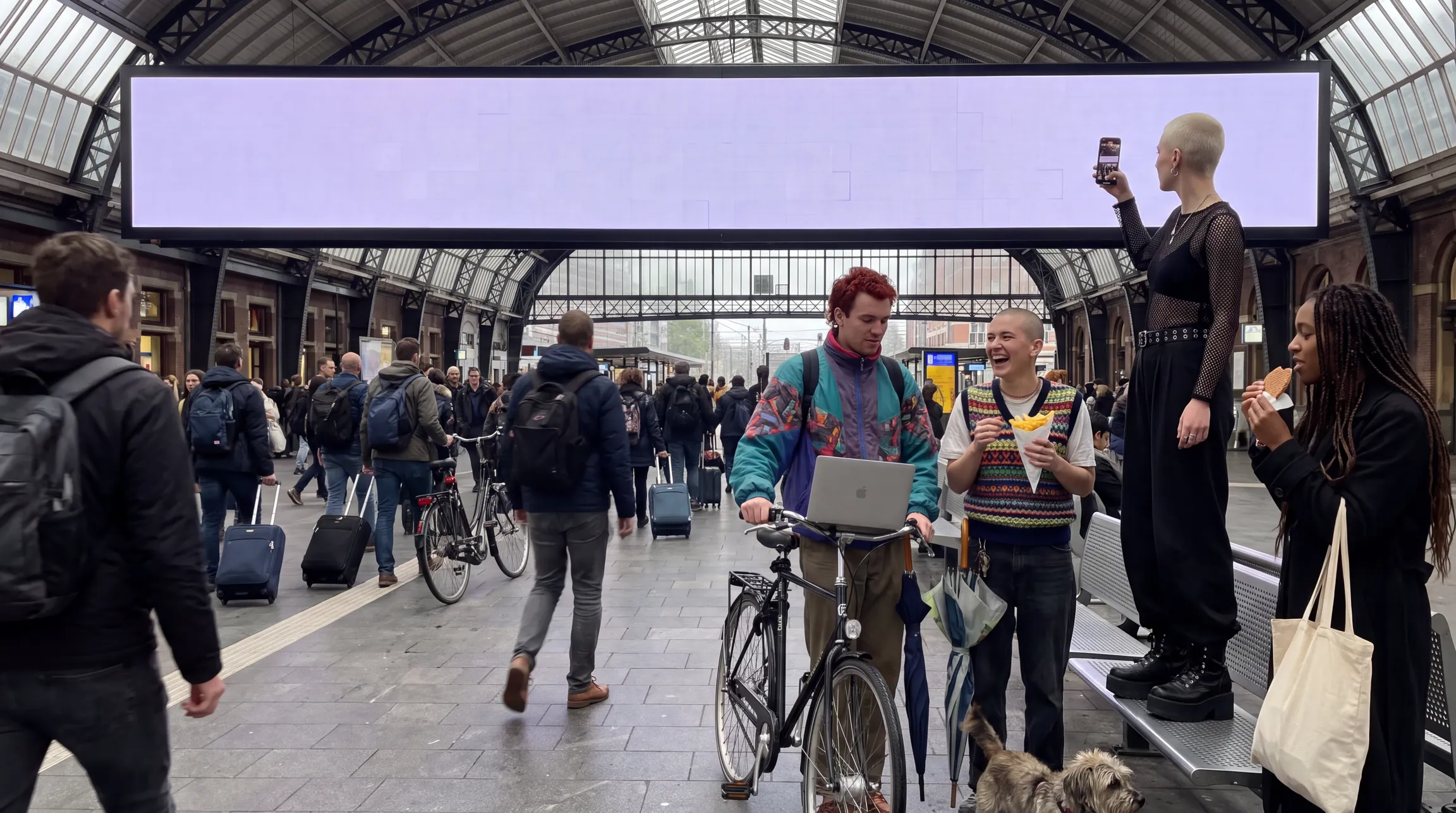
We found no giant LED corner in Amsterdam. The large digital formats are very wide station screens and tall portrait LEDs, and 3D works on them as depth and movement across the frame.
Three station screens: banner 3,072 x 352 px, West 2,112 x 608 px, DUO 1,408 x 608 px; 10-second spots, no audio
Very wide panoramic frames in a major rail hub; NS carries about 1 million train passengers a day nationally, by the operator’s figure (Global specs 2026)
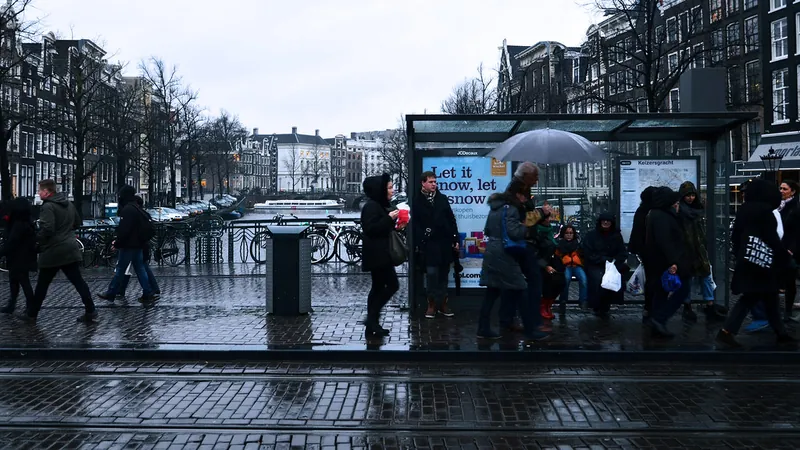
84-inch full-HD screens; almost 400 locations and 700+ displays in the largest Dutch cities
Not a 3D surface: carries the film across the city, with dayparting (JCDecaux Nederland)
For a curved surface, the Netherlands has the cylinder screen at Zuidplein in Rotterdam. A national plan can pair it with the Amsterdam formats.
media owners
Who sells the space
01
JCDecaux Nederland: digital Mupis, the Avenue large-format LED, bus shelters, Total View trams and the GVB ferry between Amsterdam Centraal and Amsterdam Noord (JCDecaux Nederland).
02
Global: more than 12,000 bus shelters and europanels and more than 3,300 digital screens nationally, including the train-station network and the large formats at Amsterdam Central (Global).
03
Bauer Media Outdoor: more than 1,100 digital screens and 21,000 analogue faces in over 300 Dutch municipalities, plus Urban Canvas painted murals in Amsterdam (Bauer Media Outdoor).
rules
Rules to know before you brief
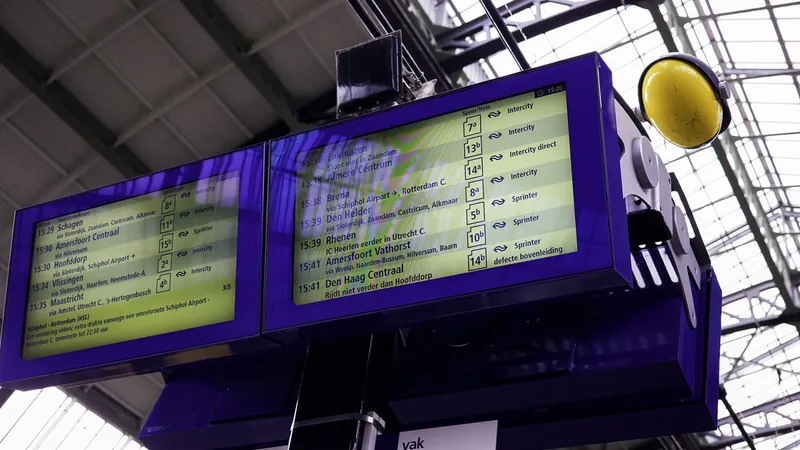
Train stations: at NS and ProRail stations, the creative must not interfere with corporate identity, signage, travel information or signalling. ProRail’s information and safety colours may not exceed 10% of the image, the blue NCS S4450-R80B may not be used, spots last exactly 10 seconds and every creative needs operator approval (Global specs 2026).
Content: Dutch advertising is self-regulated by the Dutch Advertising Code, and complaints go to the Reclame Code Commissie (Stichting Reclame Code).
costs
What it costs in 2026
Dutch operators publish gross list prices, before their indices and agency discounts:
01
JCDecaux digital network: a gross CPM of €9.25, multiplied by a month index (75 in January and July, up to 125 in December), a volume index and a targeting index (JCDecaux rate card 2026).
02
Global DOOH network: a gross base CPM of €8.50, multiplied by volume, month and optimisation indices (Global rate card 2026).
03
JCDecaux Total View tram, Amsterdam: €22,500 media plus €10,000 production for four weeks, gross, for 7,728,120 impressions and 601,212 unique reach (BRO Next) (JCDecaux rate card 2026).
04
JCDecaux Total View ferry, Amsterdam Centraal to Noord: €32,500 media plus €17,500 production for an eight-week exterior wrap, gross (same source).
05
JCDecaux print bus shelters and Mupis: a base rate per face of €215 inside the ring (excluding Noord) and €165 elsewhere in Amsterdam, before indices (same source).
The 3D film is a separate budget. It depends on how many formats it has to fit: the station panoramas, portrait screens and social cuts.
calendar
When to launch in Amsterdam
01
King’s Day, late April (week 17): huge crowds in Amsterdam; JCDecaux prices week 17 at a 125 demand index (JCDecaux rate card 2026).
02
Pride Amsterdam, late July to early August: 31 July to 8 August in 2027 (Pride Amsterdam).
03
Amsterdam Dance Event, five days in mid to late October, with more than 1,300 events across the city (ADE).
04
TCS Amsterdam Marathon, mid to late October: past the Rijksmuseum, the Amstel and Vondelpark; 30 and 31 October in 2027 (TCS Amsterdam Marathon).
05
Black Friday and December: JCDecaux applies a 125 demand index to weeks 47 and 48 and to December (JCDecaux rate card 2026).
beyond billboards
Not a billboard? The same 3D for shop windows, events and buildings.
Every screen needs a film built for its exact shape, outdoors or indoors. Same studio, same method.
None that we could verify. The large formats are the panoramic screens at Amsterdam Centraal and JCDecaux's double-sided Avenue on the Stadshouderskade, where 3D works as depth and movement. The curved screen closest to a 3D canvas in our research is the cylinder at Zuidplein in Rotterdam.
Operators publish gross list prices. In 2026, JCDecaux's digital network starts from a €9.25 CPM and Global's from €8.50, both before indices. A four-week JCDecaux tram wrap in Amsterdam lists at €22,500 for media plus €10,000 for production. The 3D film is quoted separately.
Yes. We can handle the media buying with the operators, so the screens are chosen for the creative and the budget stays under control. If you already have a media agency, we deliver the 3D film to their plan.
Yes. At NS and ProRail stations, the creative must not interfere with signage, travel information or signalling: ProRail's information and safety colours are capped at 10% of the image, one specific blue is banned, spots last exactly 10 seconds and every creative needs approval.
Yes. We create both flat and 3D versions and adapt them to every screen and media owner in your plan, whether that's one flagship billboard or dozens across markets. The technical back-and-forth is our job, not yours.
The creative is a separate line, but it never requires you to buy more media. You're making the impressions you've already paid for work harder: the same screens start generating organic reach on their own.
Ideas and early visuals can use AI. The final 3D is built by our own team, because a real screen with real people in front of it does not forgive approximation.