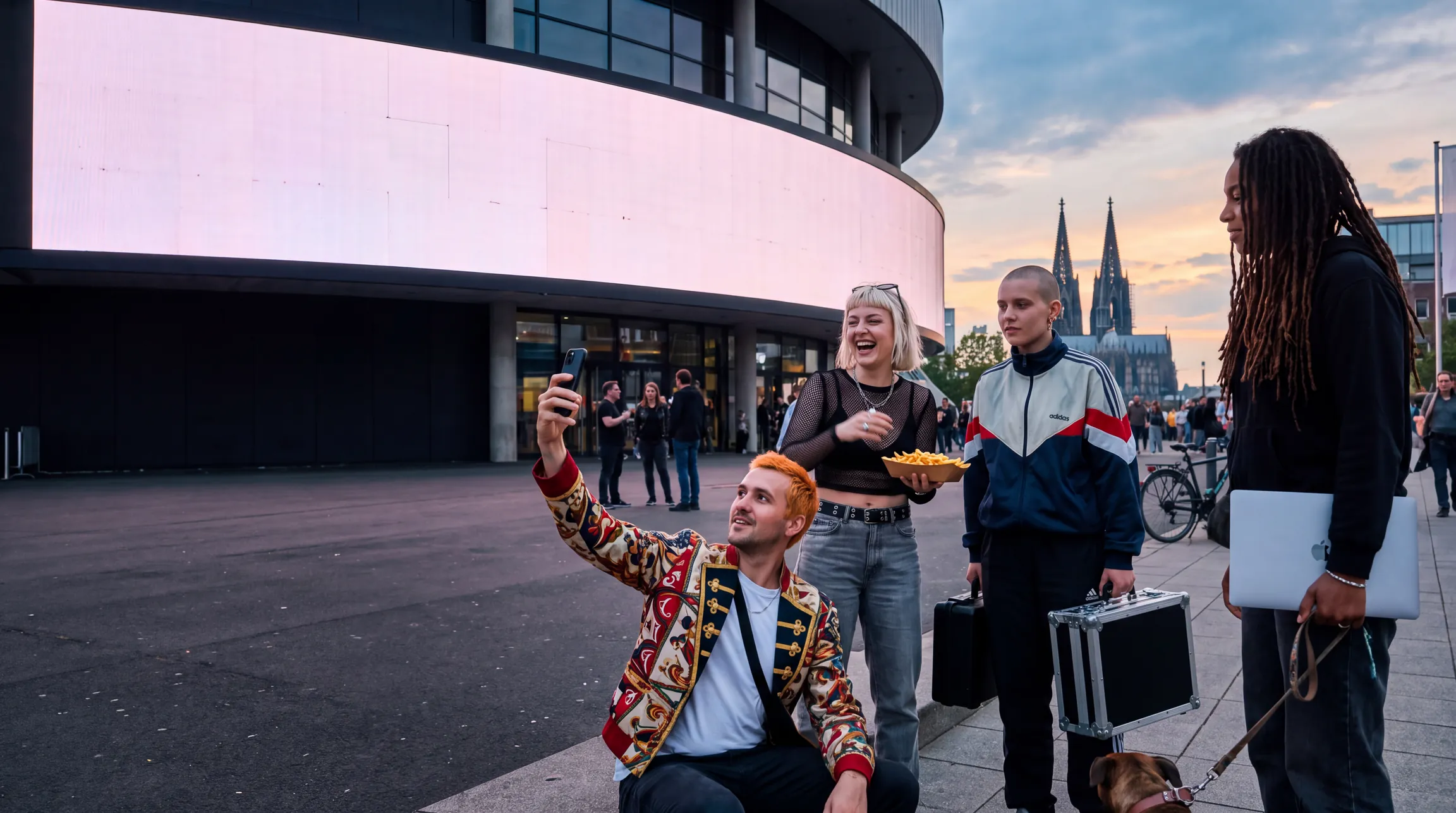
Cologne is Ströer's home city, with one large arena screen and networks a brand can take over in a day. We design 3D films that work on them, and we can book the media.
An arena screen and city-wide networks. 3D built for Cologne.
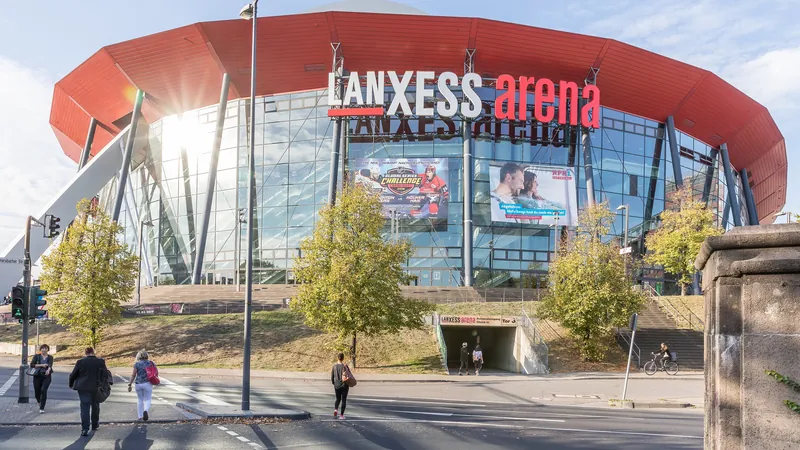
We create 3D billboards in Cologne: one film built to the specs of the LANXESS arena LED screen and Ströer's premium network, so the depth holds on every format, then cut for social. We can also book the screens with the operators.
One 3D film, built to the exact specs of each screen
Media buying with the operators, or delivery to your agency's plan
You bring the screens and the brand. We bring the idea, the 3D and the delivery, and we keep it simple for you from the first call to the day it goes live.
5 steps3 to 4 weeks from approved brief
Week 01
Week 02
Week 03
Week 04
Live +
Brief
Concept
Production
Delivery
Amplification
Cologne guide
No 3D corner screen in Cologne yet. 3D works through its networks.
We found no giant corner screen built for anamorphic content in Cologne, and no 3D campaign there yet. What the city has: a large LED screen at LANXESS arena, a premium digital network that one brand took over for a whole day in 2026, and some of Europe's biggest trade shows. Below: where 3D works, who sells the space, the rules and the dates.
market
The Cologne out-of-home market
Germany’s out-of-home market is growing fast. Nationally, gross advertising revenue passed €3 billion for the first time in 2024, up 12.7%, and digital out-of-home grew 19% to reach 43% of the total (Fachverband Aussenwerbung figures, reported by LebensmittelPraxis). In the first half of 2025, national digital out-of-home revenue reached about €731 million gross, 22% more than a year earlier, according to Nielsen (W&V).
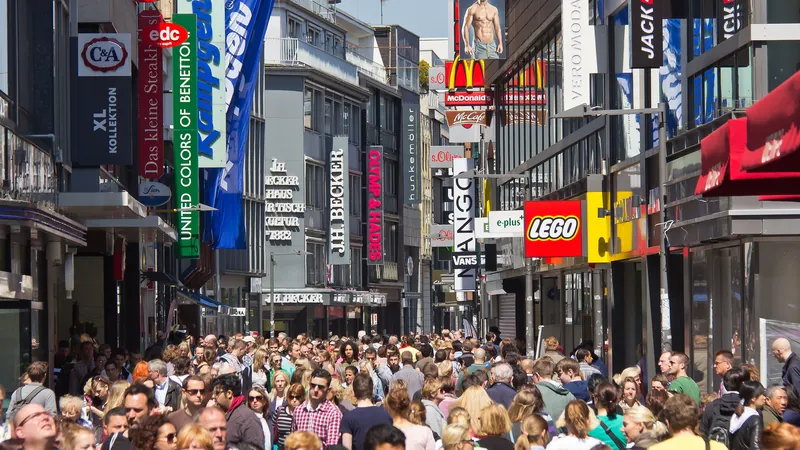
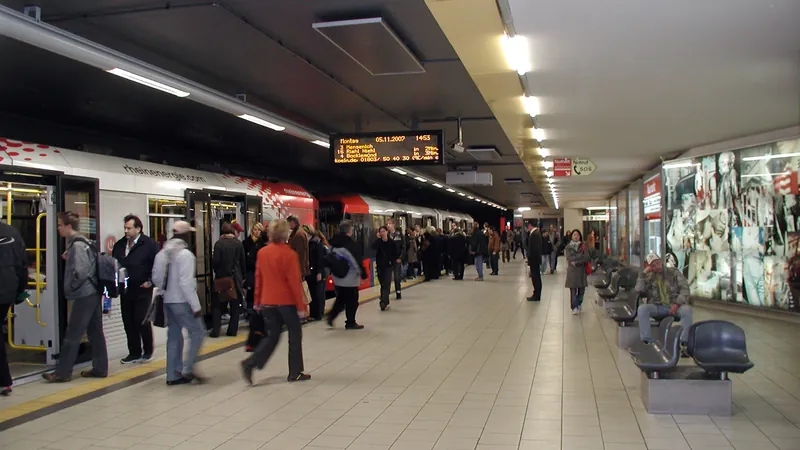
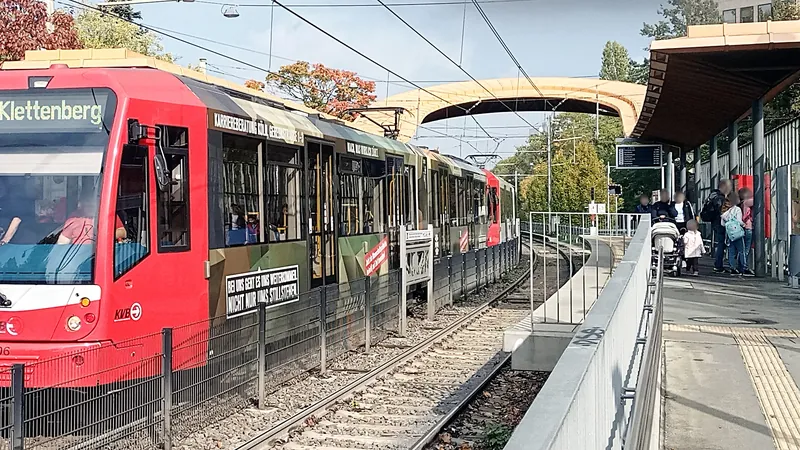
Cologne is Ströer’s home city. Since 1 January 2015, Ströer has held the main lease on the city’s advertising rights through its subsidiary Kölner Aussenwerbung (KAW): billboards, Mega-Lights, columns and the digital Public Video screens in the U-Bahn (Ströer). From the same date, JCDecaux won an exclusive 15-year contract for 1,550 bus shelters and 350 city information panels, and announced Cologne as the first German city with digital screens in bus shelters (JCDecaux). On 28 September 2026, the energy brand Yello took over 280 of Ströer’s digital premium screens in Cologne for one day, as a teaser for a national campaign (Yello).
screens
Where 3D works in Cologne
We found no giant corner LED built for anamorphic content in Cologne. 3D works in two other ways in Cologne: one large screen where a crowd gathers, and depth effects repeated across a whole network.
Simple depth effects at eye level, not a full illusion (JCDecaux)
For a true corner illusion, the screen built for it is The Lighthouse in Hamburg. A national plan can pair it with a one-day takeover of the Cologne network.
media owners
Who sells the space
01
Ströer / Kölner Aussenwerbung (KAW): the main lease on municipal advertising rights, with large formats, Mega-Lights, columns and U-Bahn Public Video (Ströer), the premium digital network (Yello) and the LED screen at LANXESS arena (invidis).
02
JCDecaux (Wall): bus and tram shelters and free-standing 2 m² panels, including digital screens, under a 15-year contract from 2015 (JCDecaux).
rules
Rules to know before you brief
Who awards the rights: advertising on municipal public space is tendered by Stadtwerke Köln GmbH on behalf of the city. The 2013 tender, effective 1 January 2015, was split into two lots: the main lease to Ströer (KAW), the shelters to JCDecaux (Ströer).
The sites are public: advertising on public land runs under an advertising-use contract between the City of Cologne and Stadtwerke Köln, and the city publishes the covered sites, shelters and information columns included, as open data (Open.NRW).
calendar
When to launch in Cologne
01
gamescom, in late August: the world’s biggest computer and video games event, at Koelnmesse; the 2027 edition runs from 23 to 29 August (gamescom).
02
DMEXCO, in September: a digital marketing expo held in Cologne since 2009; the organiser reported more than 40,000 participants in 2025, as cited by Wikipedia.
03
Carnival: the season opens on 11 November and the street carnival peaks on Rosenmontag, in February or March. The 2026 Rosenmontag parade alone had about 11,500 participants and 94 grandstands (Kölner Karneval).
beyond billboards
Not a billboard? The same 3D for shop windows, events and buildings.
Every screen needs a film built for its exact shape, outdoors or indoors. Same studio, same method.
Not that we found. The largest single screen in our research is the LED screen of about 100 m² at LANXESS arena, marketed by Ströer. In Cologne, 3D runs as depth effects on the digital networks. For a corner screen built for anamorphic content, look at Hamburg.
Two operators share the city's rights since 2015. Ströer, through its subsidiary Kölner Aussenwerbung, holds the main lease: large formats, Mega-Lights, columns and the U-Bahn screens. JCDecaux holds the bus shelters and free-standing 2 m² panels, including the digital ones.
Yes. We can handle the media buying with the operators, so the screens are chosen for the creative and the budget stays under control. If you already have a media agency, we deliver the 3D film to their plan.
It depends on the audience. gamescom, in late August, brings the games and tech crowd to Koelnmesse. DMEXCO, in September, fills the city with marketers. Carnival opens on 11 November and peaks on Rosenmontag in February or March.
Yes. We create both flat and 3D versions and adapt them to every screen and media owner in your plan, whether that's one flagship billboard or dozens across markets. The technical back-and-forth is our job, not yours.
The creative is a separate line, but it never requires you to buy more media. You're making the impressions you've already paid for work harder: the same screens start generating organic reach on their own.
Ideas and early visuals can use AI. The final 3D is built by our own team, because a real screen with real people in front of it does not forgive approximation.