Portrait screens, whole networks. 3D built for Berlin.
We create 3D billboards in Berlin: one film built to the exact specs of the Digital Poster Gallery or the Alexanderplatz and Potsdamer Platz hubs, with depth that holds at eye level and a sequence that travels across the screens. We can also book the networks with the operator.
One 3D film, built to the exact specs of each screen
Media buying with the operators, or delivery to your agency's plan
You bring the screens and the brand. We bring the idea, the 3D and the delivery, and we keep it simple for you from the first call to the day it goes live.
5 steps3 to 4 weeks from approved brief
Week 01
Week 02
Week 03
Week 04
Live +
Brief
Concept
Production
Delivery
Amplification
Berlin guide
Berlin has no giant corner screen. 3D works differently here.
On Berlin's public streets, one operator holds the rights to every digital screen, and the networks are made of portrait screens, not giant corners. 3D still works: as depth on eye-level screens, and as a sequence across a whole wall of screens. Below: the screens, the 2026 list prices, the permits and the dates that matter.
market
Berlin’s out-of-home market
Germany is a big digital out-of-home market: the industry association counts more than 100,000 digital screens in the country (B|A|M), and Ströer alone markets over 46,000 (Ströer).
Berlin works differently from most capitals. Since a contract dated 9 January 2018, Wall GmbH holds the exclusive rights to backlit and digital advertising on Berlin’s public street land, while posters and advertising columns belong to Ilg-Außenwerbung (service.berlin.de). Wall, part of JCDecaux and marketed as WallDecaux, runs more than 60,000 advertising spaces in Germany, including 450 digital City Light Posters in Berlin alone (WallDecaux Media Guide 2026).
screens
Where 3D works in Berlin
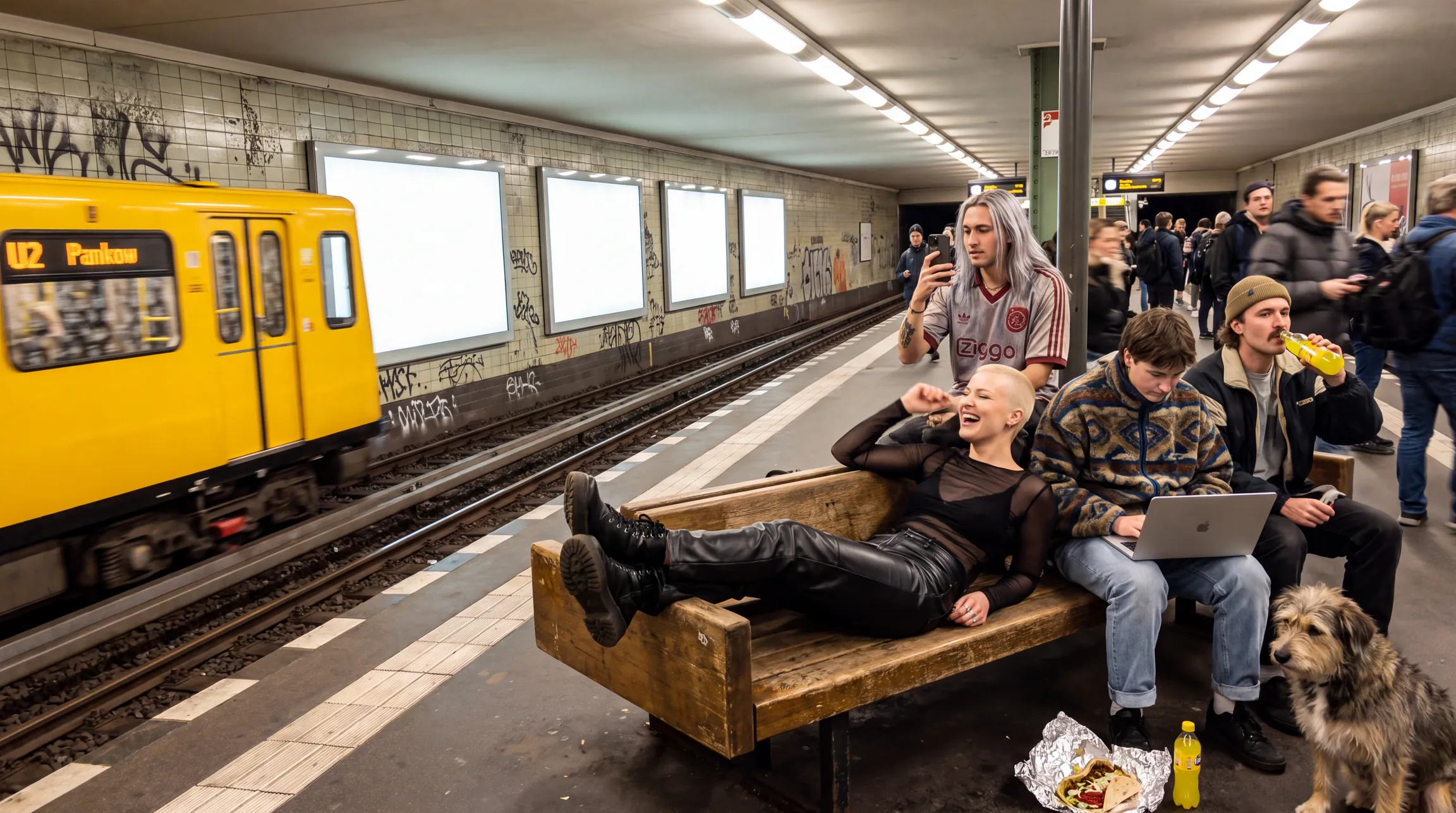
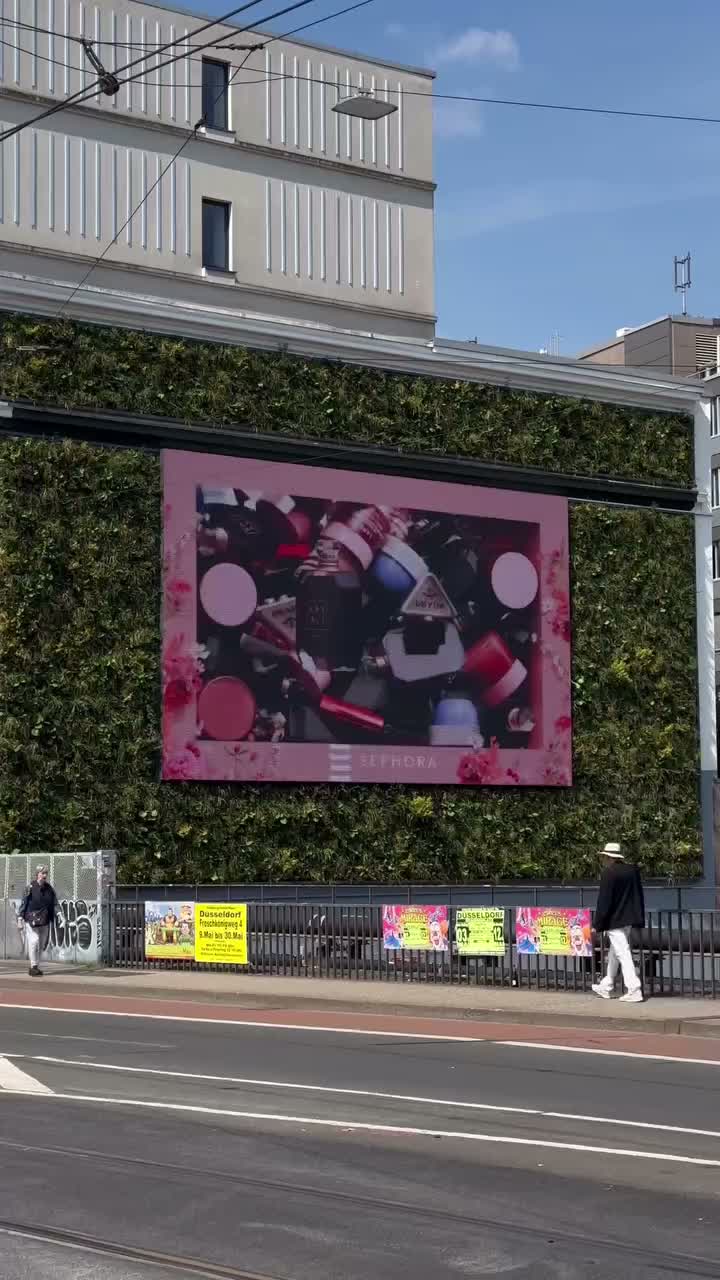
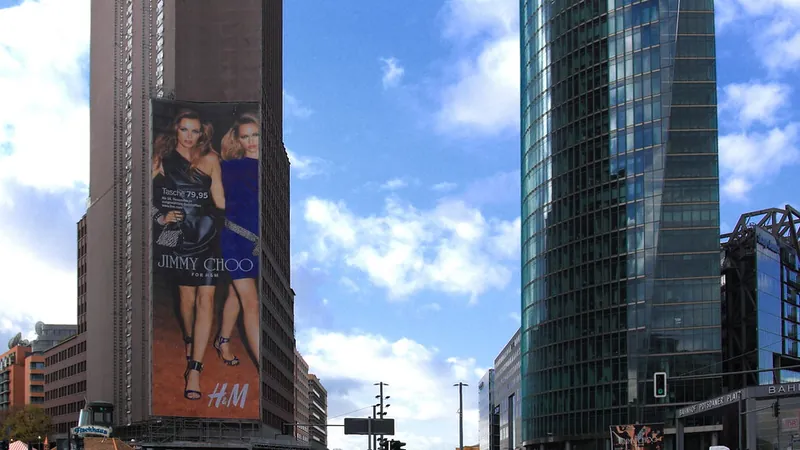
There is no giant corner LED on Berlin’s streets. 3D works in two other ways: depth on eye-level portrait screens, and a sequence that moves an object from screen to screen.
All six are WallDecaux networks, with counts from the operator’s 2026 media guide (WallDecaux Media Guide 2026).
3D has already run on these screens. In 2024, YSL Beauté launched its Loveshine lipstick with a 3D motif on shopping-street screens in Berlin, Hamburg and Düsseldorf, plus augmented reality on the KaDeWe facade (WallDecaux). In 2025, Mugler ran a 3D programmatic campaign on City Light Posters; WallDecaux reports that 77% of people surveyed noticed the 3D effect (WallDecaux).
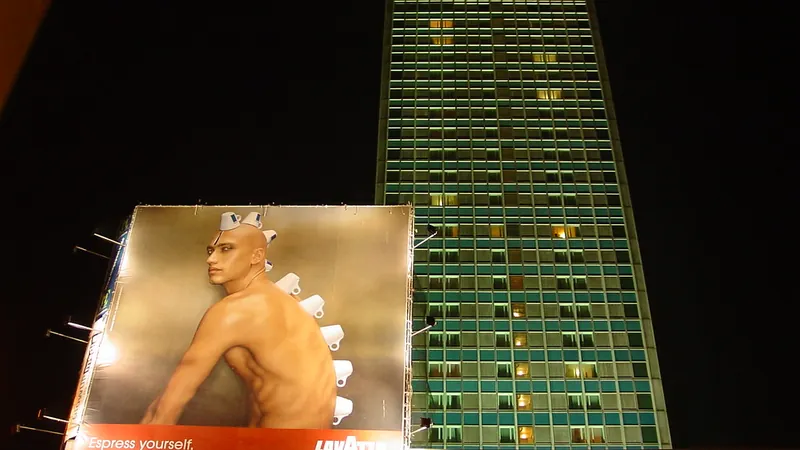
For a true corner illusion, Germany’s 3D screen is elsewhere: The Lighthouse in Hamburg, a corner of more than 530 m² built for anamorphic content (Ströer). A national plan can pair that corner with the Berlin networks.
Alexanderplatz hub (66 screens): €74,982.60 per week, for a 10-second spot played 54 times an hour.
02
Potsdamer Platz hub (32 screens): €36,355.20 per week.
03
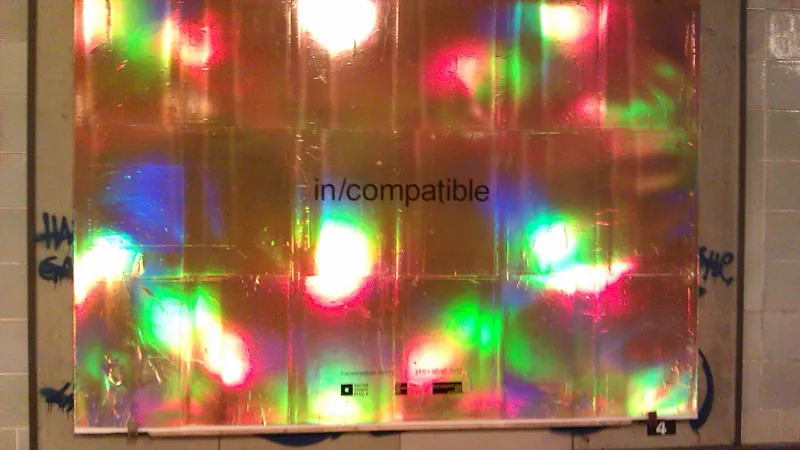
Digital Poster Gallery Friedrichstraße (12 screens): €45,964.80 per month, weekly packages from €4,552.80.
04
Digital Underground Berlin (73 screens): from €18,447.10 to €45,990 per week, depending on frequency.
05
The whole DigitalCityNet (450 screens): from €172,935 to €432,810 per week.
The 3D film is a separate budget. It depends on how many formats it has to fit: portrait street screens, the station gallery, social cuts.
rules
Permits and rules
Booking a network: the operator holds the rights. WallDecaux screens run from 6 am to midnight, and on its premium networks only 10-second spots are allowed, with the creative approved by WallDecaux in advance (WallDecaux Media Guide 2026).
Your own installation on public street land: it is a special use under § 11 of the Berlin Roads Act. The district office takes about a month, with an administrative fee of €100 to €250 plus €15.00 to €19.50 per square metre of advertising per month (service.berlin.de).
On private land: an advertising installation that is not exempt needs a building permit under the simplified procedure of § 63a of the Berlin Building Code (service.berlin.de).
calendar
When to launch in Berlin
01
Berlinale, every February: the film industry in town (Berlinale).
02
IFA Berlin, early September: more than 240,000 visitors in 2026; the 2027 edition runs from 3 to 7 September (IFA).
03
Berlin Marathon, late September: more than 50,000 finishers in 2026; next edition on 26 September 2027 (BMW Berlin Marathon).
04
The fourth quarter: demand peaks, and WallDecaux adds a 10% surcharge on its premium network from week 40 to week 53 of 2026 (WallDecaux Media Guide 2026).
beyond billboards
Not a billboard? The same 3D for shop windows, events and buildings.
Every screen needs a film built for its exact shape, outdoors or indoors. Same studio, same method.
Not on public street land: the digital rights belong to WallDecaux, whose networks are portrait screens. In Berlin, 3D runs as depth effects on those screens and as choreographed sequences, like the 12 screens of the Friedrichstraße gallery. For a true corner illusion, the screen built for it is The Lighthouse in Hamburg.
WallDecaux publishes list prices. In 2026, the 66 screens of the Alexanderplatz hub cost €74,982.60 net per week, and the 12-screen Friedrichstraße gallery €45,964.80 per month, plus VAT and before agency discounts. The 3D creative is quoted separately, depending on the number of formats.
Yes. We can handle the media buying, so the screens are chosen for the creative and the budget stays under control. If you already have a media agency, we deliver the 3D film to their plan.
Not when you book an operator network: the operator holds the rights and approves the creative. Your own installation on public street land is a special use that needs a permit from the district office, and on private land a building permit.
Yes. We create both flat and 3D versions and adapt them to every screen and media owner in your plan, whether that's one flagship billboard or dozens across markets. The technical back-and-forth is our job, not yours.
The creative is a separate line, but it never requires you to buy more media. You're making the impressions you've already paid for work harder: the same screens start generating organic reach on their own.
Ideas and early visuals can use AI. The final 3D is built by our own team, because a real screen with real people in front of it does not forgive approximation.