Chicago's digital out-of-home runs on expressway boards, Loop street screens and the CTA. We design 3D films that work on them, and we can book the media.
Expressway boards, Loop screens, the CTA. 3D built for each one.
We create 3D billboards in Chicago: one film built to the specs of the Chicago Digital Network, JCDecaux's Loop panels or the CTA network, so the depth holds on every format, then cut for social. We can also book the screens with the operators.
One 3D film, built to the exact specs of each screen
Media buying with the operators, or delivery to your agency's plan
You bring the screens and the brand. We bring the idea, the 3D and the delivery, and we keep it simple for you from the first call to the day it goes live.
5 steps3 to 4 weeks from approved brief
Week 01
Week 02
Week 03
Week 04
Live +
Brief
Concept
Production
Delivery
Amplification
Chicago guide
Big expressway boards and eye-level screens. 3D works differently here.
Chicago welcomed 56.8 million visitors in 2025. Its digital screens are sold as networks: 51 large boards on the expressways, 4K panels in the Loop and on the Magnificent Mile, screens across the CTA. We found no corner LED built for anamorphic 3D, so 3D here means depth on big faces and on eye-level screens. Below: the screens, who sells them, the zoning rules and when to launch.
market
The Chicago out-of-home market
US out-of-home revenue reached a record $9.46 billion in 2025, up 3.6%, and digital grew 10.5% to 36.3% of the total (MediaPost, OAAA figures). Chicago welcomed 56.8 million visitors in 2025, who spent a record $21.5 billion (Choose Chicago).
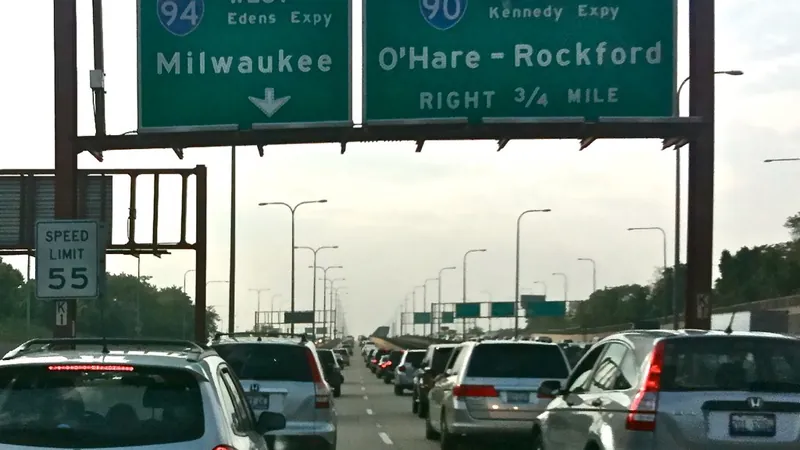
Billboard advertising in Chicago runs on a few long contracts. JCDecaux’s Chicago Digital Network has 51 large digital screens on the expressways, under a 20-year contract with the City signed in 2013 (JCDecaux North America). The CTA’s contract with Intersection, from 1 January 2020, is worth up to $247.5 million and added 775 digital screens to the 425 already on the rail system (CTA). In 2019, OUTFRONT bought 22 static and 16 digital large formats from Total Outdoor, which its CEO described as the only large format inside the Loop (OUTFRONT).
screens
Screens that suit a 3D billboard in Chicago
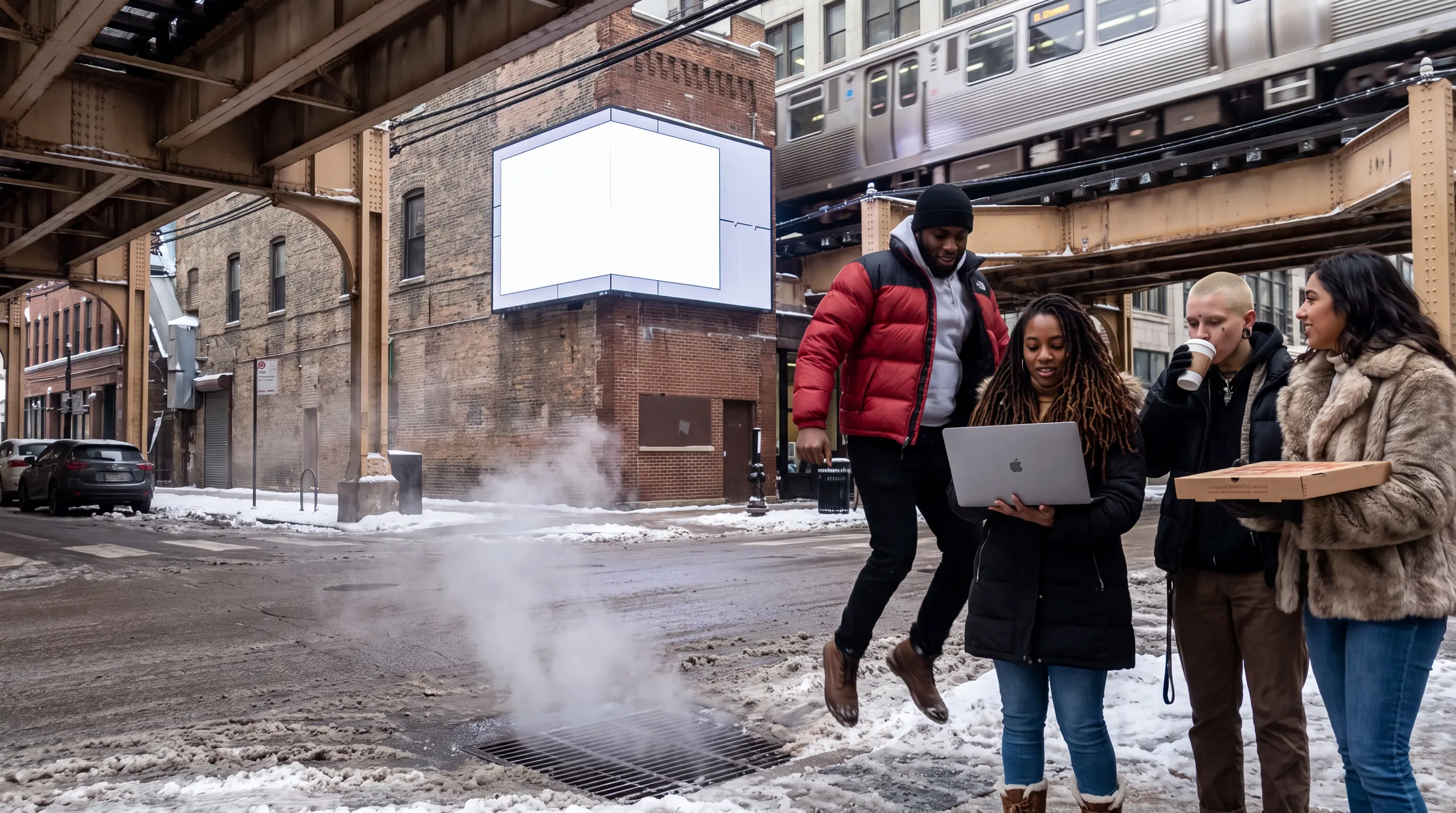
We found no corner LED in Chicago built for anamorphic 3D. 3D works in two other ways: one bold depth effect on very large faces, and depth at eye level on street screens.
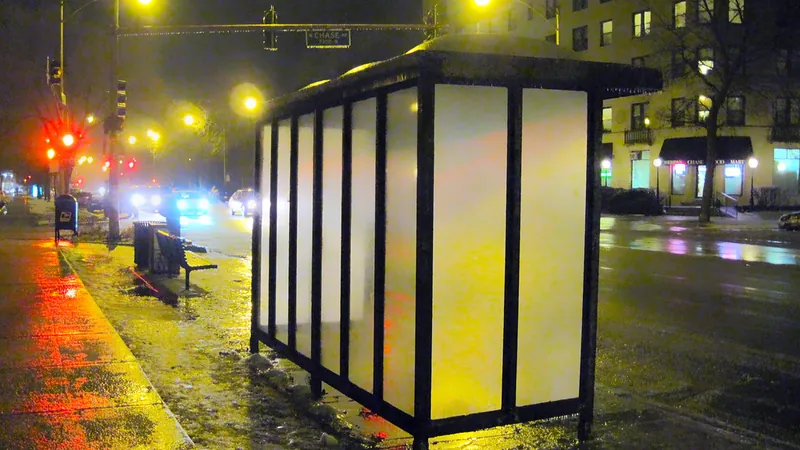
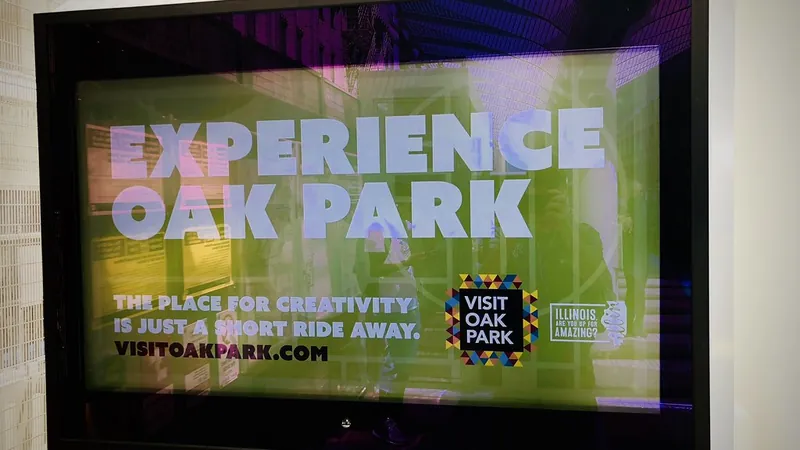
Large-format station displays, platform screens, street-level screens and kiosks
Commuters wait on platforms, which gives a depth loop time to play (CTA)
For a classic corner illusion, the US references are the corner screens of Times Square (Muse by Clio) and the corner cube on the Sunset Strip in Los Angeles (Billboard Insider). A national plan can pair one of them with the Chicago networks.
media owners
Who sells the space
01
JCDecaux North America: the Chicago Digital Network on the expressways, and digital street furniture in the Loop and on North Michigan Avenue (JCDecaux North America).
02
Intersection: CTA advertising, from rail and station screens to large formats, street-level screens and kiosks (CTA).
03
Clear Channel Outdoor: printed and digital billboards, airport media at O’Hare and Midway, and the commuter portal at 500 W. Madison (Clear Channel Outdoor).
04
OUTFRONT Media: static and digital large formats, including the ones inside the Loop (OUTFRONT).
05
Branded Cities: the spectacular at 959 W. Addison, across from Wrigley Field (Billboard Insider).
rules
Rules to know
Distance from homes: city digital signs are not allowed within 125 ft of residential districts. The buffer can be cut by 25% if the sign is off from midnight to 5 a.m. Sign faces are capped at 1,200 sq ft (Chicago Zoning Ordinance, Chapter 17-12).
Expressways: the 2012 municipal marketing ordinance allowed the digital network on city land along the expressways, with zoning changes because of the federal Highway Beautification Act and the Illinois Highway Advertising Control Act, which set 500-ft spacing rules (City of Chicago).
calendar
When to launch in Chicago
01
Lollapalooza, late July to early August: 30 July to 2 August 2026 in Grant Park, next to the Loop and Michigan Avenue screens (Lollapalooza).
02
The Chicago Marathon, in October: 11 October 2026, with the start and finish in Grant Park (Impact Magazine).
03
The Magnificent Mile Lights Festival, the Saturday before Thanksgiving: 21 November 2026. It opens the holiday shopping season on North Michigan Avenue (The Magnificent Mile).
beyond billboards
Not a billboard? The same 3D for shop windows, events and buildings.
Every screen needs a film built for its exact shape, outdoors or indoors. Same studio, same method.
We found no corner screen built for anamorphic 3D in Chicago. 3D works as one bold depth effect on JCDecaux's 20 x 60 ft expressway boards, seen on a long approach, and as eye-level depth on the 86-inch 4K panels of the Loop and North Michigan Avenue. For a true corner illusion, the US references are in New York and Los Angeles.
We found no published rates for Chicago screens, so the media is quoted per screen and per date. The 3D film depends on how many screens and formats it has to fit. We quote both once the screens are chosen.
Yes. We can handle the media buying with the operators, so the screens are chosen for the creative and the budget stays under control. If you already have a media agency, we deliver the 3D film to their plan.
The zoning ordinance keeps city digital signs at least 125 ft from residential districts, a buffer cut by 25% if the sign is off from midnight to 5 a.m., and caps sign faces at 1,200 sq ft. Along the expressways, federal and Illinois highway laws add 500-ft spacing rules.
Yes. We create both flat and 3D versions and adapt them to every screen and media owner in your plan, whether that's one flagship billboard or dozens across markets. The technical back-and-forth is our job, not yours.
The creative is a separate line, but it never requires you to buy more media. You're making the impressions you've already paid for work harder: the same screens start generating organic reach on their own.
Ideas and early visuals can use AI. The final 3D is built by our own team, because a real screen with real people in front of it does not forgive approximation.