
Anamorphic billboards: how the illusion works and where it works
The trick behind every screen that seems to break: one viewpoint, one screen, one scene built for both. What anamorphic means, why the corner matters, and what to check before you book.
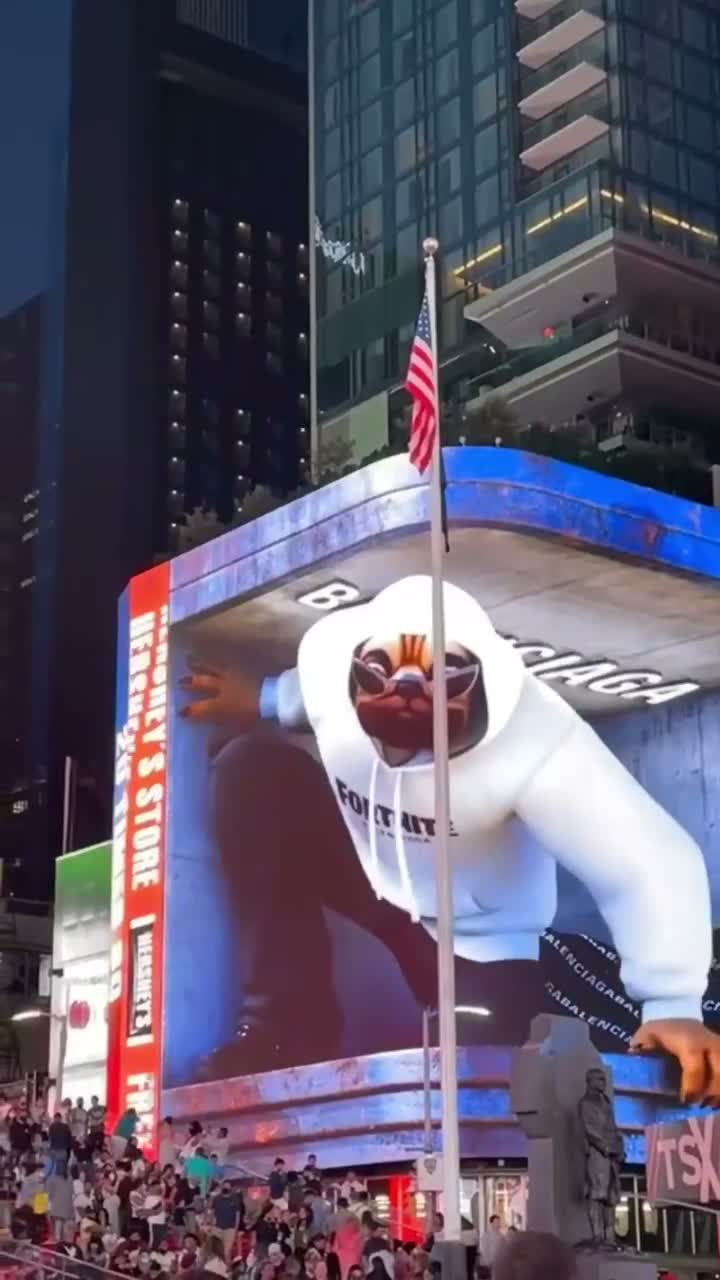
What anamorphic means
Anamorphic is an old word for a simple idea: an image that only looks right from one place. Street artists use it to paint holes in the pavement. A 3D billboard uses it to make a screen look like a box you can see into, with something inside that leans out.
The scene is built in 3D, then rendered from the exact spot where the crowd stands. From there, the perspective of the virtual scene matches the perspective of the real building, and the eye accepts the illusion. From anywhere else, it looks stretched. That is why the viewpoint is the first thing we ask for.
Why corner screens work best
A corner screen has two faces meeting at a right angle. The scene is built as a box whose inner corner matches the real one. The product seems to sit inside the building and step out of it. This is the strongest version of the illusion, and it is what most people picture when they hear “3D billboard”.
Corner screens are rare. Most of the screens brands book are flat: facades, atriums, station panels. On a flat screen the illusion is built differently, with a frame drawn inside the screen and a sense of depth behind it. It is softer, and it works on far more inventory. Our guide to the two formats goes into the choice.
What makes it believable
The geometry. The virtual box must match the real screen to the centimetre. We work from the screen’s real dimensions and a photo from the crowd’s viewpoint, not from a spec sheet alone.
The light. The scene is lit like the street: the sun where it is at the time people pass, reflections on the product, shadows that fall the right way.
The edge. The moment the product crosses the frame is the moment people film. It is timed, not accidental.
The loop. The film repeats on the screen. The end must lead back to the start without a cut people notice.
What to check before you book
- Is it a corner screen or a flat one?
- Where does the crowd stand, and how long do they stay?
- What are the real dimensions and the pixel map?
- What does the media owner accept, in file format and content?
The screen brief checklist is the list we send media owners. It answers all four.
What it costs and how long it takes
An anamorphic asset for a corner screen starts at $15,000 and takes 3 to 4 weeks from the approved brief, with two rounds of changes. The price guide explains what moves the number.
See it on your screen
Send us the screen. We build a free static concept within 72 hours from the crowd’s viewpoint, so you see the illusion before you commit to it.