


How much does a 3D billboard cost? Creative, media and screen explained
A 3D billboard has up to three costs: the 3D film, the screen time and, rarely, the screen itself. What each one depends on, how to budget them, and where our projects usually land.
How much does a 3D billboard cost?
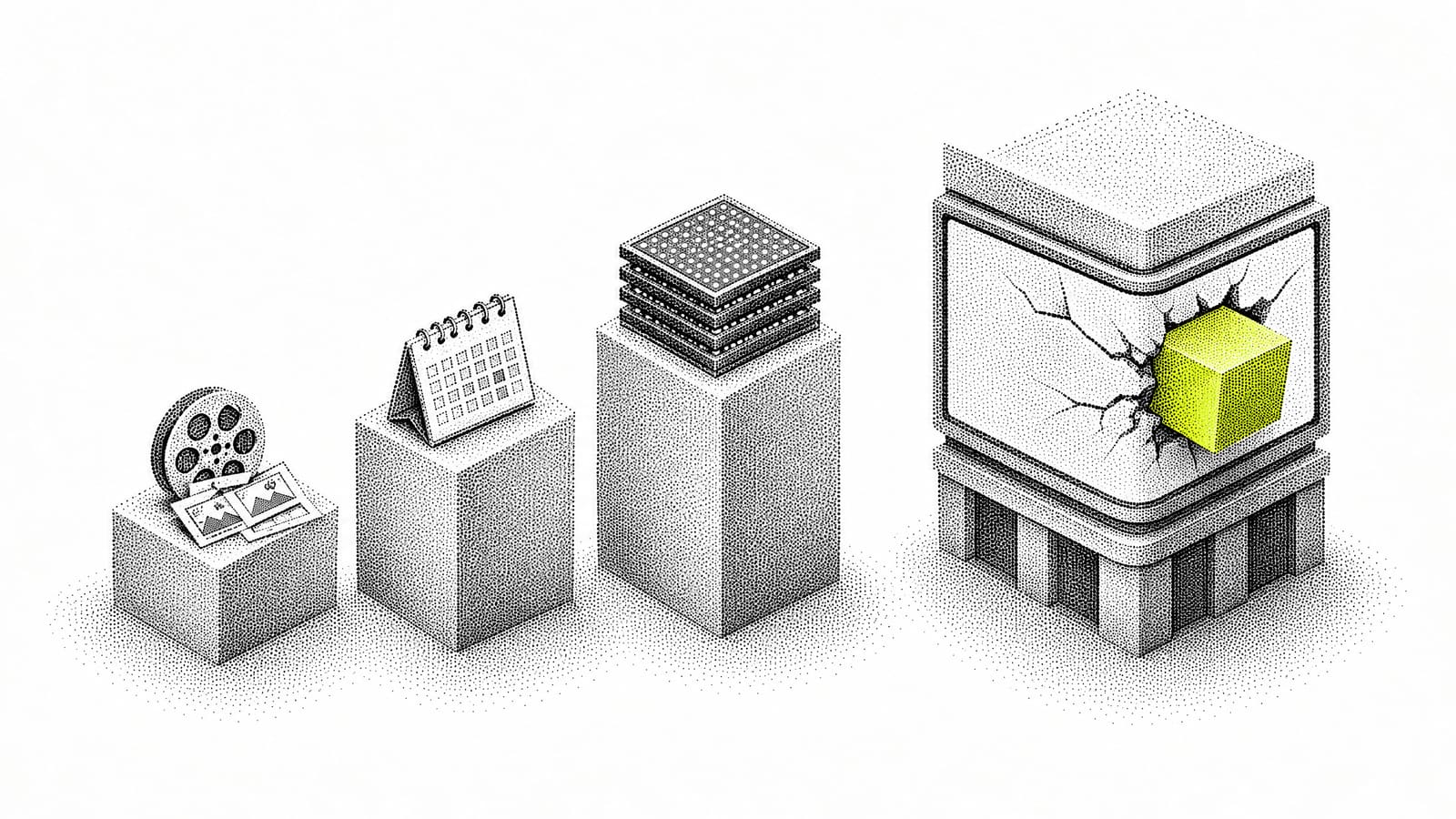
3D billboard cost splits into three parts: the 3D creative, the media (time rented on an existing screen) and, only if you build one, the LED screen itself. Most brands only pay for the first two. The creative has no fixed price: the campaigns we are built for usually land around €40,000.
The three costs behind “3D billboard price”
A “3D billboard price” can mean three different things. Mixing them up is how budgets go wrong.
| What you pay for | Who you pay | How it is priced | |
|---|---|---|---|
| 1. The creative | The 3D film built for the screen, and its versions | A 3D studio like KOSMO® | Per project, quoted on the screens and the scene |
| 2. The media | Time on an existing digital screen | The media owner, or a media agency that buys for you | Per slot, per share of the loop, per week, or per thousand impressions |
| 3. The screen | The LED hardware, its structure and installation | An LED manufacturer or integrator | Per project: panels, structure, power, permits, upkeep |
Brands pay for 1 and 2. Media owners and property owners pay for 3.
1. The creative: what an anamorphic billboard costs to make
The creative is the part we make: the film that makes a product lean out of the screen, built for that screen’s exact shape and the spot where people stand. That is what an anamorphic billboard is: an image distorted on purpose so it looks three-dimensional from one viewpoint.
There is no fixed price per anamorphic asset. Be careful with anyone who quotes one before seeing your screen. The price depends on how many screens and formats the idea runs on, how much resizing each one needs, and how far the scene goes.
As a reference for an anamorphic billboard price, the projects we are built for usually land around €40,000: a brand campaign where one idea is built in 3D and adapted to the screens of a media plan. It is a reference, not a floor.
What moves the number
| Driver | Pushes the price up | Keeps it down |
|---|---|---|
| Number of screens | A network across several cities or countries | One hero screen |
| Screen formats | Corner, curved and flat screens in the same plan | One format, or screens with the same layout |
| Resizing | Unusual ratios, split faces, zones that must stay clear | Standard landscape or portrait layouts |
| Scene complexity | Fur, liquid, glass, smoke, crowds, characters | One product, clean materials, one strong move |
| Length and cuts | 6, 10, 15 and 30-second cuts of the same film | One length for the whole plan |
| Versions and languages | Text rebuilt in each language, product variants | One language, one product |
| Social cut | A separate film made later for social | Social cuts planned from the same 3D scene on day one |
Resizing is real work. Each face has its own resolution, some screens have a seam or a zone that must stay clear, and the illusion depends on where the viewer stands. So the scene is recomposed for each layout, not stretched. Corner and flat screens are compared in our guide to the two formats.
Materials cost render time. Water, fur, glass and smoke take longer to simulate and render than clean plastic, and every round of changes renders again.
Languages are versions. Each language, product variant and screen ratio is a separate file, and text that sits inside a 3D scene has to be rendered again in each language. Decide them before production.
Why the first screen costs the most
Most of the cost sits in the first asset: the idea, the models, the lighting, the animation. The next screen reuses all of it, so each extra screen costs less than the first.
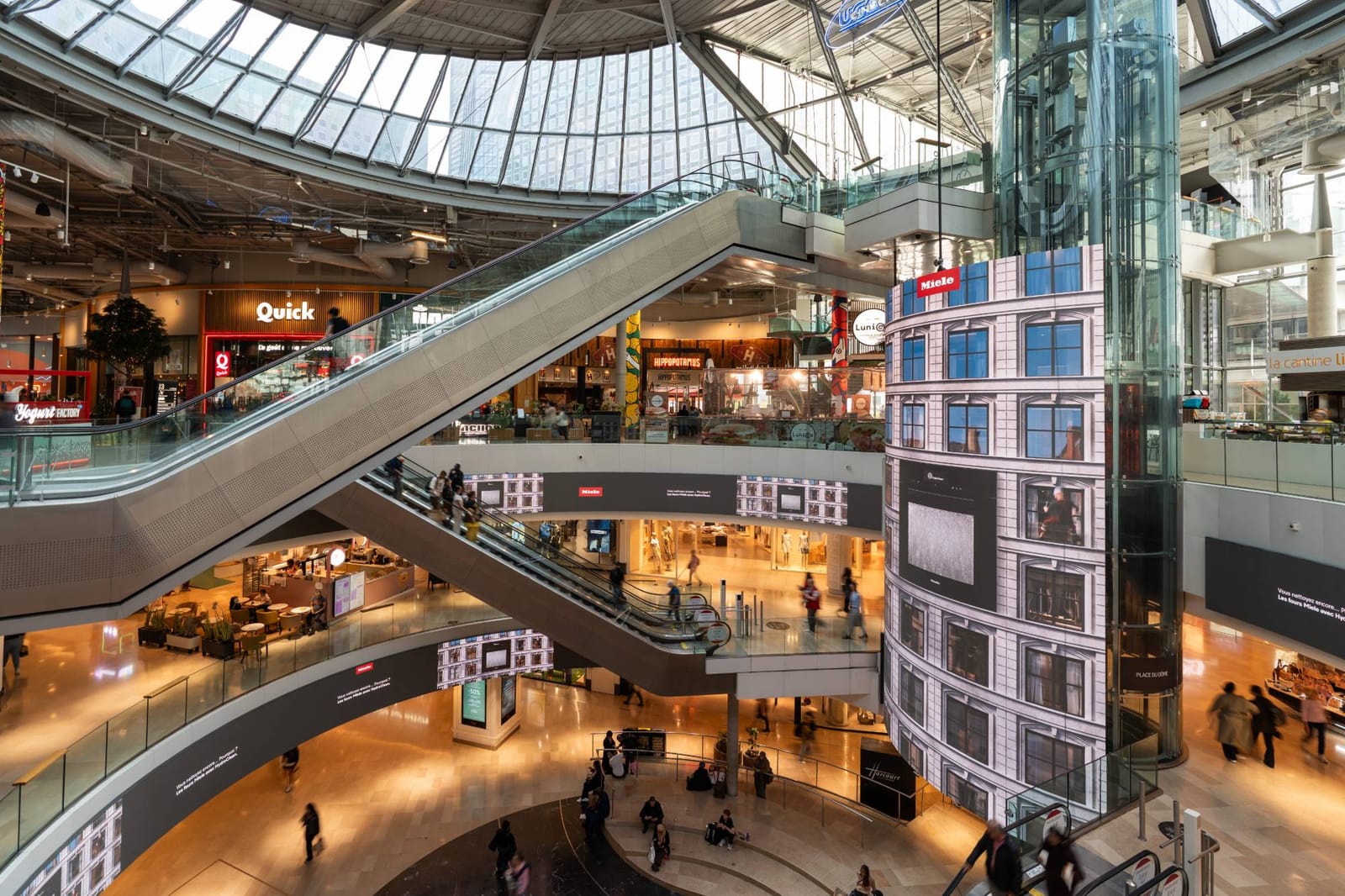
For Miele’s HydroClean launch, one CGI idea ran on 81 screens in 76 cities across four countries, in five languages, with more than 300 versions cut from it. That scale only works because the idea was built once. The full story is in the Miele HydroClean case study.
2. The media: renting time on the screen
Media is time on a screen someone else owns: you buy a share of what it shows, not the screen. The short version is below; the full guide to DOOH advertising cost covers CPMs, rate cards and takeovers.
How DOOH is priced
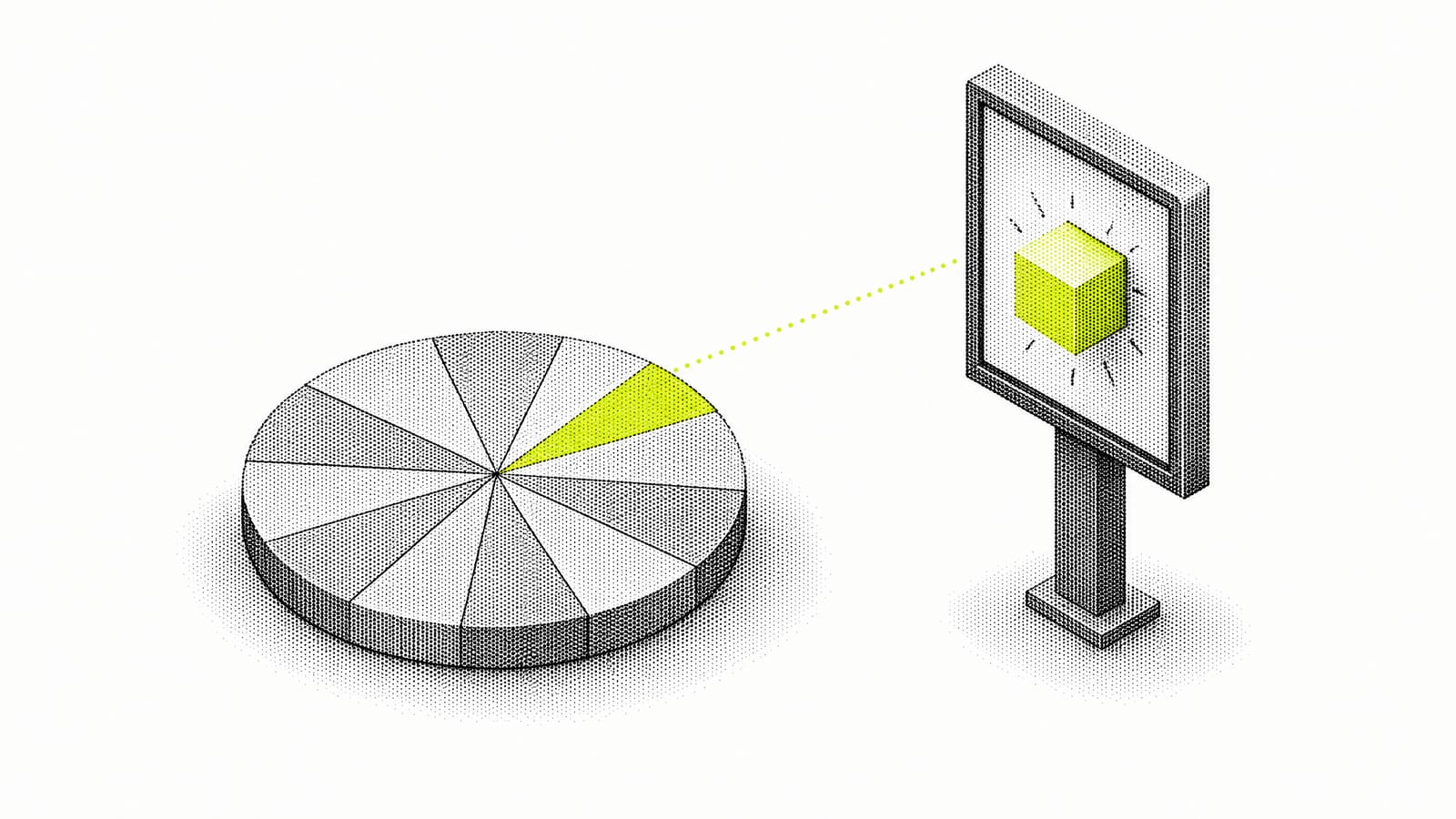
A digital screen runs a loop: a sequence of ads that repeats all day. The IAB’s digital out-of-home glossary gives the example of a six-minute loop with 11 to 15-second ad positions that repeats 10 times an hour, so each ad plays 10 times an hour. Your DOOH cost depends on how much of that loop you buy, where and for how long.
The terms you will see on a media quote:
- Slot (or spot): one ad position in the loop, with a fixed length in seconds. Your film has to fit it.
- Share of loop (share of voice): the part of the loop’s airtime you get. More plays per hour, higher price.
- Flight: how long the campaign runs, in days or weeks.
- Takeover: all the airtime on a screen, or every screen in a location, for a set period.
- CPM: cost per thousand impressions, the currency of programmatic buying. The IAB’s own example: $2,000 for 100,000 impressions is a $20 CPM.
- Proof of play: the log showing your ad actually ran. Ask for it.
What makes the media more expensive
- The location. A landmark screen in a big city costs more than a mall screen in a suburb.
- The shape. Screens built for the effect are scarce: Marketing Brew reported in 2023 that brands want curved or “box-shaped” screens, and that 3D billboards are often only available in big cities like New York or London.
- The share of loop. A full takeover costs more than one slot among several advertisers.
- The dates. Launch weeks, holidays and big events are in demand.
Benchmarks are not quotes
DOOH rates are negotiated site by site and date by date, so a range copied from the internet will not be the price of your screens. Dated benchmarks, from programmatic CPMs to 4-week rates by US market, are in our guide to DOOH advertising cost. For a real number, ask the media owner for a quote on your exact sites and dates, or let us price the media with the creative.
One check before you pay for anything: does the screen play video? JCDecaux UK states in its FAQ that it cannot run motion copy on roadside formats, because motion distracts drivers. An anamorphic film needs a screen that accepts motion. The screen brief checklist lists what to confirm with the media owner.
3. The screen: what a 3D LED billboard costs to buy
This is the “3D billboard cost to buy” or “3D billboard screen price” question. It is not our business: we do not sell or install screens. Here is how a quote is built.
There is no special 3D screen. An anamorphic billboard plays on standard LED panels: the depth comes from the content, built for the screen’s geometry and the viewer’s position. A corner or curved shape only makes the effect stronger.
What a 3D LED billboard price includes:
- The LED panels. The price rises with size, brightness (an outdoor screen must stay readable in daylight) and pixel pitch, the distance between two LED clusters. Samsung’s rule of thumb is about 8 feet of viewing distance per millimeter of pitch, and it warns that a finer pitch will almost certainly cost more.
- Structure, installation and control. Steel, mounting, maintenance access, the media player and its software.
- Permits. Planning and advertising consent, where the city requires them.
- Running costs. Electricity, maintenance, insurance, and selling the airtime.
Published price ranges for 3D LED billboards come mostly from vendors and vary widely. For a real number, ask LED manufacturers such as Samsung or Daktronics, and a local integrator, for a quote on your site.
If you own or sell a screen and want 3D content for your advertisers, see how we work with media owners on the partners page.
How to budget a 3D billboard campaign
Start from the screens. The screens decide the format, the number of versions and the dates, so they decide the creative cost too.
A budget structure (no numbers: yours depend on your plan):
- Media: screens, times weeks, times share of loop, per city.
- Hero creative: the 3D film for your main screen.
- Adaptations: every other screen, format, length and language in the plan.
- Social: the cut or the FOOH film that carries the campaign to people who never walk past the screen.
- Capture: filming the live screen from the street for your own channels.
- Room for changes: two rounds are included in our projects. More rounds cost time, and time can cost money.
Then check the balance: a big media plan with a thin creative shows an ad nobody stops for, and a big creative on one screen for one week reaches few people.
How to cut cost without killing the effect
- Use one idea everywhere. Adapting a scene costs less than a new idea per screen.
- Pick one hero screen. Put the corner or curved screen where it matters and run flat versions on the rest of the network.
- Keep one strong move. A product leaning out of the frame reads in seconds; a five-step story costs more and gets lost on a street. Miele chose three 10-second exposures over one 30-second film for that reason.
- Choose materials on purpose. Water, fur and glass are worth it when they are the product. Otherwise they are render time.
- Lock screens and languages before production. A language added after the render means rendering again. The 3D billboard timeline shows where projects lose time.
- Plan social on day one. The same 3D scene can feed the screen and the social cut, so you do not pay for two productions.
What you get for the money
A KOSMO® 3D billboard project includes:
- A concept built for your screen and for the spot people see it from.
- The 3D film, rendered to the media owner’s exact format.
- The versions for every screen, length and language in the plan.
- Two rounds of changes.
- Delivery 3 to 4 weeks after the brief is approved.
- On request, a social cut or a FOOH film made from the same 3D scene.
What nobody can sell you is a guaranteed number of views. A strong idea on the right screen and the right dates gives the campaign its best chance of being filmed and shared.
Can KOSMO® handle the media buy?
Yes. If your screens are booked, we plug into your plan. If not, we can buy the media: you keep control of the budget, and the screens are chosen to fit the idea instead of the idea being bent to fit the screens.
We have no exclusive media-owner partner, so we can look across networks such as JCDecaux, Clear Channel, Ströer or Ocean Outdoor, and local operators. Across 150+ campaigns in 14 countries, we have adapted work to 750+ screens.
FAQ
How much does a 3D billboard cost per month?
The creative is a one-off cost. The media is rented by the week or by the flight, and its price depends on the site, the share of the loop and the dates, so ask for a quote on your exact screens.
Is an anamorphic billboard more expensive than a normal digital billboard?
On the same flat screen, the slot usually costs the same whatever film plays in it: the extra is the 3D creative. Corner and curved screens built for the effect are scarcer, and their price can reflect it.
How does billboard advertising cost compare with a 3D billboard?
The media follows the same rules for both: site, size, dates and share of the loop. The difference is the creative: a 2D file on one side, a 3D production built for the screen on the other.
Does the DOOH price include the creative?
Usually not. Media owners sell airtime, and the creative is a separate line, made by a studio or agency and delivered to the media owner’s specs.
Is a 3D billboard worth the cost?
It is when the screen, the idea and the dates line up, and the campaign is planned to be filmed and shared. A 3D billboard nobody films is an expensive ad. One that people film keeps working after the flight ends.
Want a number for your screen?
Send us the screen, the dates and the brief, and we come back with a quote built for your plan: the creative, the versions and, if you want, the media. Tell us about your campaign. Not ready to talk budget yet? Start with a free concept for your screen.