How much does DOOH advertising cost? Digital billboard prices explained
What it costs to run ads on digital screens: CPM, flat rates and takeovers, dated prices by market, what moves them, and how to budget the media next to the creative.
How much does DOOH advertising cost?
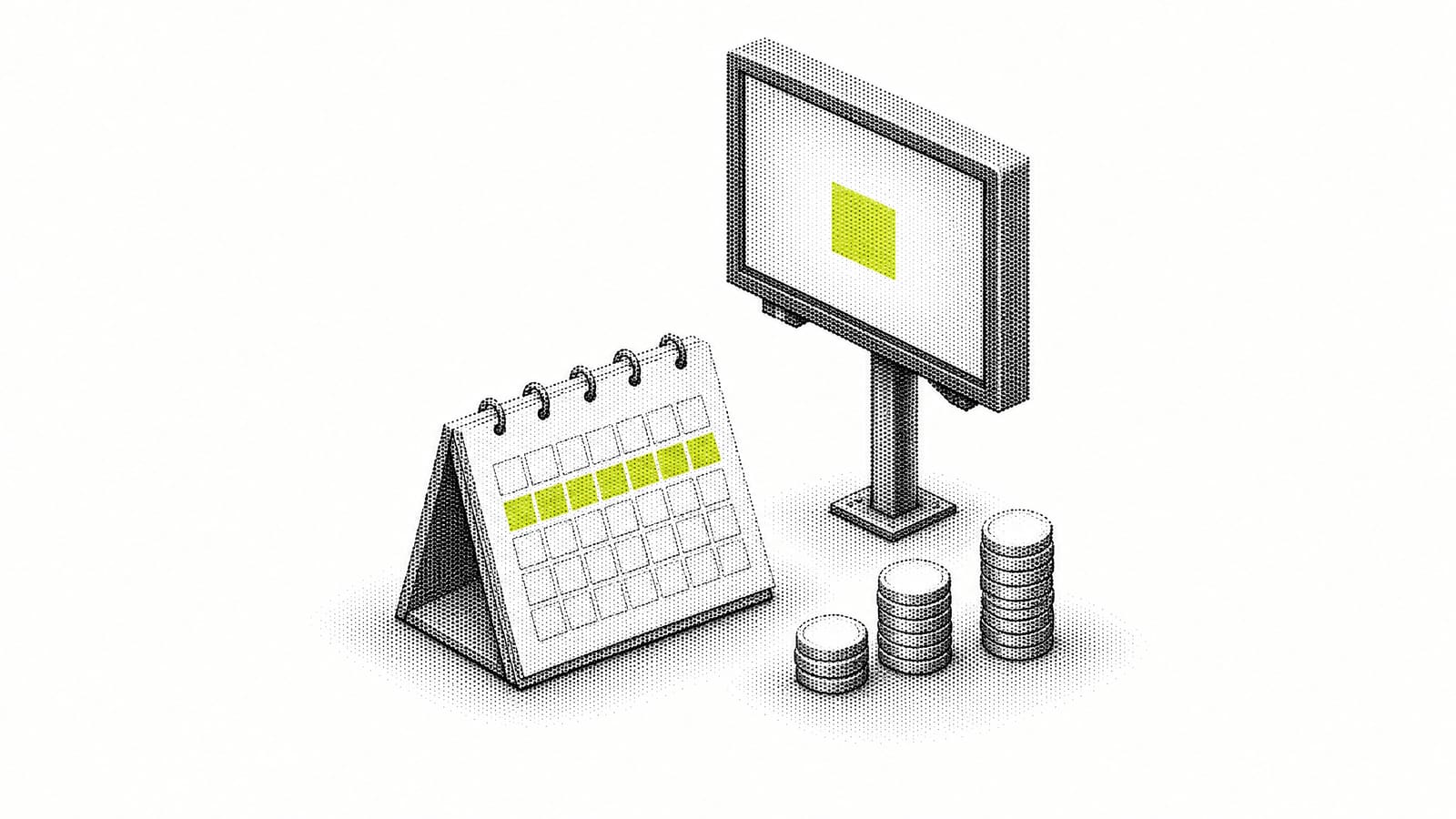
DOOH advertising cost depends on how you buy. Programmatic screens sell by CPM: Place Exchange reported an average of $7.62 per thousand impressions in the second half of 2024. Direct bookings sell a share of a screen’s loop for a flat rate per week or per 4 weeks. Landmark screens sell takeovers, priced on request.
For one digital billboard in the US, AdQuick, an out-of-home marketplace, reports a median of $2,000 to $4,800 per 4 weeks depending on the size of the market, based on what advertisers paid between July 2025 and June 2026.
These are benchmarks to size a budget, not quotes. The real price is set per site, per date and per share of the loop. And it covers the media only: the creative is a separate line. If DOOH itself is new to you, start with what DOOH means.
DOOH pricing models
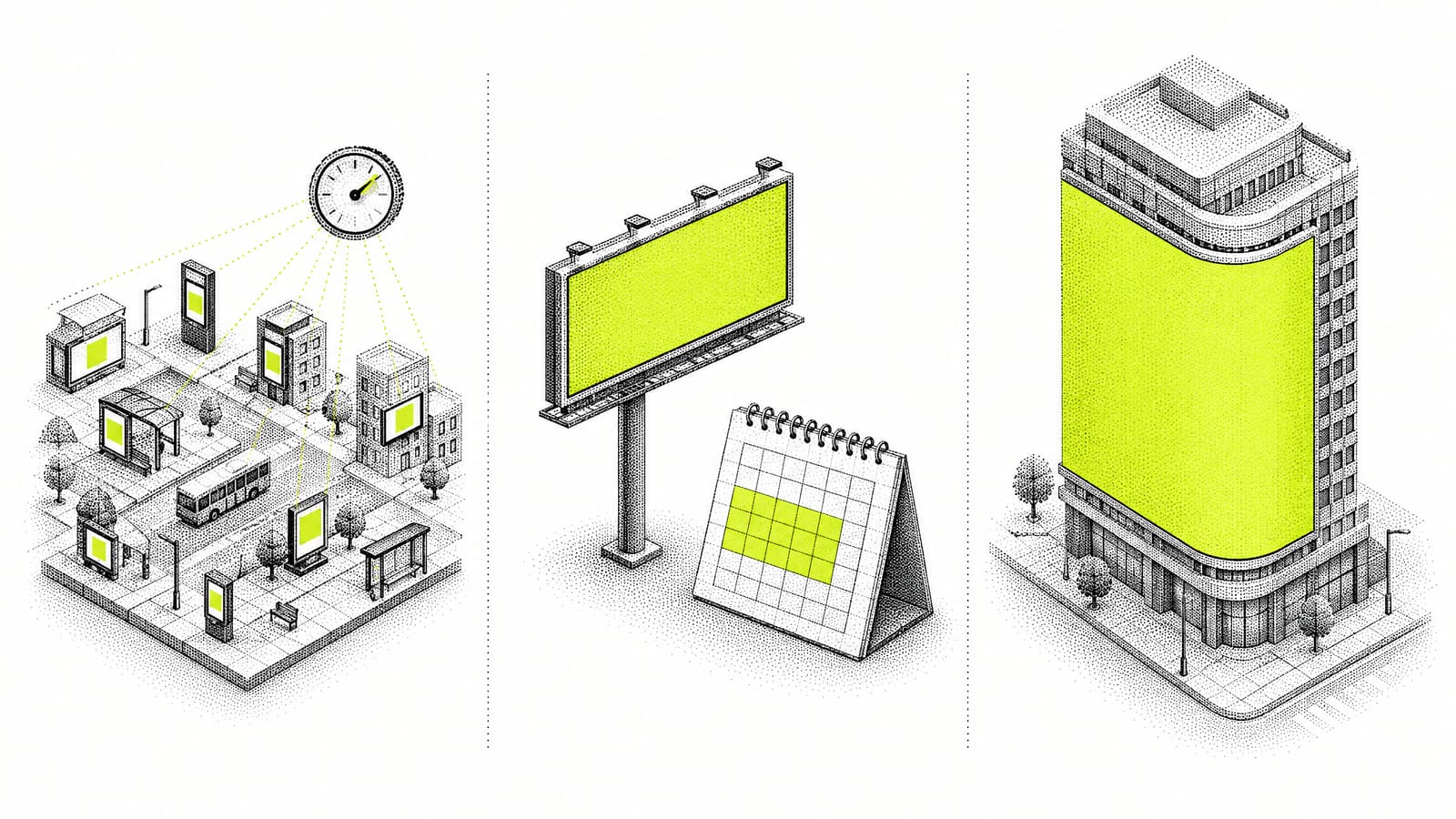
A digital screen plays a loop: a sequence of ads that repeats all day. The IAB’s DOOH glossary gives the example of a six-minute loop that repeats 10 times an hour, so each ad plays 10 times an hour. Every pricing model is a way of selling a piece of that loop.
| Model | What you pay for | Use it when | Watch out for |
|---|---|---|---|
| Programmatic (CPM) | Each thousand estimated impressions, bought through a buying platform (DSP) | You want many screens, targeting by hour or audience, or a small test | Impressions are modeled; platform fees can sit on top of the CPM |
| Flat rate (direct) | A fixed share of one screen’s loop for a week, 2 weeks or 4 weeks | You need a specific screen on specific dates | The hours the screen runs and how many advertisers share the loop |
| Share of voice | A bigger slice of the loop: 2 slots instead of 1, or a set share of airtime | The screen matters and you want frequency | The price rises with the share |
| Takeover | All the airtime on a screen, or every screen in a venue, for an hour, a day or longer | A launch, a landmark, a 3D film you want people to film | The highest price per day, and the earliest booking |
| Pay per play | Each play of your ad, under a daily cap, on self-serve platforms | A local brand testing with a small daily budget | Short plays spread across the day |
What is a good CPM in DOOH?
CPM means cost per thousand impressions. The IAB’s own example: $2,000 for 100,000 impressions is a $20 CPM. In DOOH, an impression is an estimate: the media owner models how many people were likely in front of the screen when your ad played.
Two dated benchmarks from US platforms:
- Programmatic DOOH CPM: Place Exchange’s report on the second half of 2024 put the average programmatic out-of-home CPM at $7.62, up from $7.16 in the first half (MediaPost, February 2025).
- Digital billboards bought directly: on AdQuick, the median CPM ran from $20.25 to $30 depending on the market, between July 2025 and June 2026.
Why DOOH CPM rates differ so much
The two numbers do not measure the same thing.
- The screens. Programmatic averages mix many venue types, from transit and retail to doctors’ waiting rooms. A large roadside or city-center digital billboard is a bigger, scarcer unit.
- What counts as an impression. AdQuick notes that its digital CPMs are advertiser-share CPMs: they count only the share of the loop your campaign owns, not the screen’s whole audience.
- Fees. A programmatic CPM can be quoted before or after platform fees. Ask which one you are looking at.
So the average DOOH CPM matters less than a like-for-like comparison: same kind of screen, same impression method, same fees.
How much does a digital billboard cost per month?
Direct bookings are priced per period, often 4 weeks rather than a calendar month. Check the period before you compare quotes.
The most useful public dataset we found is AdQuick’s record of what advertisers actually paid on its marketplace for US digital billboards, from July 2025 to June 2026. Markets are ranked by size (DMA), from the biggest metros down.
| US market | Median 4-week rate per screen | Typical range | Median CPM |
|---|---|---|---|
| Top 10 markets | $4,800 | $2,950 to $9,000 | $27.00 |
| Markets 11 to 50 | $3,200 | $2,250 to $4,650 | $27.50 |
| Markets 51 to 100 | $2,000 | $1,300 to $2,950 | $20.25 |
| Markets 101 and smaller | $2,000 | $1,450 to $2,500 | $30.00 |
These are transacted prices, not rate cards. The typical range runs from the 25th to the 75th percentile. Landmark screens, and corner screens built for 3D, are not typical inventory: expect them above these medians.
Digital billboard cost for a day
On a direct booking, divide the period price by its days: the top-10 median of $4,800 for 4 weeks works out to about $171 a day.
Some self-serve platforms let you buy by the day. Blip, a self-serve digital billboard platform, sells single plays of 7.5 to 10 seconds with no minimum spend. On its page for Burlington, New Jersey, a $20 daily budget buys about 491 plays on average, and $100 about 2,455 (checked October 2026). That is about 4 cents a play, on local roadside boards.
A landmark takeover can cost six figures a day: see Sphere below.
Worked example: from the loop to the price
The numbers below are hypothetical, to show the math. Only the loop comes from the IAB example.
- The screen runs 18 hours a day, with a six-minute loop: your ad plays 10 times an hour.
- Plays: 10 × 18 = 180 a day, or 5,040 over 4 weeks.
- Price (hypothetical): $4,800 for 4 weeks. That is about $171 a day, or about 95 cents a play.
- Audience (hypothetical): the media owner estimates 240,000 impressions for your share of the loop. $4,800 divided by 240 thousand gives a $20 CPM.
- Double the share: two slots in the loop give you 360 plays a day, at roughly twice the price.
What drives the cost of digital billboard advertising
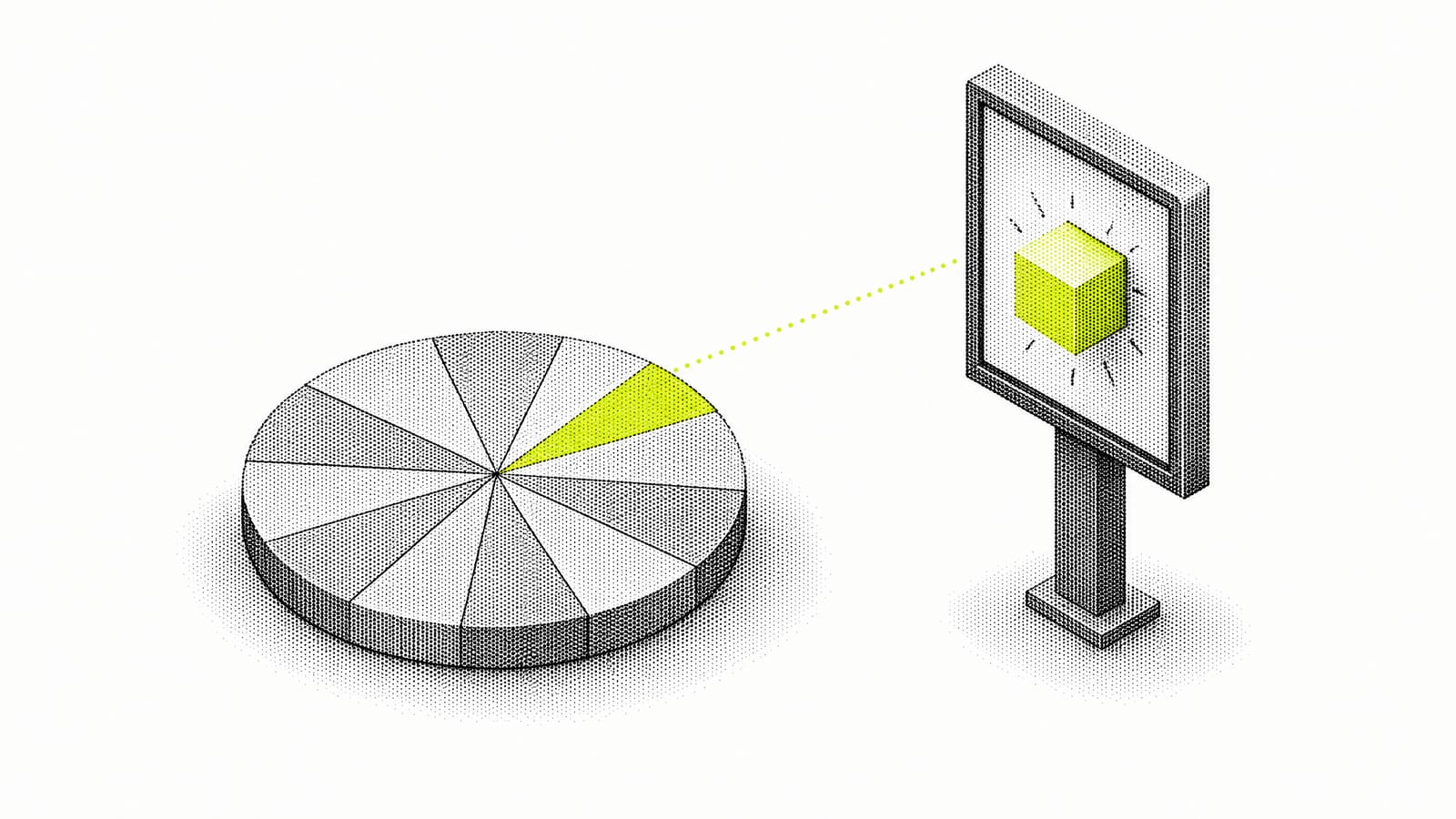
- Location and audience. Traffic, footfall and who passes by.
- Size and shape. Big formats cost more. Corner and curved screens built for 3D are scarce, and mostly found in big cities.
- Share of the loop. One slot among 8 advertisers, or the whole screen.
- Dates. Launch weeks, holidays and big events are in demand.
- Daypart. Rush hours cost more than the middle of the night.
- Flight length. A short flight often costs more per week than a long one.
- Motion allowed. Many roadside screens only show still images. The US Federal Highway Administration’s 2007 guidance for signs along federal-aid highways recommends about 8 seconds per display, and lists, among standards some states use, static messages without animation, scrolling or full-motion video. JCDecaux UK states that it cannot run motion copy on roadside formats. A video, and any anamorphic 3D film, needs a city, venue or landmark screen that plays motion.
- Landmark premium. You pay for the place and its fame, not only the audience.
- Extras. Minimum spends, platform fees, and changes to the copy: JCDecaux UK charges £500 to change digital copy outside working hours.
Digital billboard advertising cost in the UK
- Entry point. Alight Media, a UK out-of-home company, lists its classic and digital 6-sheet formats from £49 per week, with the price varying by location and demand (checked October 2026).
- Self-serve. In June 2026, the media group Global launched AdPower, a self-serve platform to book its UK outdoor and audio networks.
- Large formats. Roadside, rail and mall screens are quoted per site and per period.
- Piccadilly Lights. Landsec owns it and Ocean Outdoor runs the advertising. From January 2027, full-screen takeovers move from one 40-second slot per hour to two 60-second takeovers per hour, invidis reported in September 2026. There is no public price.
For screens that suit a 3D film in the capital, see anamorphic billboards in London.
Times Square, Sphere and other landmark screens
- Times Square. We found no reliable, dated public price. Estimates online come from vendors and differ by more than ten times. Ask for a quote on the exact screen and dates. Several corner screens there are built for 3D: see anamorphic billboards in New York.
- Las Vegas Sphere. Marketing Brew reported in November 2023 that ads on the Exosphere could cost $450,000 for a day to $650,000 for a week. More landmark screens, with their sources, are in our guide to famous 3D billboards.
Landmark prices are negotiated, and they move with the calendar. If you need one on a launch date, ask early.
Programmatic DOOH: minimums and fees
Programmatic DOOH means buying screens through software: you set screens, hours, budget and maximum CPM in a demand-side platform (DSP), which buys from the media owners’ supply-side platforms (SSPs).
- Mostly private deals. In Place Exchange’s H2 2024 report, 95% of programmatic out-of-home spend ran through private deals with selected media owners, not the open auction.
- Minimums. They vary by route. Some self-serve platforms, like Blip, have no minimum spend. Managed services and agencies may set one. Ask before you plan.
- Fees. The DSP, the SSP, audience data and the agency can each take a share. Ask for the all-in CPM and for the part of your budget that actually reaches the media owner.
- Proof of play. The IAB defines it as the logs that show your ad actually played. Ask for them.
How to budget DOOH media next to the creative
The media price buys airtime. It does not include the film that plays in it.
For an anamorphic 3D billboard, the media is the same rate card as any booking on that screen. The extra cost is the 3D creative. There is no fixed price per anamorphic asset: it depends on the resizing, the number of screens and formats, and the scene. The projects we are built for usually land around €40,000. The full breakdown is in our 3D billboard cost guide.
Build the budget in this order:
- Screens: cities, sites, dates, share of loop.
- Media: the price of those screens, fees included.
- Creative: the hero film for your main screen.
- Adaptations: every other screen, length and language in the plan.
- Capture: filming the live screen, so the campaign lives on social after the flight.
How to lower your DOOH cost
- Daypart. Buy the hours your audience is there, not 24 hours.
- Buy the share you need. One slot on the right screen beats a takeover on the wrong one.
- One landmark, then a network. Put the hero film on one strong screen and run versions on cheaper network screens.
- Test, then book. Run a programmatic test for a few weeks to learn which screens and hours work, then book the best ones directly.
- Move your dates. Avoid the busiest weeks if your launch allows it.
- Commit longer. Longer flights usually lower the price per week.
How much does a digital billboard cost to buy or build?
Owning a screen is a different question from renting time on it, and not our business. We found no reliable public price, so here is what a quote covers.
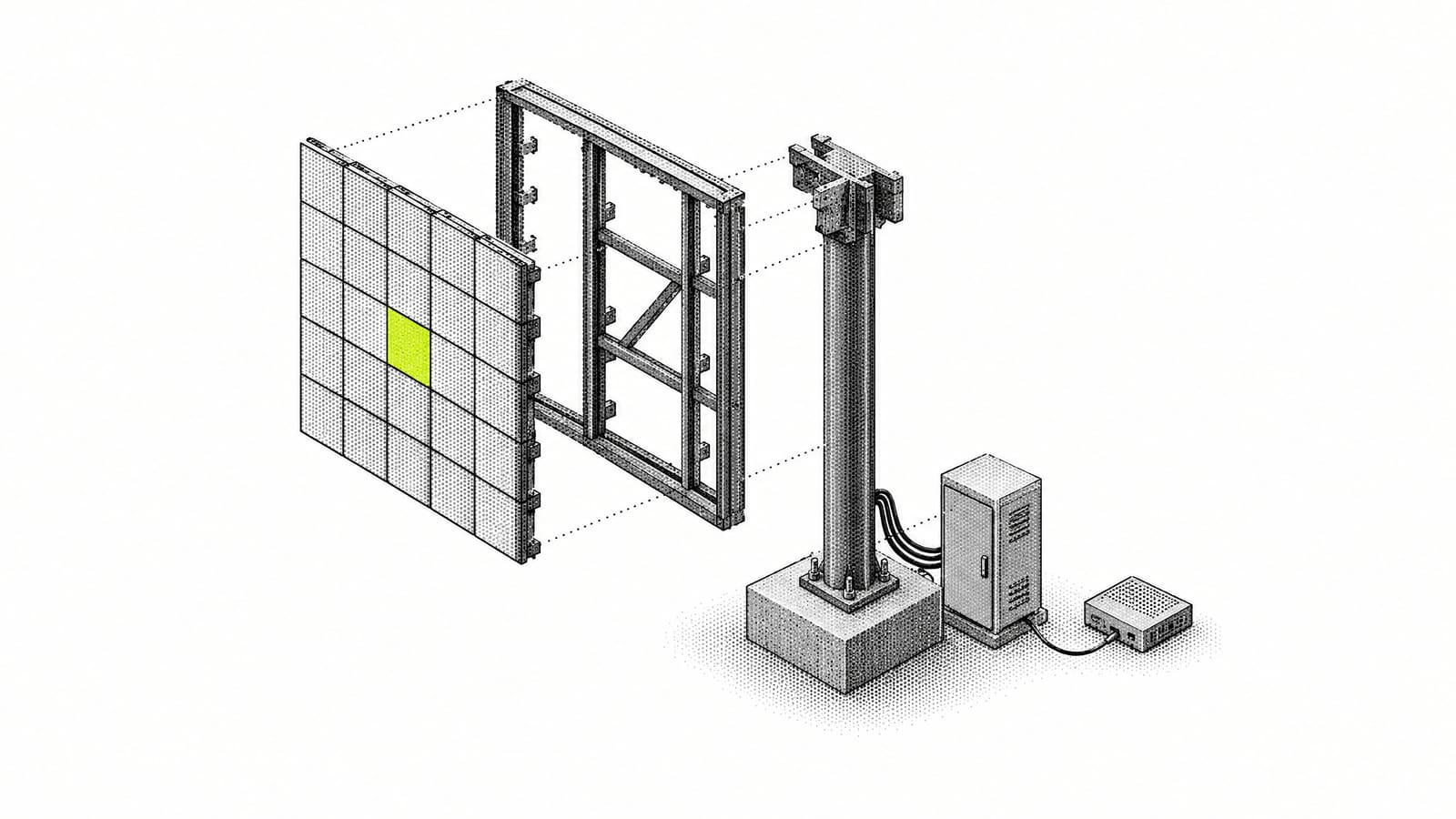
- The LED panels. Size, brightness and pixel pitch drive the price. Daktronics, for example, lists its urban billboards in 8 mm and 10 mm pitch and six standard sizes, with no public price: each size has a request-pricing link.
- Structure, power and software. Steel, installation, electricity and the media player.
- Permits. Zoning and advertising consent. Near US highways, state rules apply on top of the federal guidance above.
- Running costs. Maintenance, insurance, power, and the sales team that fills the loop.
Ask manufacturers and local integrators for a quote on your site.
Can KOSMO® handle the media buy?
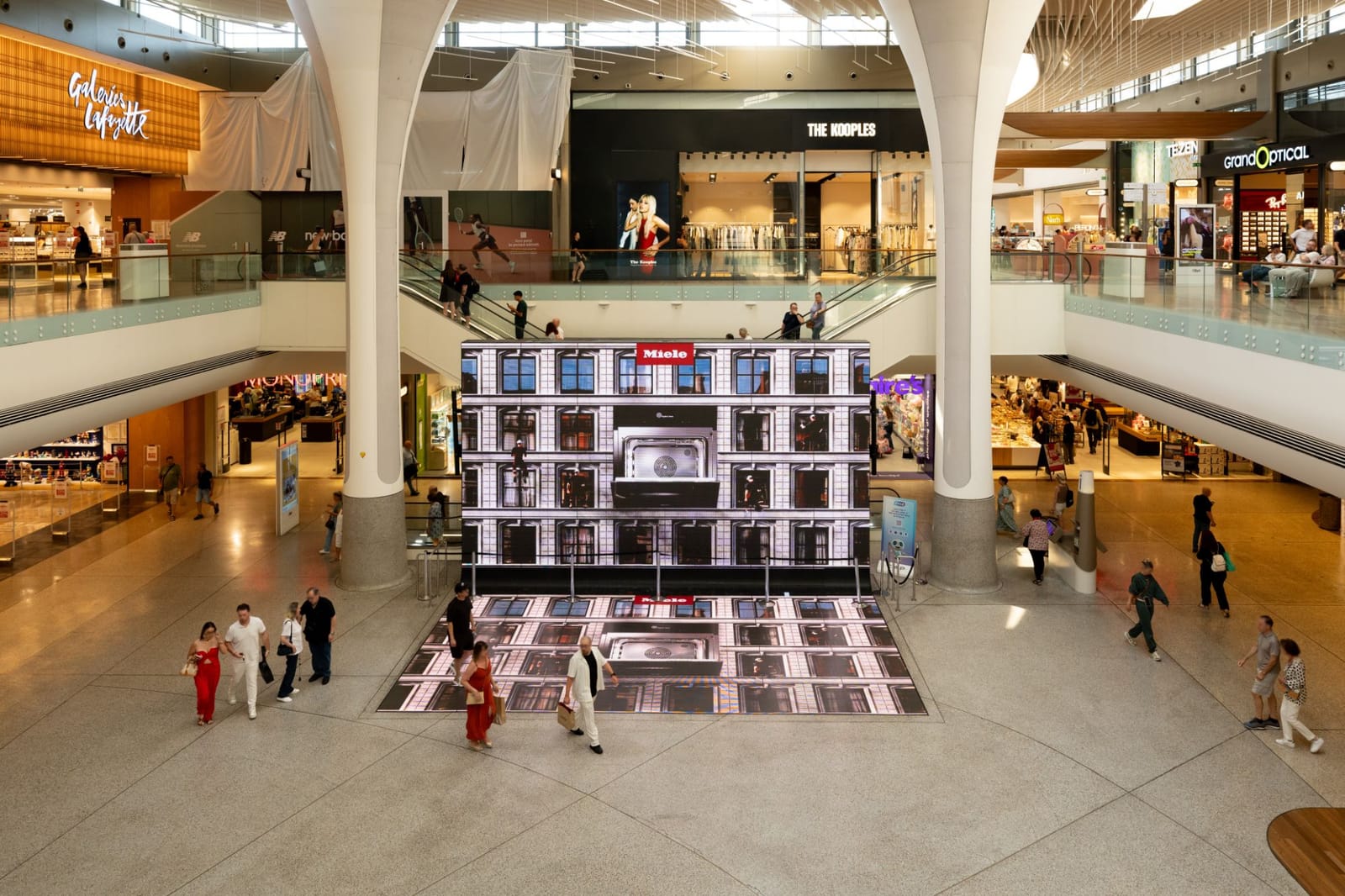
Yes. If your screens are already booked, we build for them: Miele’s media was bought through Publicis, mostly in 10-second slots, and our film ran on 81 screens in 76 cities. If they are not booked yet, we can buy the media: you keep control of the budget, and the screens are chosen to fit the idea.
We have no exclusive media-owner partner, so we can look across networks such as JCDecaux, Clear Channel, Ströer or Ocean Outdoor, and local operators. Across 150+ campaigns in 14 countries, we have adapted work to 750+ screens. The screen brief checklist lists what to confirm with any media owner before you pay.
FAQ
Is a digital billboard more expensive than a static one?
Per thousand impressions, yes. AdQuick reports that digital bulletins transact at roughly 5 to 12 times the CPM of comparable static bulletins on its marketplace. In return, you skip printing and posting, and you can change the message.
Is DOOH cheaper than TV or social?
Per thousand impressions, out of home is usually cheaper than TV, not social. Solomon Partners’ June 2025 media comparison, reported by Billboard Insider, put roadside bulletins at a $3 to $10 CPM, below TV, newspapers and magazines; only radio and social media came out cheaper. Digital screens price above static ones, so compare like for like.
How much does a Clear Channel digital billboard cost?
The same drivers apply as on any network: site, share of the loop, dates and flight length. Ask its sales team or a marketplace for a quote on the exact sites. The US medians above are a fair first benchmark.
Does the DOOH price include the creative?
Usually not. Media owners sell airtime. The film is made by a studio or agency and delivered to each media owner’s technical specs.
Can any digital billboard run a video or a 3D ad?
No. Many roadside screens only accept still images, for driver safety. An anamorphic film needs a screen that plays motion, and works best on a corner or curved one. See anamorphic 3D billboards for the formats.
Planning a DOOH campaign?
Send us your cities, dates and budget range, and we come back with a media and creative plan: which screens fit the idea, what they cost, and what the 3D film costs. Tell us about your campaign. Not ready to talk budget yet? Start with a free concept for your screen.