
How long does a 3D billboard take? The week-by-week timeline
From approved brief to a file the media owner accepts: 3 to 4 weeks. What happens each week, where campaigns lose time, and how to keep the date.
The number
3 to 4 weeks from the approved brief to a delivered file, with two rounds of changes included. That is the timeline we commit to, and it holds when the brief holds.
Before week one: the brief
The clock starts when the brief is approved, not when the first email is sent. A brief is approved when we have the screen layout, its real size, a photo from where people see it, the media owner’s requirements, the product files and one decision maker on the brand side. The screen brief checklist is the list. Campaigns that take six weeks usually spent two of them collecting these.
Week one: concept and animatic
We build the scene for the real screen and show it as a static concept, then as an animatic: a rough animation with the timing of the moment. This is where the idea is decided. Changing the idea in week three costs a week; changing it here costs a day.
For a launch campaign we often start from the free static concept we sent before the contract, which saves the first days.
Week two: production
Modelling, materials, lighting, animation. The product is built to the brand’s files, the scene to the screen’s geometry. We show a first render of the key moment before rendering the whole film, so the second round of changes happens on something real.
Week three: rounds, render, versions
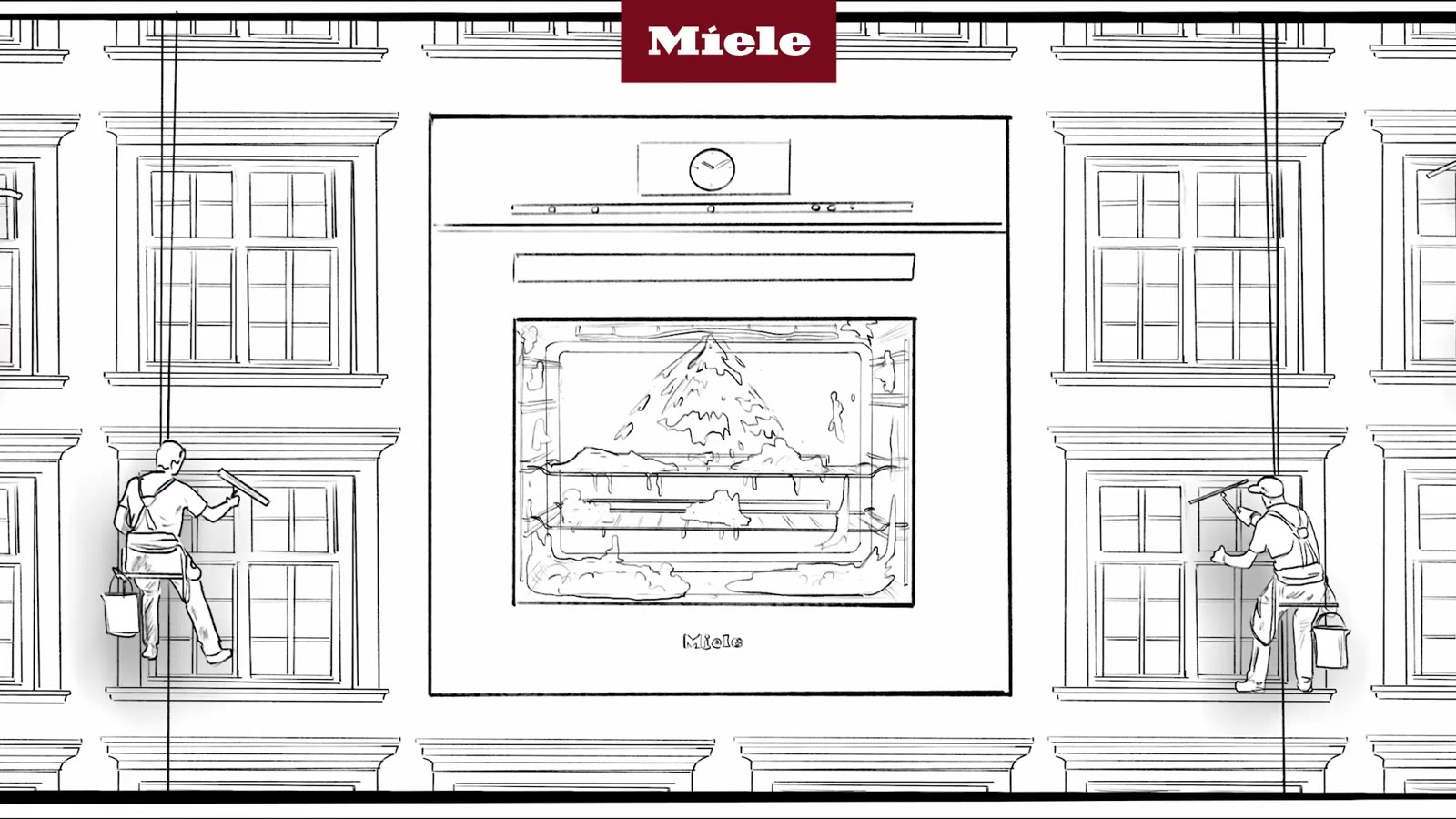
Two rounds of changes are planned here. Then the full render, and the versions: each screen ratio in the plan, each language, each product variant. The Miele HydroClean campaign went from one concept to more than 300 versions for 81 screens in this phase.
Week four: delivery and approvals
Files are exported to each media owner’s requirements and submitted. If a file is flagged, we fix it and resubmit. This is included, and it is why we ask for the media owner’s specs at the start rather than at the end.
Where campaigns lose time
- The screen changes after the concept. A different screen is a different scene.
- Product files arrive late or in the wrong format.
- More than one decision maker gives changes in different directions.
- Languages are added after the render.
None of these are fatal. All of them cost days.
How to keep the date
Approve the brief once. Name one person for changes. Send product files with the brief. Decide the languages and the screens before week one. Then the timeline holds.
Need it faster?
Ask. A single corner screen with a simple product can be quicker than four weeks. A network across several countries cannot. Tell us the date and we tell you what fits.