


3D billboard ideas for a product launch: what to show and how to plan it
10 ideas that work on a 3D screen for a launch, with real examples from Nike to Miele, plus when to book, which screen to pick and how to carry the moment to social.
What makes a good 3D billboard idea for a launch?
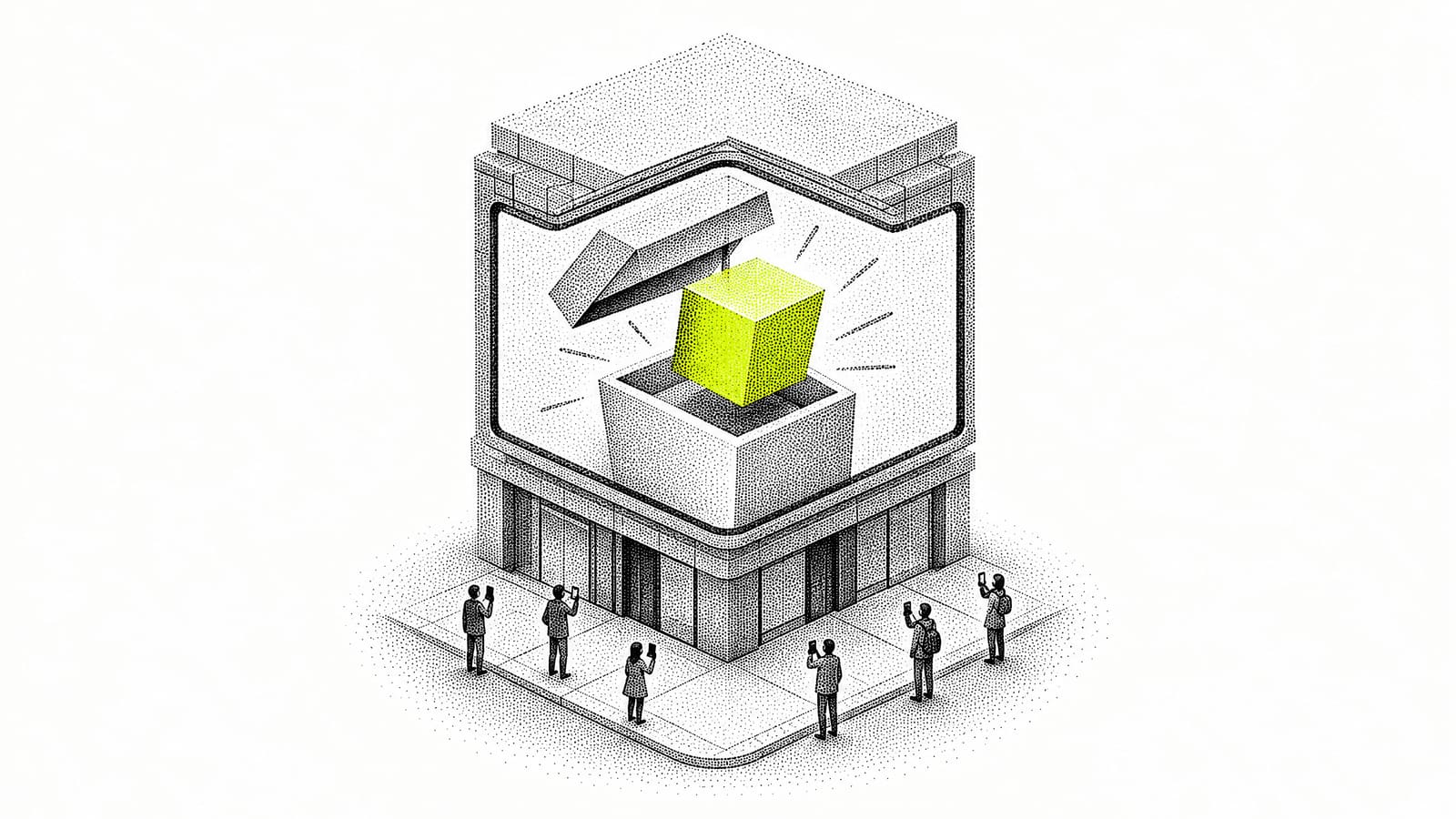
The best 3D billboard ideas for a product launch show the product doing one thing that could not happen on a flat poster: breaking out of its box, growing to the size of a building, proving its feature or revealing the date. One moment, readable in a few seconds, from the spot where people stop.
Here are the patterns that work, with real campaigns where they exist.
What works on a 3D screen
- One object, one moment. A product with a clear shape reads from across the street, and spots are short. On Miele’s HydroClean launch, three 10-second exposures replaced one 30-second story.
- The edge of the frame. Depth comes from things crossing the border of the screen toward the viewer. That is the moment people film.
- The product from frame one. On Miele’s film, the logo stays on screen from the first frame.
- No sound. Most street screens are silent. The idea has to work muted.
3D billboard ideas for a product launch: 10 patterns
1. The unboxing
The pack appears, opens, and the product comes out. Everyone knows the gesture. Nike used it for its first 3D billboard, for Air Max Day 2022 in Shinjuku, Tokyo: a giant orange shoebox opens on a rotating display of Air Max styles, made by Nike Tokyo’s in-house studio with the creative collective Cekai (Creative Review).
Use it when the packaging is recognizable, or the launch is a range with several variants.
2. The breakout
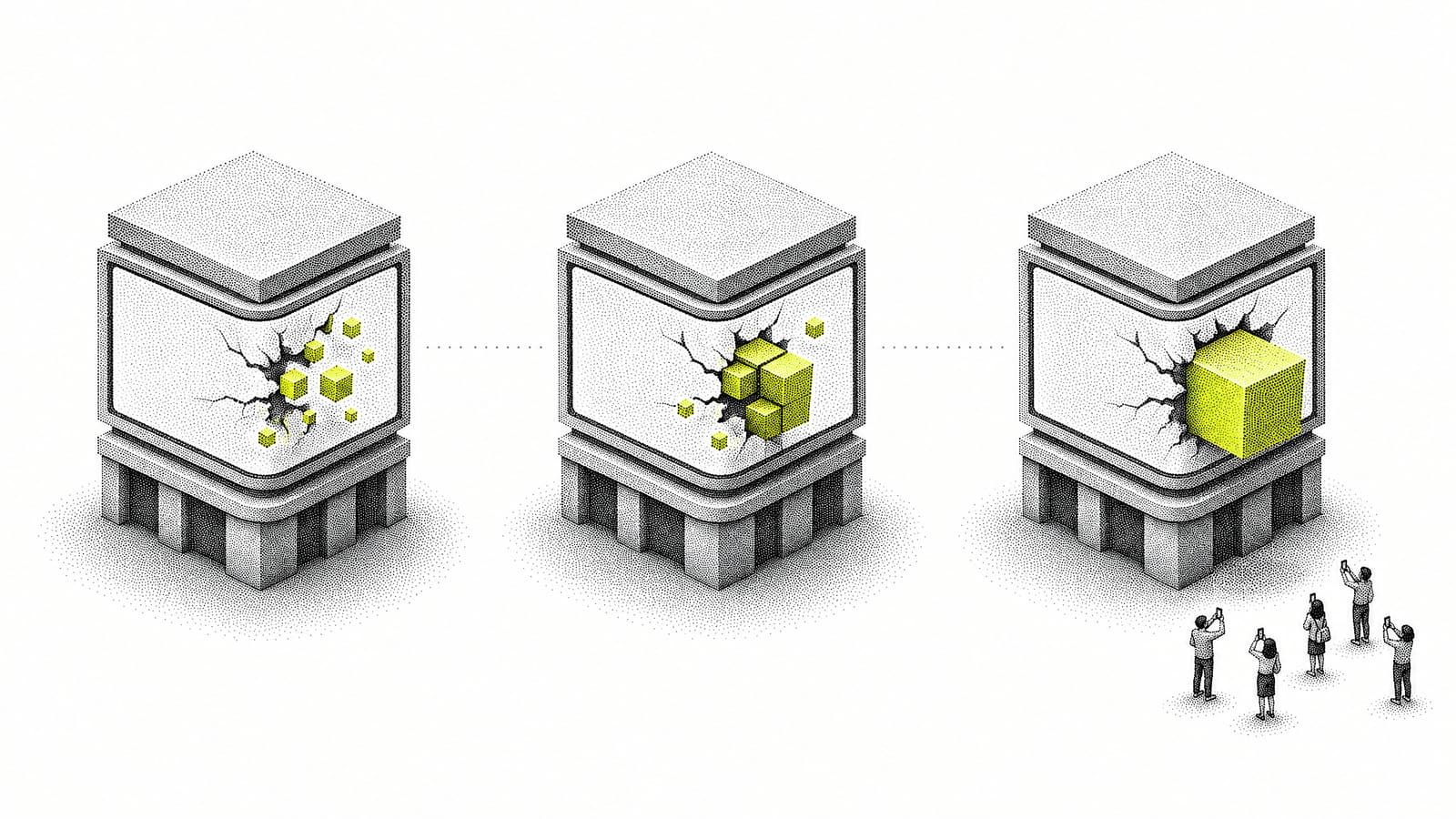
The product leaves the frame and seems to come toward the street: the shot people film, because they see it coming. In August 2023, HOKA launched its Mach X running shoe with a 3D campaign on two screens in Times Square, by Jellyfish with Clear Channel Outdoor (MediaPost).
Use it when you have a corner screen and one hero product with a strong shape.
3. The giant product
Make a small product the size of a building, so the texture, the liquid and the light through the glass become the show. To launch its Première range in Melbourne in August 2024, Kérastase ran a 15-second anamorphic film on Swanston Street in which the product appears to soar out of the screen, made by MADE THIS (Mediaweek).
Use it when the product is small (beauty, drinks, phones, watches) and its finish is the selling point.
4. The demonstration
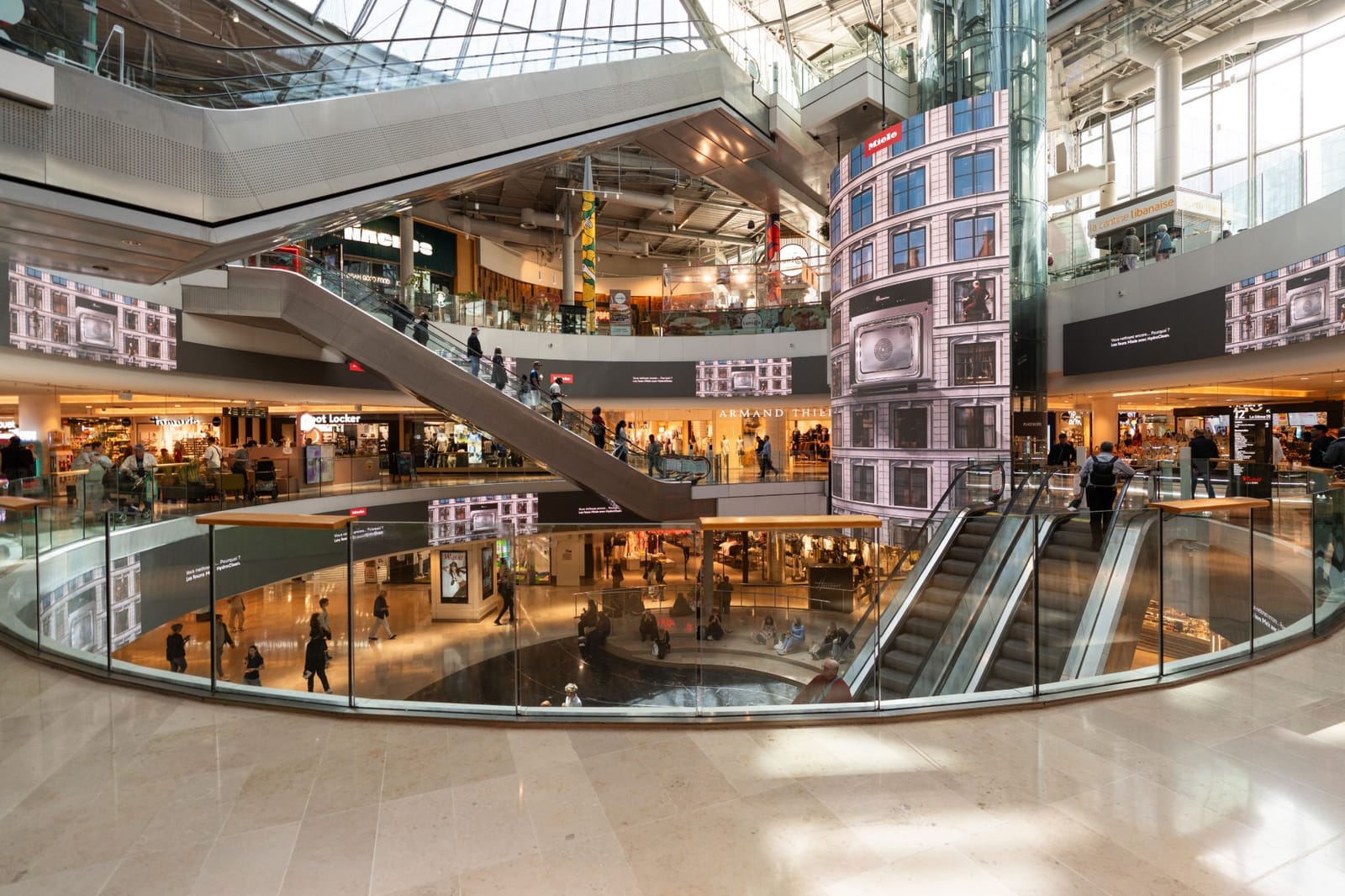
Show the product doing its job, at a scale nobody can miss. Miele was launching HydroClean, an oven that cleans itself. We built a building whose facade behaves like an oven: the door opens on a dirty oven, the cycle runs, the oven ends clean. One idea, 81 screens, 76 cities, 4 countries.
Use it when the launch is a new feature people need to understand before they buy.
5. The transformation
Before and after in one shot: the old model turns into the new one, or a plain object becomes the product. The change carries the message, so the film needs almost no copy.
Use it when the launch is a redesign, a new generation or new packaging.
6. The inside story
Open the product up: an exploded view, a cutaway, a camera traveling inside the device. On a corner screen, the parts can float out over the street before snapping back together.
Use it when the product has engineering worth showing: tech, cars, appliances.
7. The character
A character people already know steps out of the screen and reacts to the street. Prime Video used it to launch The Wheel of Time in November 2021: characters from the series burst out of screens in cities including New York and Paris, in billboards developed with the agency Amplify. Amazon called it the first anamorphic billboard made for an entertainment series (Amplify).
Use it when you launch a film, a series, a game, or a brand with a mascot.
8. The date reveal
When the date is the news, make the date the object. For Netflix’s Big Mistakes, a classic billboard on Sunset Boulevard showed a diamond necklace spelling 4.9.26, and no copy. That night, our FOOH film showed a thief stealing it. The next day the cast posted selfies wearing it, and the date turned out to be the premiere (read the case).
Use it when you have a teaser phase and a date to reveal.
9. The countdown
The screen changes as launch day gets closer: the product assembles piece by piece, a seal breaks on the day. Each version gives people a reason to come back and film again, so plan one version per phase at the storyboard.
Use it when you have screens booked for the weeks before launch.
10. The impossible product
For a film or a game with nothing physical to sell, invent the product. For The Super Mario Galaxy Movie, we put a carton of Yoshi eggs on a real New York grocery shelf: a self-initiated concept, not a Nintendo commission, that reached 15M earned media impressions with no paid media (read the case). It was a FOOH film, but the idea works on a screen too.
Use it when you launch entertainment and want something people wish they could buy.
Which idea fits your launch
| Idea | Best for | Works best on |
|---|---|---|
| Unboxing | Known packaging, ranges with variants | Corner screen |
| Breakout | One hero product with a strong shape | Corner screen |
| Giant product | Beauty, drinks, phones, watches | Corner or flat |
| Demonstration | A new feature to explain | Any, including a network |
| Transformation | Redesigns, new generations, new packs | Any |
| Inside story | Tech, cars, appliances | Corner screen |
| Character | Films, series, games, mascots | Corner screen |
| Date reveal | Teasers and release dates | Any, plus social |
| Countdown | Screens booked before launch | Any |
| Impossible product | Entertainment with nothing to sell | Social first |
When to plan a 3D billboard around your launch date
Work back from launch day:
- Book the hero screen first. The idea depends on it, and the best-known 3D screens in big cities get booked early.
- Approve the brief 5 to 6 weeks out. Production takes 3 to 4 weeks from the approved brief, with two rounds of changes. The rest covers specs, product files and media-owner checks. See how a 3D billboard is made, week by week.
- Decide markets and languages before production. Each one is a version.
- Deliver to the media owners the week before. Files are checked before they go on air.
- Launch day: check every screen. Then film the hero screen and post the brand’s own cut.
- Launch week: social. The FOOH version and the reaction videos keep the launch in feeds.
Which screen for a launch billboard?
One hero screen, then a network. The hero is a corner screen above a crossing, a plaza or a station concourse, where people stop and film. The illusion works from one spot only, so check where people actually stand.
The network carries the same idea on flat screens, with a frame-breaking version of the scene: see corner screen or flat screen. Each site needs its own version. For the Volvo EM90 launch, Territory Studio built site-specific 3D billboards, including one at Beijing Capital International Airport and one at Volvo’s Shanghai store (Maxon).
We can also handle the media buy for our anamorphic billboard projects: you keep control of the budget, and the screens are chosen to fit the idea.
Extend the launch with FOOH
The screen reaches the people who walk past. A FOOH film reaches everyone else: CGI placed in real street footage, made for social. Built from the same 3D assets as the billboard, it has to be planned at the storyboard.
For Miele, the HydroClean building was placed in a real Paris street and delivered in 5 languages and 3 social formats (9:16, 1:1, 2:3). For Big Mistakes, the billboard was real and the theft was CGI.
Be honest about FOOH today: a CGI object in a street is no longer news on its own. It works when it is tied to something real: a placement, a date, a product. More on our FOOH films.
Mistakes that waste a launch billboard
- The effect is the star, not the product. People remember the dragon and forget the brand.
- Too much story for the slot. 10 seconds is one moment, not three scenes.
- Copy too small to read. On Miele’s 6-second cut, the tagline was extended after the first days on air.
- The wrong viewpoint. From the wrong angle, the illusion looks broken.
- The idea before the screen. A concept written for a screen you did not book has to be redone.
- Social planned after launch. By then the moment has passed.
- No day-one check. A black screen on launch day is a lost launch.
FAQ
What are CGI billboard ads?
Two different things share the name. A CGI billboard on a real screen is an anamorphic 3D film playing in the street. A FOOH ad is CGI added to footage of a real place and posted on social: the billboard in it may not exist. A launch can use both.
Do 3D billboards work for small products?
Yes, often better than for big ones. A lipstick or a watch the size of a building shows detail nobody sees on a shelf.
How much does a 3D billboard for a launch cost?
There is no fixed price. It depends on the scene, the number of screens and formats, and the resizing. The projects we are built for usually land around €40,000, and each extra screen costs less than the first. Details in how much a 3D billboard costs.
Can one launch idea run in several countries?
Yes. Miele’s HydroClean launch ran as one idea on 81 screens in 4 countries and 5 languages, with 300+ versions. Decide the markets before production starts.
Should a launch billboard have a QR code?
Rarely. People in front of a 3D screen are filming, not scanning. The call to action is the product name, the date, and maybe a handle people can tag.
Launching a product?
Send us the product, the launch date, the markets and the screens you have booked or want, and we come back with an idea built for them: contact us. Not ready to brief? Start with a free concept for your screen.