


What is FOOH? Fake out of home meaning, examples and how it's made
FOOH means fake out of home: CGI placed into real street footage and posted on social. The meaning, the famous examples, how it's made, what it costs and whether it still works.
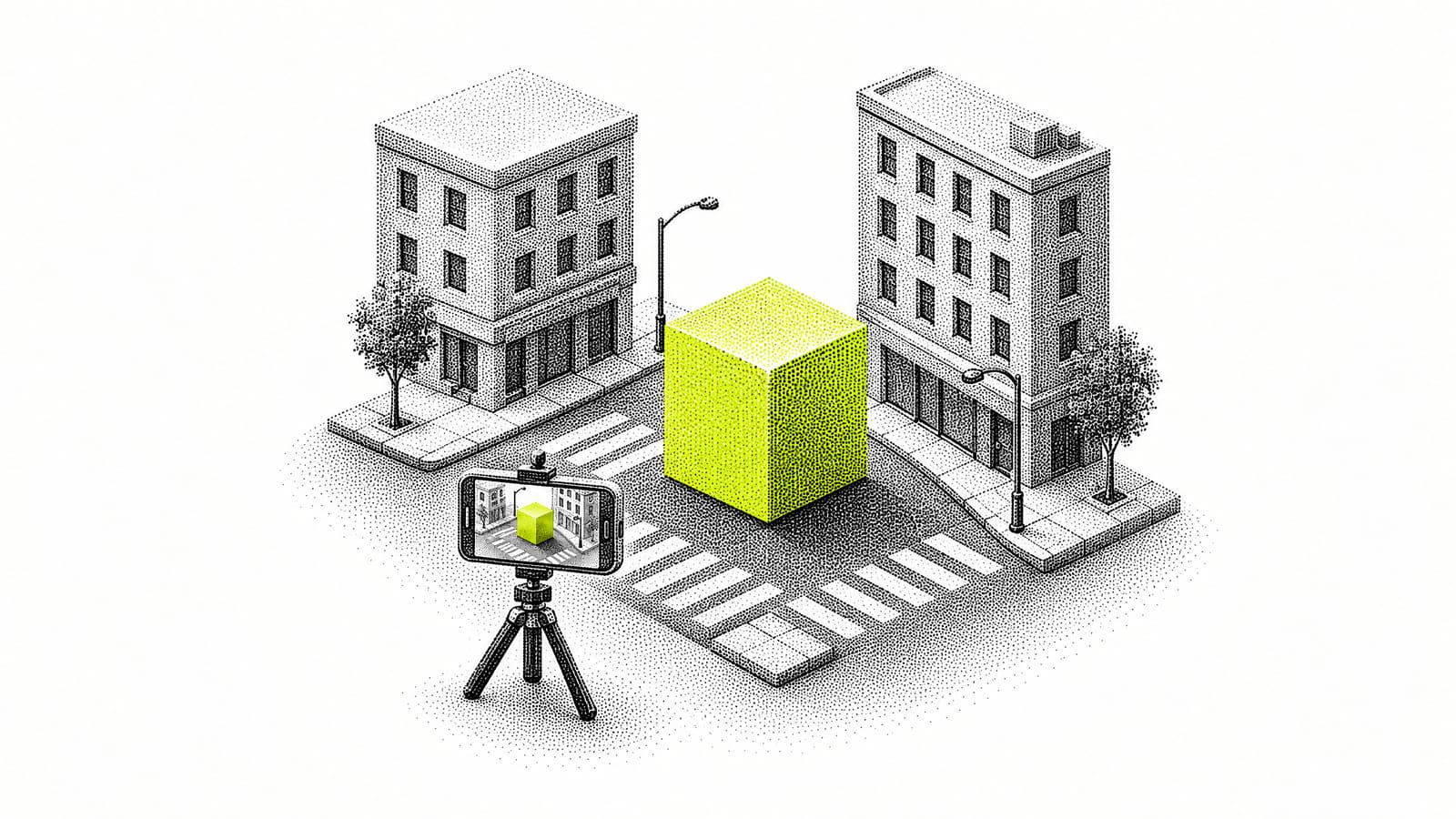
What is FOOH?
FOOH stands for fake out of home. It is a short social video in which a CGI object is placed into real footage of a real place, so it looks like it is really there: a giant handbag driving down a Paris street, a London train getting its lashes done. Nothing is installed. The ad only exists in the feed.
The “fake” is the placement, not the footage. The street, the light and the people walking past are real. Only the object, and the media space it seems to occupy, are CGI.
FOOH meaning: what the acronym stands for
OOH is the industry term for out-of-home advertising: billboards, bus shelters, transit, building wraps. FOOH adds an F for fake, or faux. The format goes by several names:
- Faux OOH or fake OOH, in the trade press.
- CGI ads or CGI OOH, after the technique (more in our guide to CGI ads).
- Mixed reality, the term we use at KOSMO: a real plate mixed with a virtual object.
- Fake DOOH (fake digital out of home), when the fake placement is a digital screen.
FOOH is not a 3D billboard, which plays on a real screen in a real street. People confuse the two because the best-known FOOH films look like 3D billboards. We compare the formats further down.
Where fake out of home came from
The style is widely credited to Ian Padgham, a 3D artist based in Bordeaux who works as Origiful. Creative Review names his wine bottle tram for Château de Cérons as one of the first pieces to gain traction, and fashion labels such as Jacquemus, Isabel Marant and Alexander Wang as the early adopters. In 2023, CGI out-of-home ads flooded social media and the name FOOH stuck.
Why brands use FOOH marketing
- Reach without a media buy. There is no screen to book. The budget goes into the film.
- Places no screen can reach. A monument, a river, a supermarket shelf. If you can film it, you can put a product on it.
- A test before the real thing. Padgham’s argument to Marketing Brew: try an out-of-home idea as a film, and if it takes off, build it. Maybelline did exactly that.
Famous FOOH ads
These are the films people still search for. None of them is ours, and we checked who made each one. The full list, by category, is in fake out of home examples.
Jacquemus: the Bambino bags on wheels (Paris, 2023)
In April 2023, Jacquemus posted an 8-second clip of giant Le Bambino bags driving through Paris traffic. Many viewers could not tell if it was real, AI or CGI. It was CGI by Padgham, who modeled the bags in 3D and placed them into street footage he had already shot, as he told PAPER.
Maybelline: Sky High lashes on the Tube (London, 2023)
In July 2023, Maybelline New York posted a London Tube train with giant lashes, swept by an oversized Lash Sensational Sky High mascara wand, and a double-decker bus getting the same treatment. An earlier version ran in New York. Marketing Brew reports both were made by Padgham’s Origiful, and that the brand winked at the CGI in the comments instead of pretending it was real.
In March 2024, Maybelline and the media group Global built a real version in Manchester: trams wrapped with 3D lashes over the headlights. The fake ad became the brief for a real one.
Adidas: Messi on the Dubai Frame (2022)
After Argentina won the World Cup in December 2022, a grainy, unbranded clip showed Messi’s World Cup moments playing on the Dubai Frame, a 150-meter monument that is not an advertising screen. It looked like a fan’s phone video. The Drum later reported it was an Adidas film, on creative by TBWA, with the CGI studio Vertex given two days to fit the video into the Frame. This is fake DOOH in its purest form: a screen that does not exist.
BINGE: House of the Dragon in Sydney (2024)
For the Australian premiere of House of the Dragon season 2 in June 2024, BINGE released a CGI film in which a dragon breathes fire on a billboard at Taylor Square, Sydney. Then the real billboard changed to look scorched. It was made with Mindshare and POLY, the creative studio of oOh!media, which documents the campaign. Fake and real out of home, working together: the pairing we now lead with.
Fake out of home examples from our own work
FOOH is where KOSMO started. Our FOOH work is mostly launches and series for brands, filmed in real cities. A few with numbers we can source:
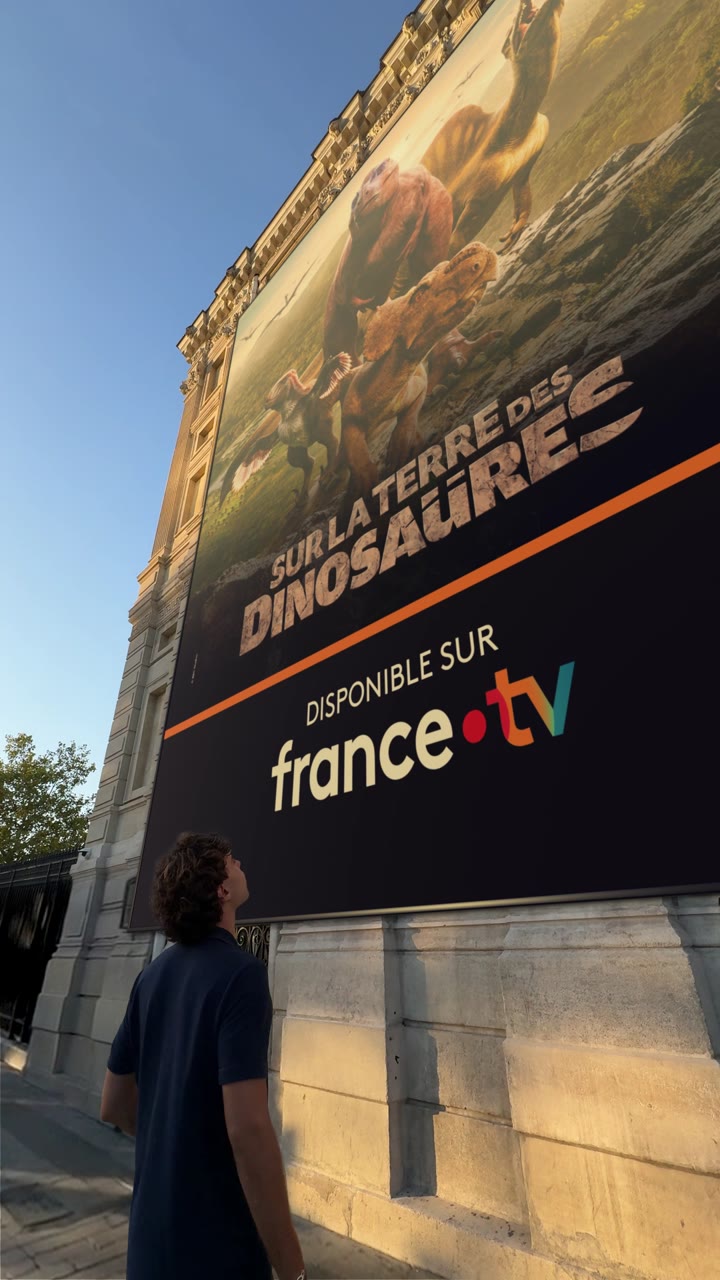
- France TV (Paris, 2025). Dinosaurs in the streets of Paris for the series Sur la terre des dinosaures: 25M+ earned media.
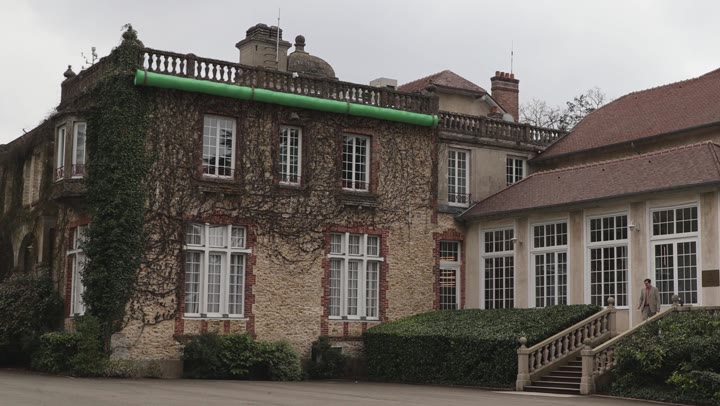
- Uber Eats x Team France (2025). A news-hacking film at Clairefontaine for the extension of the partnership with the French football team: 25M+ earned media, and a pickup on TV.
- Maisons du Monde (Paris, 2024). Christmas baubles taking over Paris, the most viewed and most liked video on the brand’s account: 12M+ earned media, 150K+ engagements.
- Extrême (Paris, 2024). The summer packaging at street scale: 15M+ earned media.
- UEFA, PSG’s Champions League win (Paris, 2025). 15M+ earned media, 350K+ engagements.
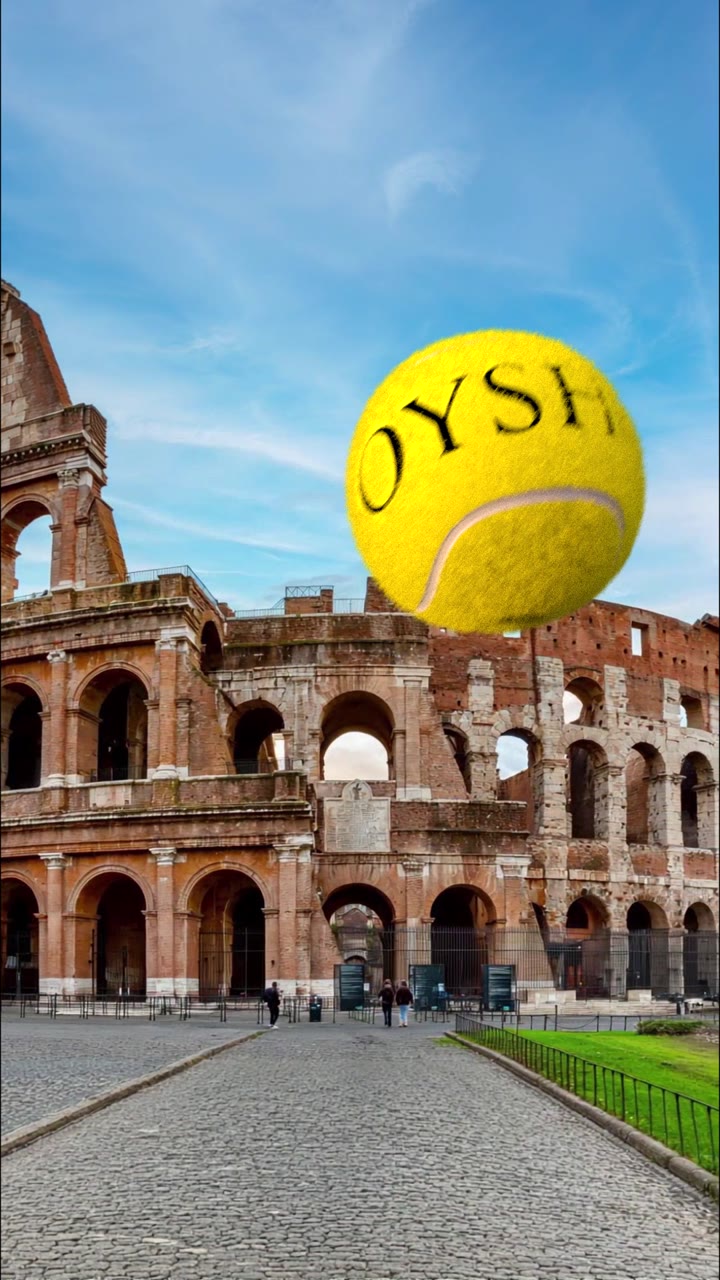
- Oysho x Premier Padel (Rome, Milan, Valladolid, 2025). One idea, three cities: 6M+ earned media and 550K+ engagements across the films.
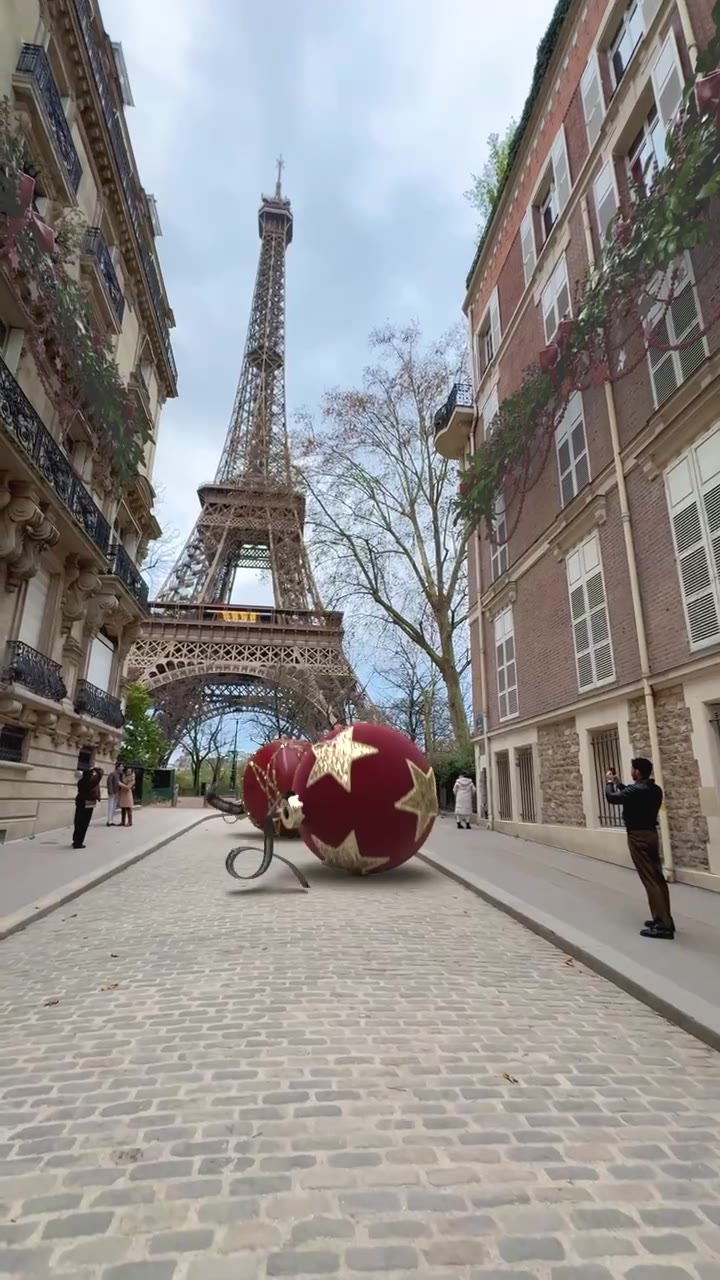
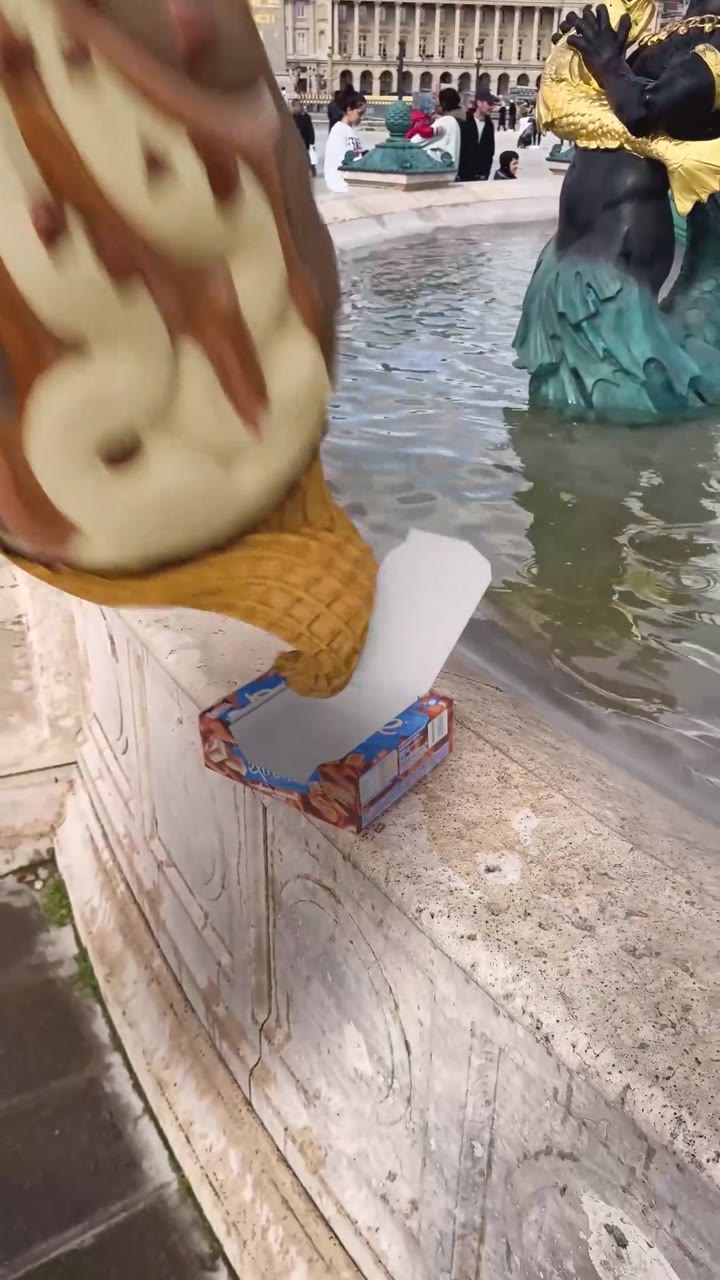
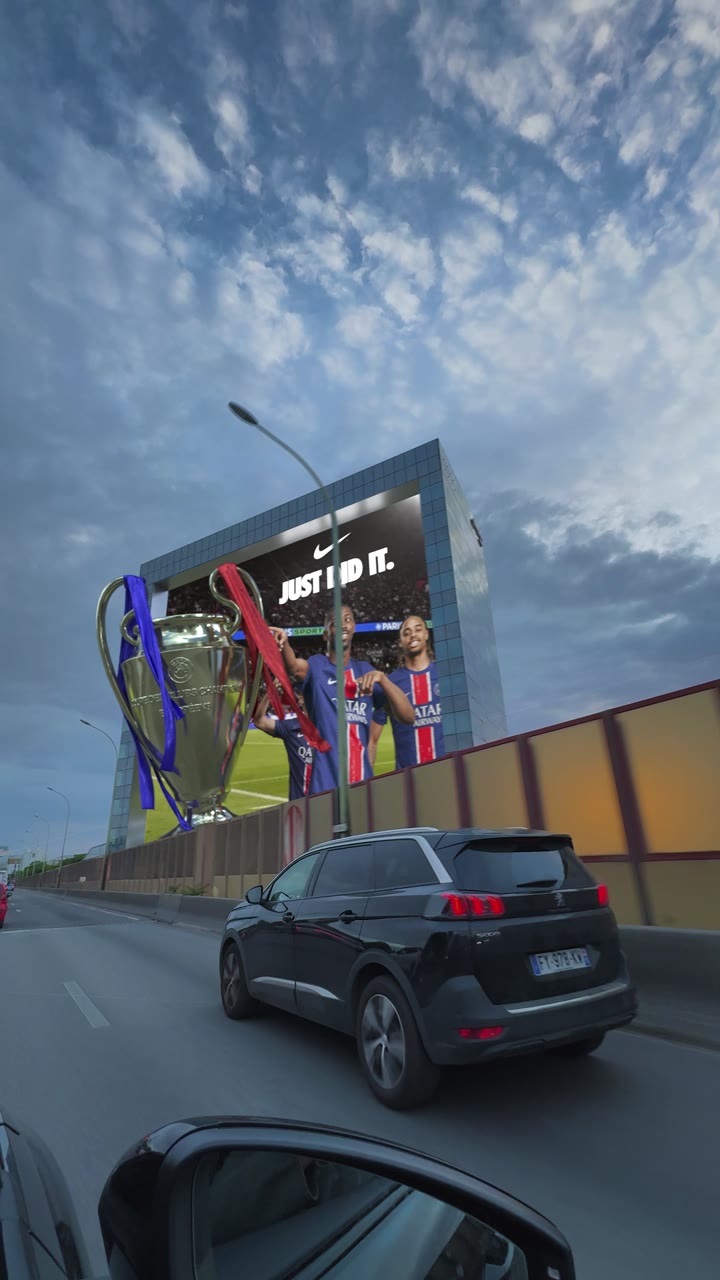
Three are written up in full:
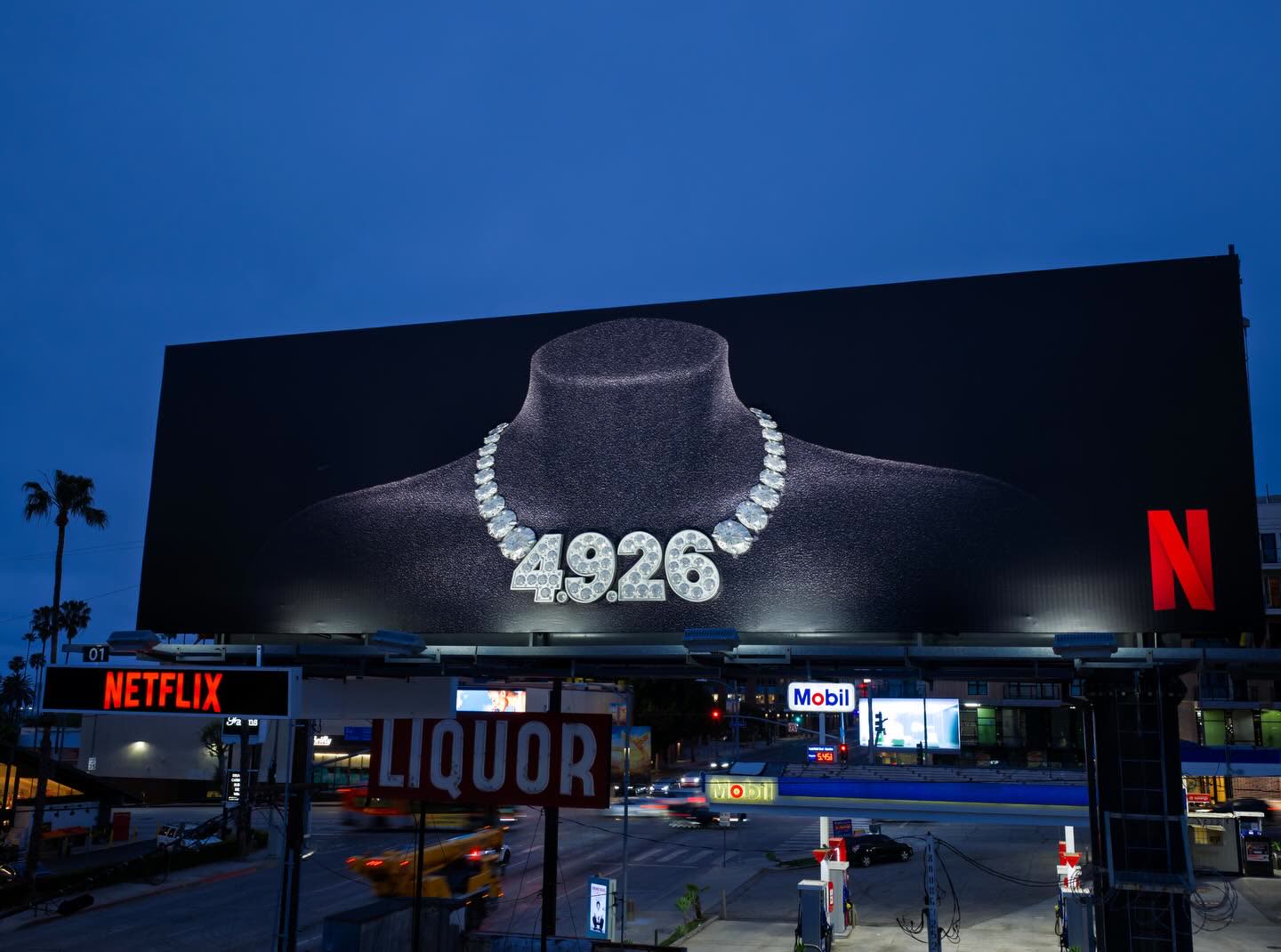
- Netflix, Big Mistakes (Los Angeles, 2026). A real billboard on Sunset Boulevard, then a CGI thief stealing its necklace, filmed as CCTV footage. Read the Big Mistakes case.
- Netflix, Avatar: The Last Airbender (Los Angeles, 2026). A real stencil on a cracked sidewalk, then the ground opening onto the Earth Kingdom. The post passed 30K likes. Read the Avatar case.
- Netflix, Below (New York and Niagara Falls, 2026). A tentacle takes a patrol boat in front of the Statue of Liberty, then the same creature surfaces under the Horseshoe Falls. 56.8M views on Netflix’s Instagram in eight days. Read the Below case.
- Yoshi eggs (New York, 2026). Our best-known piece, and a self-initiated one: a concept we made for The Super Mario Galaxy Movie, not a Nintendo commission. 5M views, 15M earned media impressions, 500K engagements, $0 in paid media. Read the Yoshi eggs case.
How a FOOH video is made
The CGI gets the attention, but the realism is decided on the shoot.
- The idea and the place. One object, one action, one reason to share it, in a location that makes it believable.
- The plate. Real footage shot on location at the right time of day, the camera moving the way a phone would, plus a 360° photo of the light and measurements of the scene. We film it, or work from footage you provide.
- Camera tracking. Software rebuilds the camera’s movement, so the 3D object stays locked to the street when the shot moves.
- The CGI. The product is modeled, textured and animated. Cloth, liquids, smoke and crowds are simulated, and they are what makes a film slower and more expensive.
- Light matching. Same sun direction, reflections of the real street on the object, shadows on the real ground, the same grain. This step separates a believable film from an obvious one.
- Compositing. People and cars passing in front of the object are cut out frame by frame and put back on top. The grade makes it one image.
- The social cut. 9:16 first, the surprise in the first second, sound, captions. Then 1:1, 4:5 and the campaign’s languages.
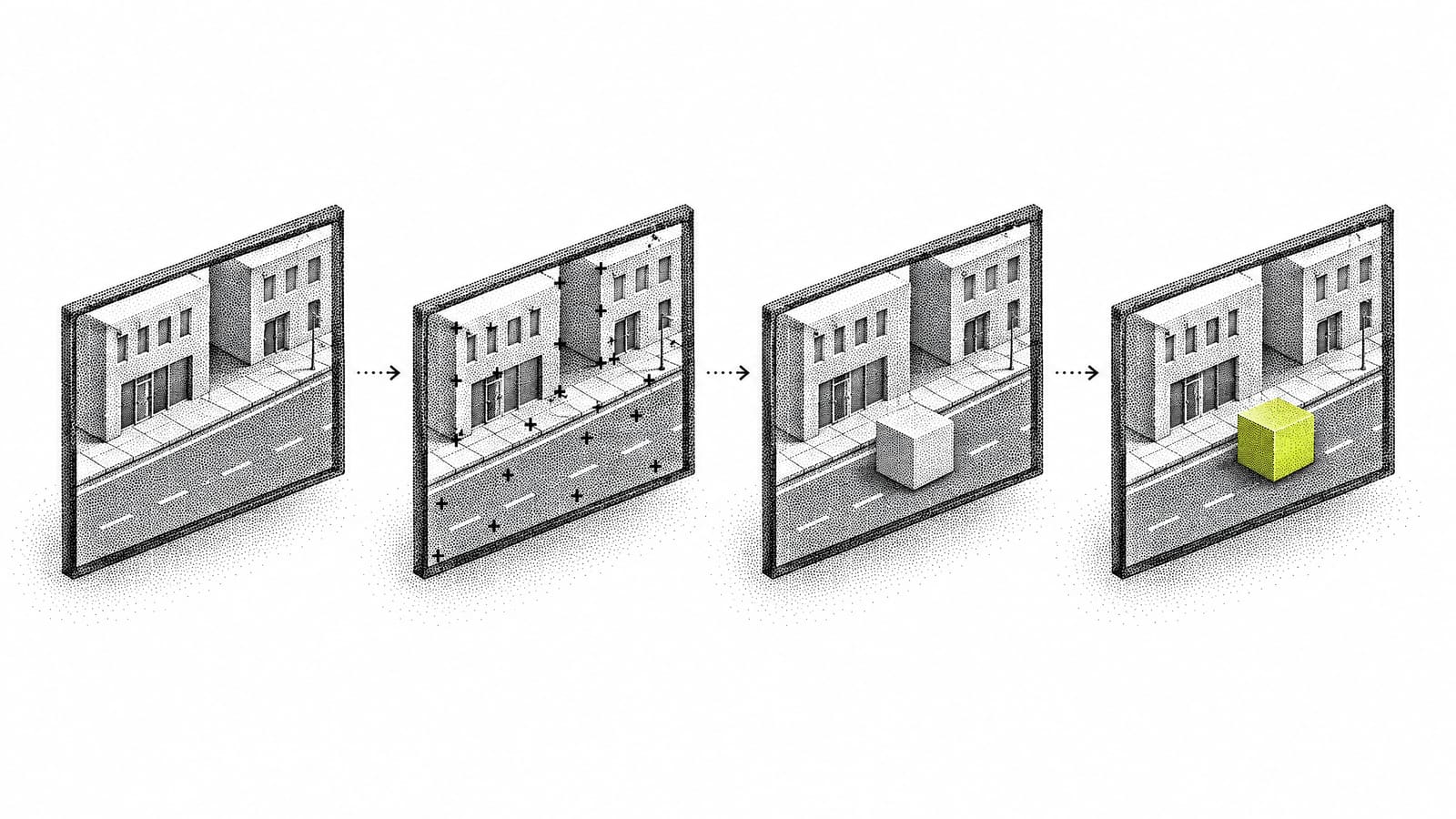
It takes 3 to 4 weeks from the approved brief to delivery, two rounds of changes included. AI helps a little, for ideas and early visuals. On the self-initiated Yoshi eggs it built the product and its variants. On client films, the final 3D is built by our team.
FOOH vs DOOH vs 3D billboard
| FOOH | DOOH | Anamorphic 3D billboard | |
|---|---|---|---|
| What it is | A CGI object placed into real footage, posted as a video | Any ad on a digital out-of-home screen | A DOOH spot built so the scene seems to leave the screen |
| Physically there? | No | Yes | Yes |
| Where people see it | Social feeds | In the street | In the street, then in the videos people post |
| Media buy | None | Yes | Yes |
| Main limit | Novelty has faded, must be disclosed as CGI | Easy to walk past | The illusion works best from one viewpoint |
| Best for | Reach and conversation | Coverage and repetition | A real moment people film |
People search for “fake out-of-home DOOH advertising”, but FOOH is not a type of DOOH. DOOH is a media channel you buy. FOOH is a film you post. They only overlap in fake DOOH, the Adidas kind, where the film shows a screen that does not exist.
The strongest set-up uses both. The 3D billboard gives the campaign a real moment and a proof. The FOOH film carries it to people who were never in that street. Both come from the same 3D assets, as we explain in how a 3D billboard travels on social.
Is FOOH fake? Disclosure and audience trust
It is fake the way a commercial with visual effects is fake. The problem starts when a brand claims the thing really happened.
- Pretending backfires. Padgham told Marketing Brew that telling audiences something is real when it is not leaves them let down. The same article cites British Airways, criticized for an image that appeared to show a billboard at Glastonbury, where such ads are limited.
- Platforms have rules. Since March 2024, YouTube asks creators to disclose realistic altered content, and its examples include altering a real cityscape; clearly unrealistic content needs no label. TikTok requires a label on AI-generated content with realistic images, audio or video. Rules change, so check them before you post.
- Never fake the product. CGI can exaggerate the scale of a product, never what it does. A giant mascara wand is a joke. Lashes that look longer on screen than in real life are a claim.
Our advice: let the audience in on it, with a caption, a wink in the comments or an idea absurd enough that nobody takes it literally. People share FOOH because it surprises them, not because they think it happened.
Does fake out of home still work?
Less easily than in 2023. Back then, a giant product on a landmark was enough to stop the scroll. Today feeds are full of them, viewers assume CGI, and “how did they do that” is no longer a hook. The fake out of home trend has peaked, and films that rely on scale alone get scrolled past.
Fake out of home ideas that still travel
- A real anchor. A real billboard (Big Mistakes), a real stencil (Avatar), a real store aisle (Yoshi eggs). The CGI only has to sell one thing.
- A story, not a size. A theft, a cliffhanger, something people want to explain to a friend.
- Low-fi formats. CCTV and phone footage look caught, not made.
- Cultural timing. A trophy (PSG), a series launch (France TV), Christmas (Maisons du Monde).
- A product people want. The comment that came back most on the Yoshi eggs: “wish it was real”.
- Series. Several films on one idea give the audience more than one chance to catch it.
When the idea is there, the format still delivers: 25M+ earned media each for France TV and Uber Eats in 2025, 15M earned media impressions with $0 in paid media for the Yoshi eggs in 2026. Many films get far less, and we only publish the numbers we can source.
That is why KOSMO changed its lead. FOOH made us known. Today we lead with anamorphic 3D billboards for big brands and use FOOH as their social extension, the BINGE model. Our FOOH page shows how the two work together.
How much does a FOOH ad cost?
There is no fixed price. The cost depends on what it takes to make the film believable:
- The shoot. A handheld shot in a public street is the simple case. Night, drones, permits, actors and closed locations add cost. Footage you already own removes the shoot.
- The CGI. A rigid product is the simplest. Characters, cloth, liquids and crowds take longer to animate and render.
- Shots and versions. Every extra angle, format, length and language adds work.
- One film or a series. A series costs less per film, because the assets are reused.
- A billboard in the plan. With a 3D billboard, the FOOH version is produced from the same 3D assets: the most efficient way to get both.
For reference, the projects we are built for usually land around €40,000. For the screen side, see what a 3D billboard costs.
How to brief a FOOH film
One page is enough:
- The product, and the one thing the film should make people feel.
- The place and the moment: a city or landmark, a launch date, a season.
- Where it will be posted: accounts, platforms, organic or paid.
- Formats and languages.
- Screens in your media plan, if the film should extend a 3D billboard.
- Assets and constraints: 3D or CAD files, packaging, legal and disclosure rules.
We come back with a concept, then deliver the film 3 to 4 weeks after the brief is approved.
FAQ
Is FOOH the same as augmented reality?
No. AR adds a virtual object live, through the viewer’s own phone camera. FOOH is a finished video: the object is added in post-production and everyone sees the same film.
How long should a FOOH video be?
Short, with the surprise in the first second. The Yoshi eggs film runs 7 seconds, the two Big Mistakes films 8 and 11. Longer works when there is something to hand over to: the Avatar reel cuts into the season’s own footage.
Does FOOH work for B2B brands?
Yes, when the idea is simple. We have made FOOH films for recruitment (Proman), real estate (Icade, Sogelym Dixence) and insurance (Hiscox). The audience is smaller, so judge the film on who it reaches, not on raw views.
Do you need permission to film the street?
It depends on the city and the size of the shoot. Drones, closed roads and private buildings usually need authorization and lead time, so we choose the location with that in mind.
Can you make a FOOH film from our product’s 3D files?
Yes, and it saves time. A CAD or 3D model of the product is the starting point, adapted for rendering. If a 3D billboard is also in the plan, both use the same model.
Planning a FOOH film or a 3D billboard?
Tell us about the product, the city and the date on our contact page. We come back with the format that fits: a FOOH film, a 3D billboard, or both from the same assets. Not ready to commit? Ask for a free concept for your screen.